Hawaiʻi Public Radio Interview!

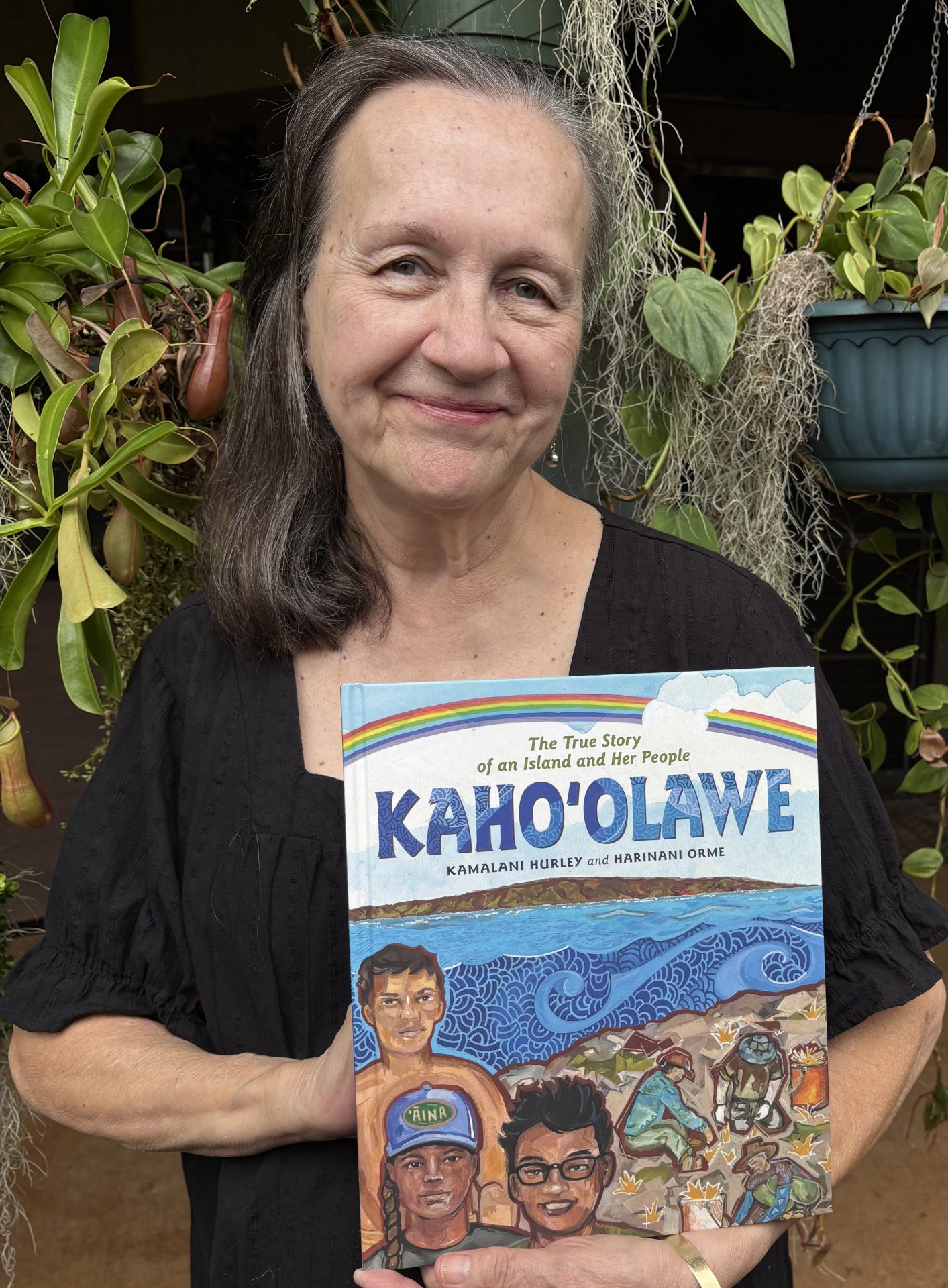
kamalani-and-book

What start­ed out as a bit scary turned out to be such fun! I’d nev­er been inter­viewed for pub­lic radio before, so I was nervous. kamalani-and-book

Edi­tor Cather­ine Cluett Pactol made me feel right at home. 

Hon­est­ly, I can talk about the book all day, and I think I did! 

Because of time and space lim­i­ta­tions, she could­n’t include every­thing we’d talked about. She did a great job in focus­ing on the best parts for the interview.

BUT what was left out was my heart­felt alo­ha for the book’s won­der­ful illus­tra­tor, Hari­nani Orme. Hari­nani’s art is rich­ly tex­tured and vivid­ly col­or­ful and based on tons of research. She is amaz­ing, and I am grate­ful to call her my friend.

Cather­ine asked for a pho­to of me with the book. Any­one who knows me knows I don’t like being pho­tographed, but duty called! So out to our lanai I went with my hus­band, Tim, in tow. 

Maha­lo to Hawai’i Pub­lic Radio for fea­tur­ing Kaho’o­lawe: The True Sto­ry of an Island and Her Peo­ple! Read the arti­cle and lis­ten to the inter­view here.

All pro­ceeds ben­e­fit the Pro­tect Kaho’o­lawe ‘Ohana. Maha­lo nui to Car­ol Hinz and the team at Millbrook/Lerner!

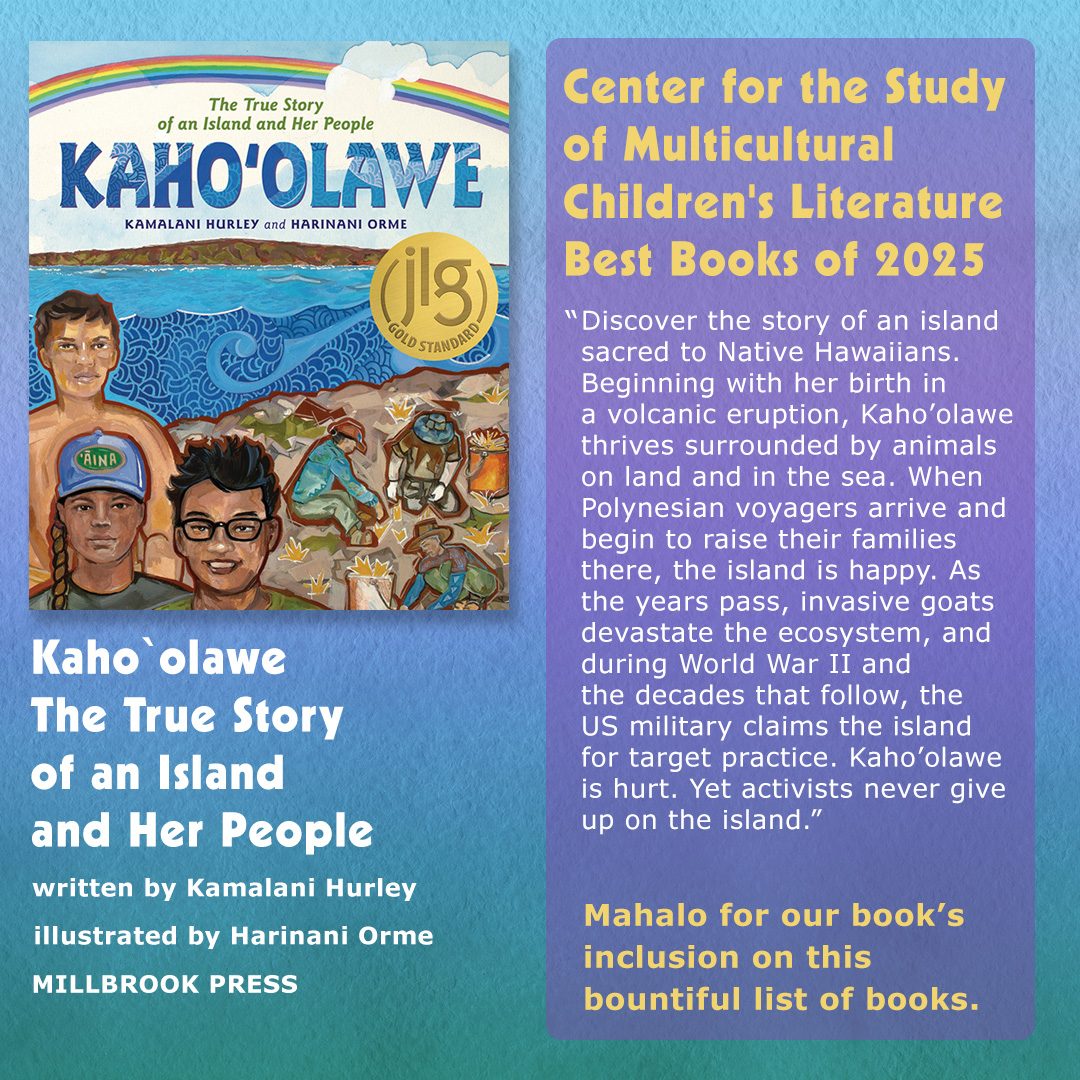
We’re on the CSMCL Best Books 2025 List!

CSMCL-List

I believe that all voic­es deserve to be heard. Maha­lo to the Cen­ter for the Study of Mul­ti­cul­tur­al Chil­dren’s Lit­er­a­ture Best Books of 2025 List for includ­ing Kaho’o­lawe: The True Sto­ry of an Island and Her People!
CSMCL-List


All pro­ceeds ben­e­fit the Pro­tect Kaho’o­lawe ‘Ohana. Maha­lo nui to Car­ol Hinz and the team at Millbrook/Lerner!

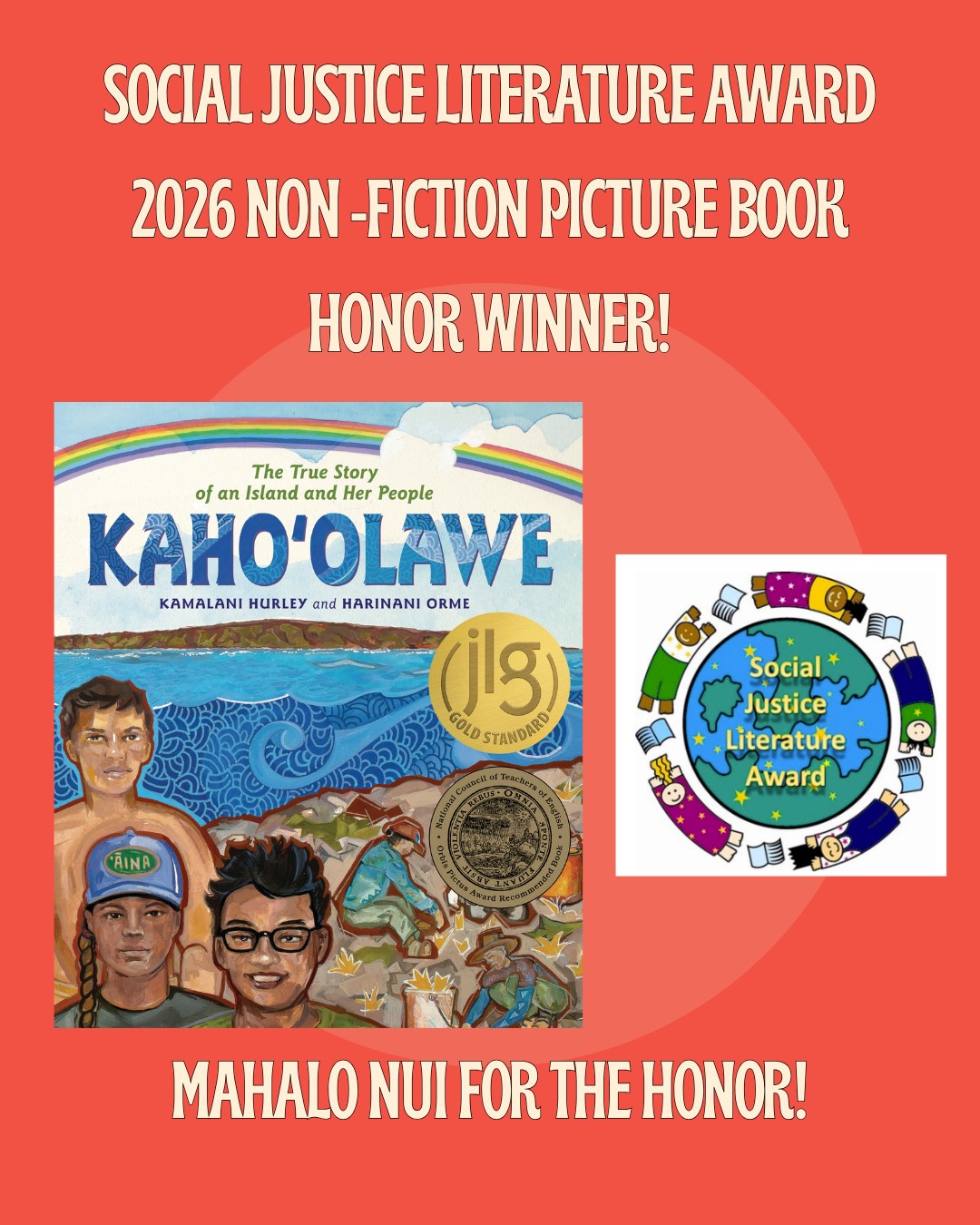
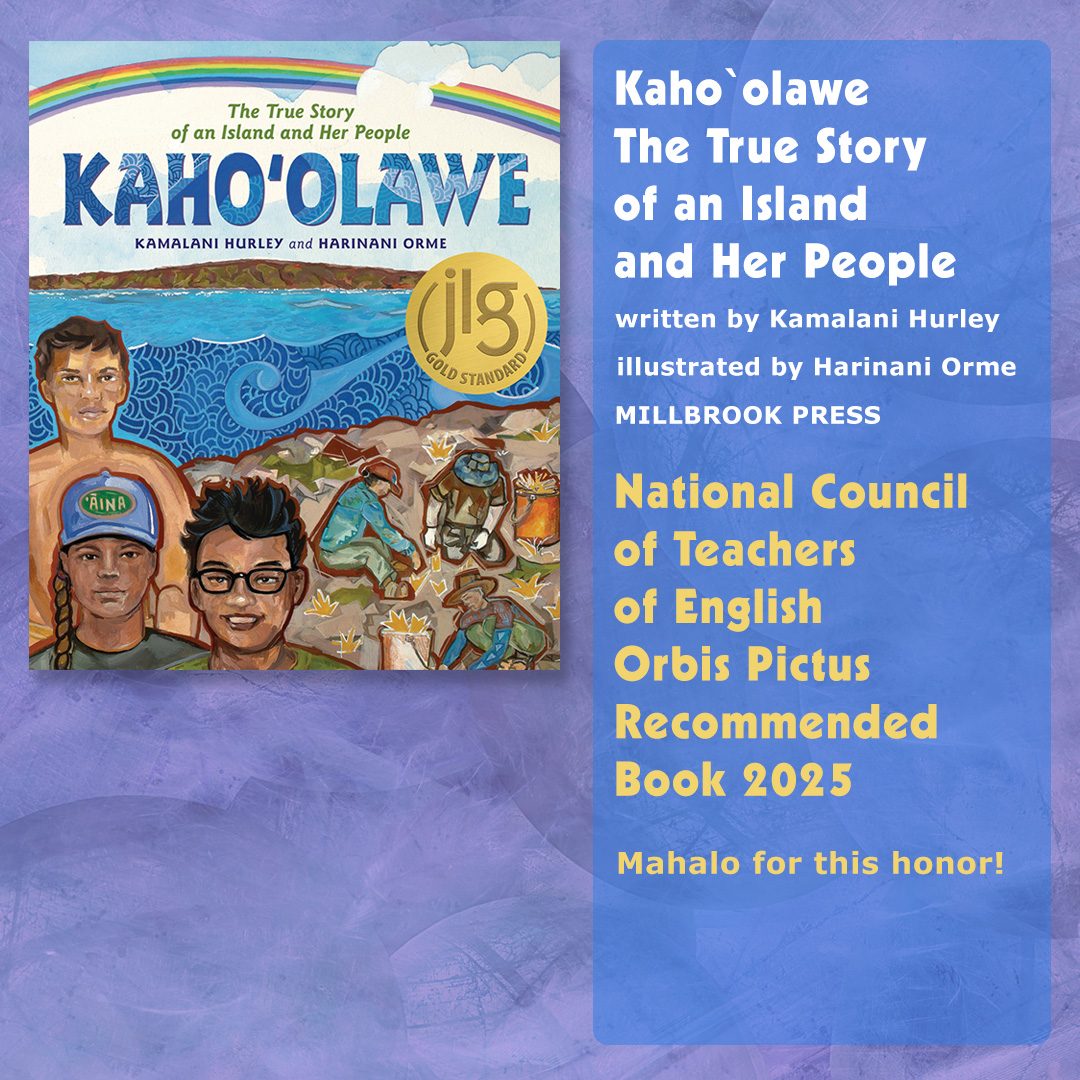
Kaho’olawe is an NCTE Orbis Pictus Recommended Book!

NCTE

I am so grate­ful that Kaho’o­lawe: The Sto­ry of an Island and Her Peo­ple is an NCTE Orbis Pic­tus Rec­om­mend­ed Book! Maha­lo nui to the NCTE for this honor!

NCTE

All pro­ceeds ben­e­fit the Pro­tect Kaho’o­lawe ‘Ohana. Maha­lo nui to Car­ol Hinz and the team at Millbrook/Lerner!

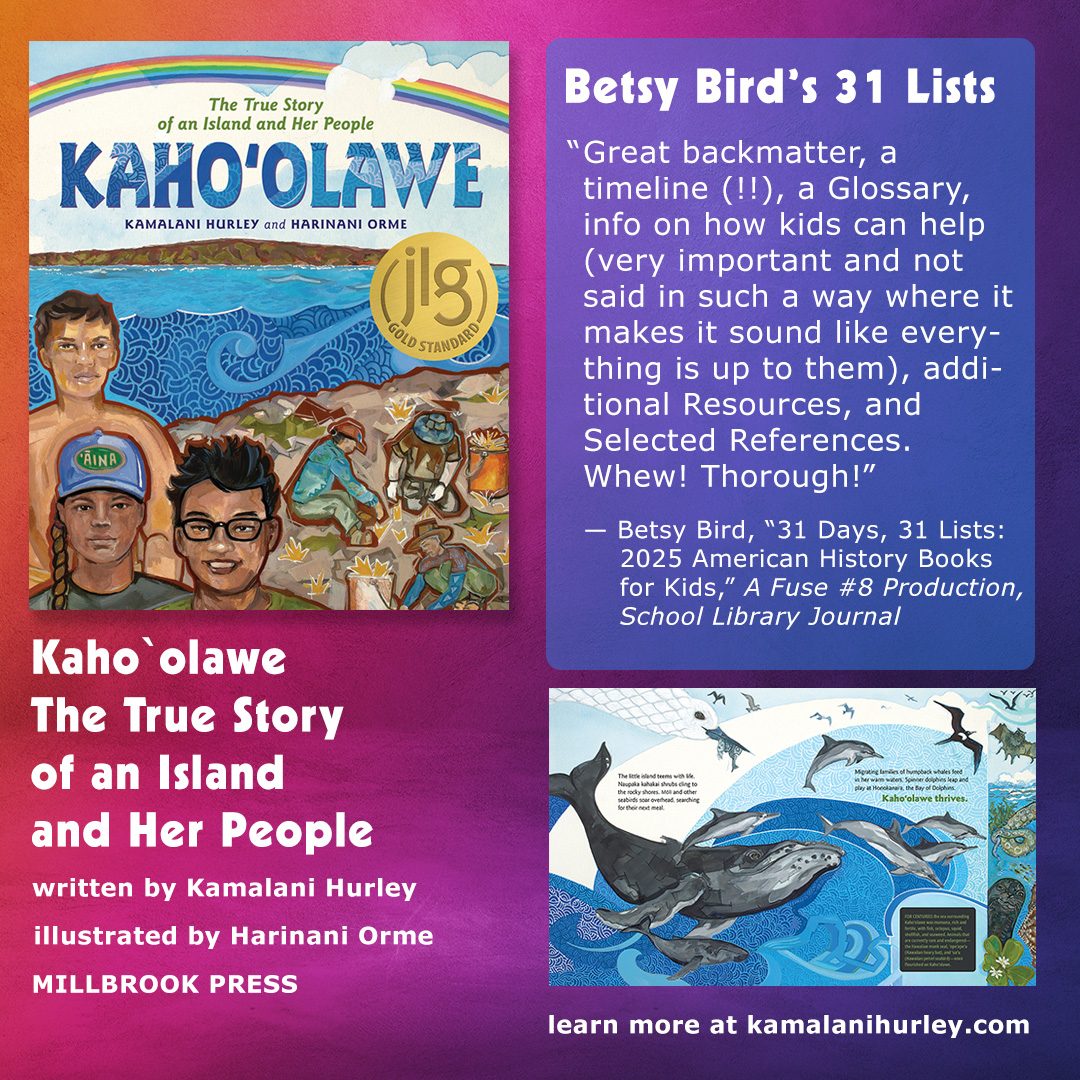
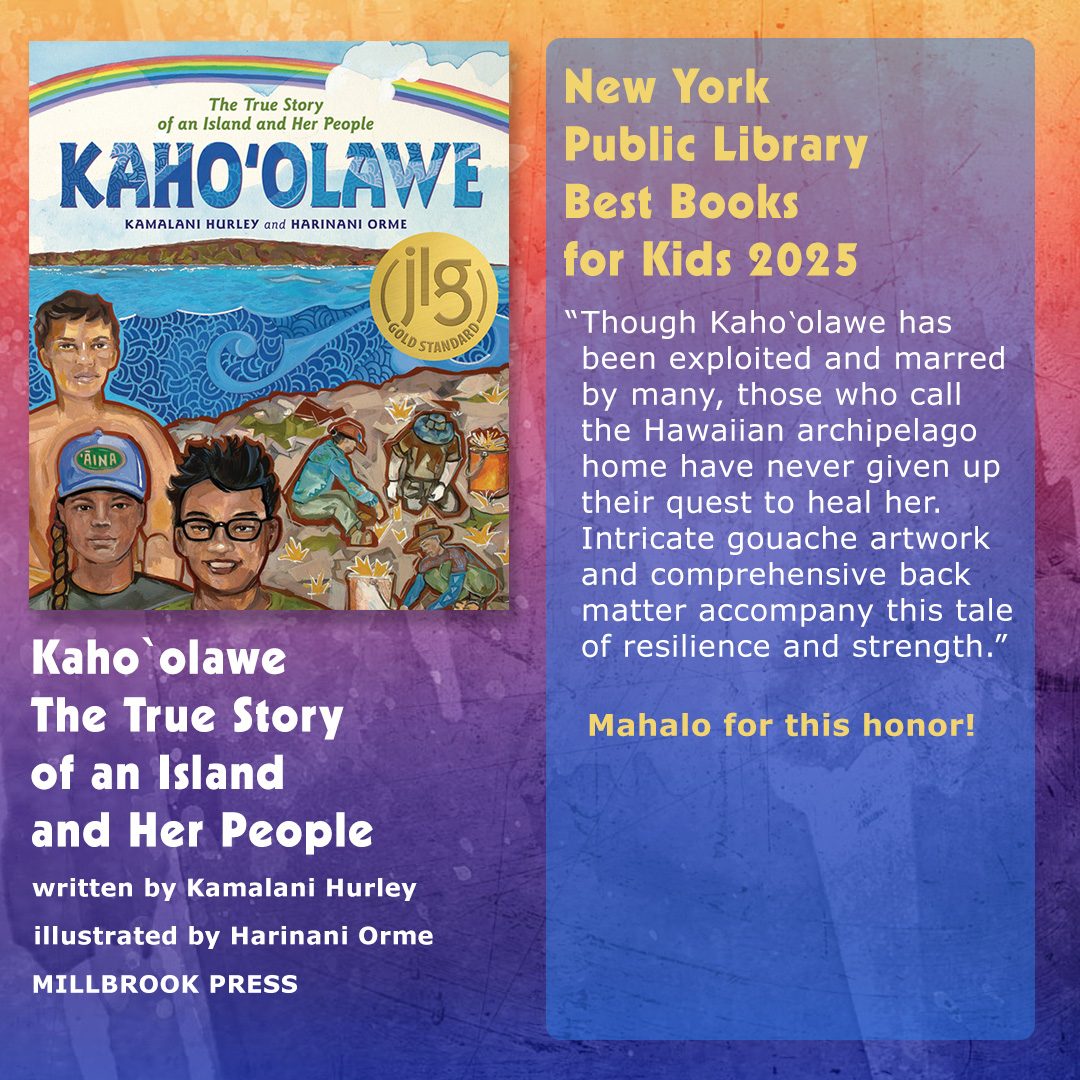
New York Public Library Best Books 2025 List for Children’s Nonfiction!

New York Public Library Best 2025

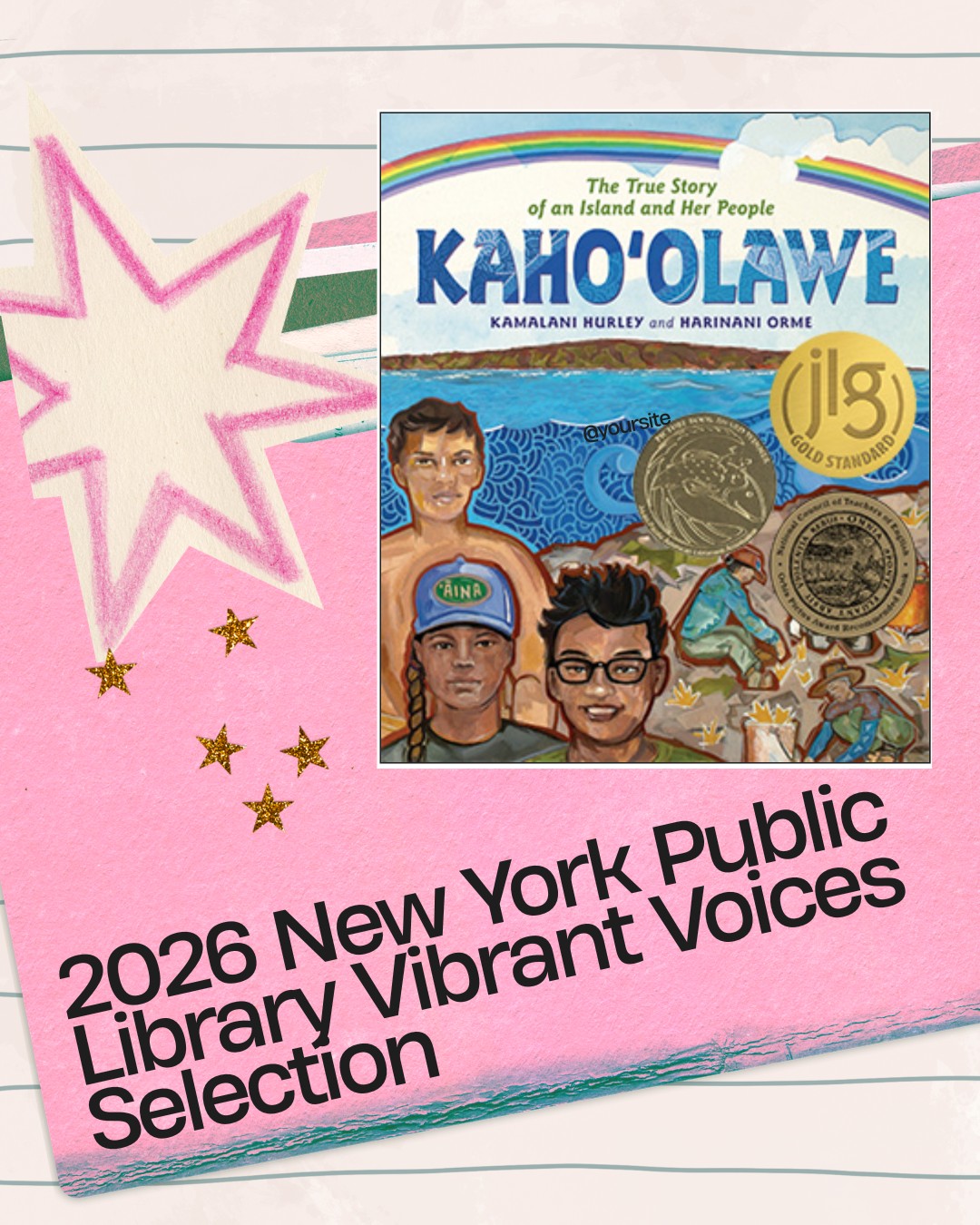
We’re so excit­ed that KAHO’OLAWE: THE TRUE STORY OF AN ISLAND AND HER PEOPLE is on the New York Pub­lic Library Best Books 2025 List for Chil­dren’s Nonfiction! 


New York Public Library Best 2025

All pro­ceeds ben­e­fit the Pro­tect Kaho’o­lawe ‘Ohana. Maha­lo nui to Car­ol Hinz and the team at Millbrook/Lerner!

SLJ Best Books 2025 List for Nonfiction Elementary

SLJ Best 2025 List

So very grate­ful that KAHO’OLAWE: THE TRUE STORY OF AN ISLAND AND HER PEOPLE is on the School Library Jour­nal’s Best Books 2025 List for Non­fic­tion Ele­men­tary.

SLJ Best 2025 List


All pro­ceeds ben­e­fit the Pro­tect Kaho’o­lawe ‘Ohana. Maha­lo nui to Car­ol Hinz and the team at Millbrook/Lerner!

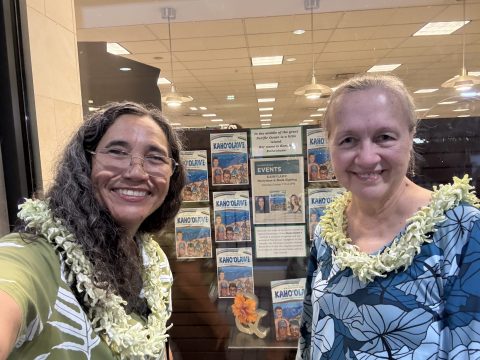
Look what’s in the window at Barnes & Noble, Ala Moana!

mahalo-b&n-placard

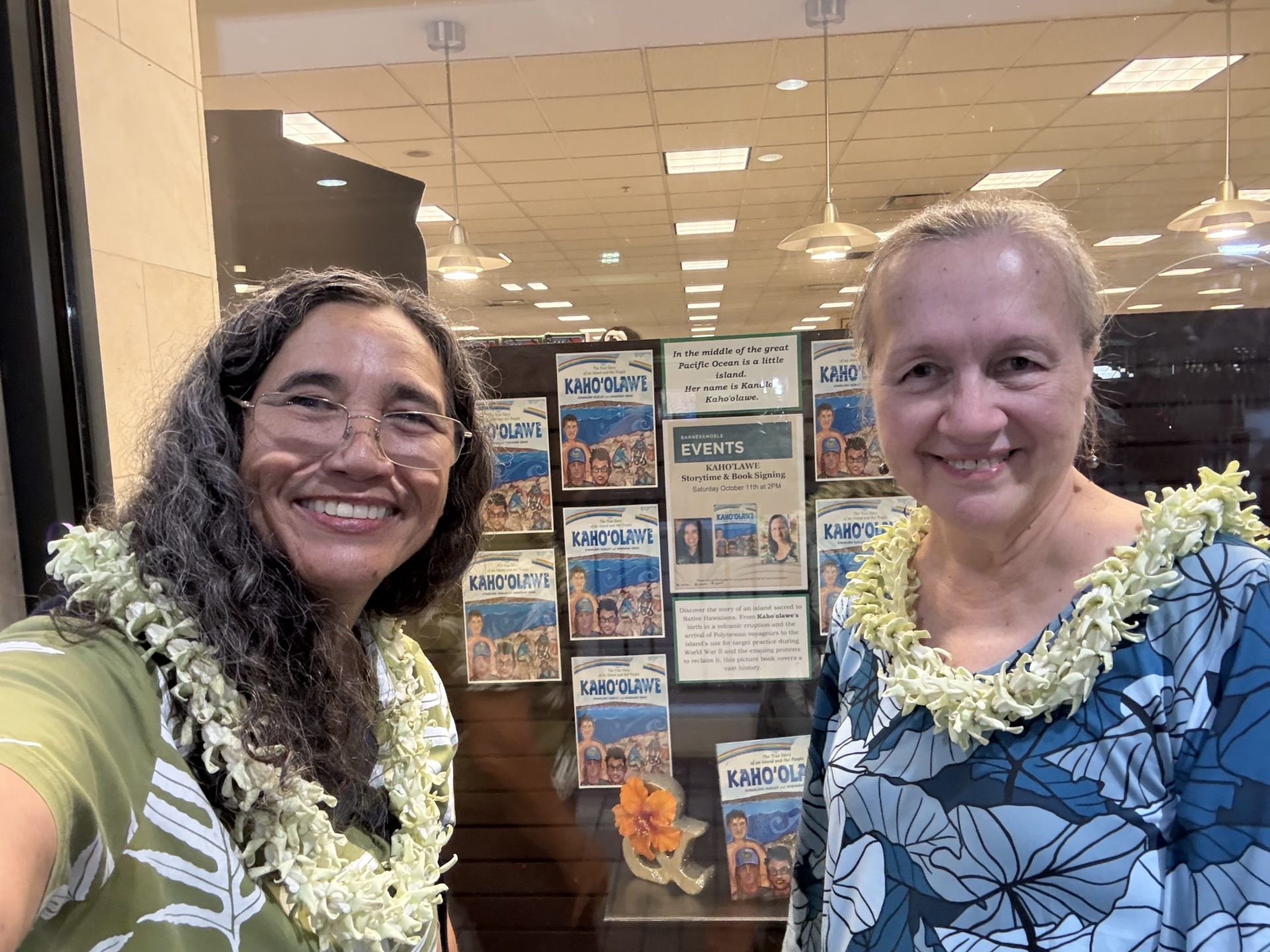
Talk about a dream come true. KAHO’OLAWE: THE TRUE STORY OF AN ISLAND AND HER PEOPLE is a fea­tured book at Barnes & Noble.

B&N is the only major book­seller on Oʻahu, so being in their win­dow is very cool. Amaz­ing illus­tra­tor Hari­nani Orme and I had fun at the book read­ing and sign­ing event. But we always have fun when we’re togeth­er. It’s so rare for both author and illus­tra­tor to appear togeth­er. Talk about special!

at-barnes-and-noble

One lit­tle boy about 7 or 8 years old, asked, 

Is this is real story?

Yes, I replied. the sto­ry of Kahoʻo­lawe is very real.

We hand­ed out book­marks from the pub­lish­er and col­or­ing pages Hari­nani made to the kids, then stayed to talk sto­ry with the grownups for a bit.

Maha­lo to every­one who stopped by and to the good folks at Barnes & Noble for host­ing us!

Pho­to cred­it: Hari­nani Orme

My Newest Picture Book — AT THE WATER’S EDGE — is Announced at Publisherʻs Weekly!

canva-seaweed

I thrilled to share that my pic­ture book biog­ra­phy, AT THE WATER’S EDGE, about the amaz­ing Native Hawai­ian sea­weed sci­en­tist Dr. Isabel­la Aiona Abbott, has been offi­cial­ly announced at Pub­lish­erʻs Week­ly!

ATWE-announcement


Dr. Abbot­t’s sto­ry is fas­ci­nat­ing. She was first Native Hawai­ian to earn a PhD and the first woman of col­or pro­fes­sor at Stan­ford Uni­ver­si­ty’s Hop­kins Marine Sta­tion. While at Hop­kins, she dis­cov­ered over 200 species of sea­weed and wrote sem­i­nal books and papers sci­en­tists use today. After retir­ing as pro­fes­sor emeri­ta from Stan­ford, Dr. Abbott returned home to Hawai’i where she bridged Native Hawai­ian sci­ence with West­ern approach­es. Not sur­pris­ing­ly, her stu­dents are today’s lead­ers in marine biol­o­gy and botany.

Due to be released in Spring 2027 by Lern­er Pub­lish­ing, the book will be illus­trat­ed by tal­ent­ed illus­tra­tor Remi Jose

Maha­lo nui …

  • to Dr. Abbot­t’s daugh­ter Annie Abbott Foer­ster, to her col­leagues Dr. Celia Smith and Dr. Puakea Nogelmeier, to her grad­u­ate teach­ing assis­tant Kim Pay­ton, and to the many stu­dents who shared their hal­i’a alo­ha — their fond mem­o­ries — with me
  • to my dream edi­tor and pub­lish­er, Car­ol Hinz
  • to my agent extra­or­di­naire James McGowan

Pho­to cred­it: Rok­ki Midro

Mahalo, 2023!

Christmas 2023

What a year it’s been! As 2023 ends, I look back with much alo­ha and grat­i­tude for the many peo­ple who have made such a dif­fer­ence in my writ­ing life.

Christmas 2023

Maha­lo nui loa …

  • to the amaz­ing writ­ers, artists, and film­mak­ers who shared their man­aʻo here on my blog this past year. Their accom­plish­ments and hard work con­tin­ue to inspire us!
  • to the many won­der­ful writ­ing friends, cri­tique part­ners, and men­tors, espe­cial­ly at Writ­ing Barn’s Courage to Cre­ate com­mu­ni­ty, my alo­ha always. You are a source of encour­age­ment and wis­dom I know I can count on.
  • to my com­put­er gurus, Vic­ki and Steve Palmquist of Wind­ing Oak, for your patience and tech genius.
  • to my awe­some agent, James Mac­Gowan of Book­Ends Lit­er­ary, for believ­ing in me. Team James all the way! 
  • To my hus­band, Tim, and my daugh­ters, Kalikole­hua, Kawe­hion­alani, and Kale­o­nani, for sup­port­ing me in every­thing I do. And to my lit­tle moʻop­una, Hal­iʻa and Laʻakea, for being an end­less source of child­hood won­der and stories.

I look for­ward to shar­ing more inter­views and book reviews by Native Hawai­ian, Poly­ne­sian and Hawaiʻi-based cre­atives. And look for good news in the com­ing year about my upcom­ing writ­ing projects! Alo­ha from our ʻohana to yours! See you in January!

Interview with Illustrator Jing Jing Tsong

Jing-Jing-Tsong

Jing-Jing-Tsong

Tal­ent­ed pic­ture book illus­tra­tor Jing Jing Tsong is a mas­ter at her craft. Influ­enced by the prin­ci­ples of mono­print and tra­di­tion­al stone lith­o­g­ra­phy, Jing Jing lay­ers col­ors and tex­tures to cre­ate images that are engag­ing and com­pelling. Their visu­al and emo­tion­al appeal com­mu­ni­cate a visu­al expe­ri­ence for young read­ers and their grown-ups. “In every­thing I prac­tice,” she says, “I explore the inter­con­nect­ed­ness of being.”

We are very pleased to talk sto­ry with illus­tra­tor Jing Jing Tsong.

Wel­come, Jing Jing! For those who haven’t met you, could you please tell us a lit­tle about yourself?

I am an ama­teur musi­cian (cel­lo and stand-up bass), a per­ma­nent grom (begin­ner surfer), and a writer and illus­tra­tor. To me, these inter­ests are inextricable—they influ­ence how I approach my life—finding flow, con­nec­tion and being ready to improvise.

Where did you grow up? Who do you con­sid­er to be your biggest supporter?

I grew up in a small col­lege town in cen­tral Penn­syl­va­nia. Because of my dad’s work (physics researcher) our fam­i­ly had the oppor­tu­ni­ty to live in West Berlin for a year and then Albu­querque, NM, for a summer.

Bucket-of-BlessingsThere have been many “biggest” sup­port­ers in dif­fer­ent phas­es of my life. But over­all, it is def­i­nite­ly my hus­band, Michael Austin (who is also a writer/illustrator). We met each oth­er in the Graph­ic Design pro­gram at Penn State. For many years we were rock climb­ing partners—we had to trust each oth­er in belay­ing and being ready to take up the slack in the rope if one of us fell. Cre­ative­ly, when I feel I am falling or feel that I am fail­ing, I trust Mike to catch me or pick me up and encour­age me.

Your rela­tion­ship sounds amaz­ing. Why did you become an illus­tra­tor? Did you always knew you could cre­ate art?

Hon­est­ly, one of the rea­sons I start­ed to focus on illus­tra­tion was because I was burned out on being the Art Direc­tor of the design stu­dio that Michael and I were part­ners in. Michael left the busi­ness first and com­mit­ted to illus­tra­tion full-time. Even­tu­al­ly, when we sold our busi­ness, we took a year long sab­bat­i­cal where I recon­nect­ed with fam­i­ly and my cre­ative self. I worked on devel­op­ing an illus­tra­tion port­fo­lio and at the end of the year, declared myself an Illus­tra­tor. Look­ing back, it seems rather auda­cious to make such a life piv­ot. Luck­i­ly, there was no one to tell us we couldn’t, so it worked out well. But full disclosure—I did jug­gle free­lance design work, teach­ing and play­ing my cel­lo at dozens of wed­dings, before I actu­al­ly prac­ticed illus­tra­tion full-time.

Aloha-ZooI nev­er thought I COULDN’T be an artist. My mom used to bring us to the library every week­end for sto­ry time and then to replen­ish our stack of books for the week. I loved pic­ture books and read them well past the time I was an “advanced” read­er. After din­ner, we often sat around the table as a fam­i­ly and drew and copied things from books. Because my par­ents loved bal­let, I drew a lot of dancers! My dad had an easel set up in the tiny space by the wash­er and dry­er. He exper­i­ment­ed with abstract paint­ing. My child­hood seems to be a col­lage of visu­al expe­ri­ences and cre­at­ing art seemed as nat­ur­al as eat­ing or breathing.

What do you enjoy most about cre­at­ing art? What are some of your great­est challenges?

The thing I love most is that any­thing is possible—I am the only to tell myself I can’t.

 The great­est chal­lenge is not let­ting all the amaz­ing work I see on social media dis­tract me from my own journey.

Your art is so expres­sive and col­or­ful. If you had to choose a favorite project, which would it be and why?

My favorite project is usu­al­ly the most cur­rent one.

Before-We-MetThe one on my draw­ing table now, is a mid­dle-grade graph­ic nov­el I’ve been work­ing on for the past 7 years. I actu­al­ly have sketch­es for ini­tial explo­rations that date back 12 years! It start­ed out as a pic­ture-book, but my edi­tor sug­gest­ed it would be stronger as a graph­ic nov­el. She and my agent took great care in guid­ing me through this chal­leng­ing and, at times, intim­i­dat­ing path. The sto­ry went from 32 to 90 to almost 200 pages.

When it comes out (hope­ful­ly Spring 2024), it will be my debut as a writer. Iron­i­cal­ly, even though I am known for my col­or­ful work, my true love is black and white work. I had a chance to indulge myself in black and white draw­ings which reflect an impor­tant con­cept in the sto­ry. I use col­or spar­ing­ly. What start­ed out as a sto­ry on an expe­ri­ence of being bul­lied, evolved into a lov­ing explo­ration of a young girl find­ing her place in her fam­i­ly and how that allows her embrace her dif­fer­ent iden­ti­ties into a true expres­sion of self.

We’re look­ing for­ward to your graph­ic nov­el! What are your hopes and dreams for the year and beyond in terms of your artis­tic career and what you would like to see pub­lished in the future?

I see illus­tra­tion and writ­ing as a life prac­tice. I hope I con­tin­ue to learn and cre­ate stronger work. I’ve illus­trat­ed over 20 pic­ture books. In the future, I’d like to illus­trate more of my own man­u­scripts. I hope that what­ev­er I put out in the world will help some­one under­stand their con­nec­tion to their world in a joy­ful way.

Do you have any expe­ri­ences as a woman of col­or illus­tra­tor that you might share with our read­ers? What would you like to see change in the indus­try regard­ing the accep­tance of BIPOC illus­tra­tors and writers?

Pele-Finds-A-HoneOnce I received a man­u­script where a descrip­tion in the vein of “Ori­en­tal grace” was used to describe some­thing. It def­i­nite­ly raised my hack­les, and I reviewed it with my sis­ters to see if they felt the same. They rein­forced my feel­ings, and I was able to address it with the edi­tor who then addressed it with the writer.

Over­all, I’m excit­ed to be in pub­lish­ing dur­ing a time of pos­i­tive change. There is still a lot of work to do, but I feel there are many peo­ple in the pic­ture-book com­mu­ni­ty active­ly seek­ing under-rep­re­sent­ed peo­ple to share their stories.

Because my par­ents grew up in a time where their moth­er tongue, Tai­wanese, was banned by 2 dif­fer­ent occu­pa­tions, I am always thrilled to see work that sup­ports and cel­e­brates indige­nous lan­guages. With­out these lan­guages, we’re in dan­ger of los­ing sto­ries that are essen­tial to our under­stand­ing of tra­di­tions and his­to­ries. I’m hon­ored to be part of one such project, the Hawai­ian Leg­ends for Lit­tle Ones by Gabrielle Ahuli’i, pub­lished by Beach­house Pub­lish­ing, comes out in an ‘Ōle­lo Hawai’i  edi­tion this spring.

What beliefs is your work challenging?

Instead of “chal­leng­ing” I think of my work as “encour­ag­ing.”  I hope my work encour­ages peo­ple to think of them­selves as parts of com­mu­ni­ties that extend beyond geo­graph­ic and polit­i­cal bor­ders. I hope that what I put into the world encour­ages peo­ple to take the time to lis­ten and watch and seek expe­ri­ences that broad­en perspectives.

Where do you get your inspirations?

Shanghai-SukkahMy local library is one of my favorite places to pro­cras­ti­nate. I love the ran­dom­ness of scan­ning shelves and find­ing unex­pect­ed trea­sures. I also like lis­ten­ing to dif­fer­ent kinds of music and have my sis­ters and son and daugh­ter for intro­duc­ing me to aur­al treats I may not have found on my own.

In addi­tion to books, what oth­er kinds of art do you do?

I like to exper­i­ment with dif­fer­ent mate­ri­als. Last year, I carved my own pens out of bam­boo and cre­at­ed ink from black­ber­ries. This year, I’ve been exper­i­ment­ing with intaglio print­ing using lids from plas­tic con­tain­ers and scratch­ing images with a sewing nee­dle. I real­ly want to get into pottery!

Can you share a bit about what you’re work­ing on next?

I’m work­ing on illus­tra­tions for a count­ing book about deli­cious things. All I can say is that every time I start sketch­ing, I get hungry!

What advice would you give an aspir­ing illustrator?

Join your local chap­ter of Soci­ety of Children’s Book Writ­ers and Illus­tra­tors, join a cri­tique group. The chap­ter I belong to (West­ern Wash­ing­ton) is so sup­port­ive, and I am con­stant­ly inspired by the gen­eros­i­ty and phe­nom­e­nal sup­port of this community.

What’s your online pres­ence? What do your fol­low­ers say?

You can find my illus­tra­tion here: www.jingjingtsong.com . I’m incon­sis­tent on IG (occa­sion­al­ly shar­ing my cre­ative process, or a good wave): @jingjingtsong. Work­ing from a home stu­dio can feel incred­i­bly iso­lat­ing, so I’m on Twit­ter every now and then, join­ing in on the week­ly con­ver­sa­tions in dif­fer­ent pic­ture book groups.

The books that have elicit­ed the most response are the Hawai­ian Leg­ends for Lit­tle Ones series. Peo­ple are grate­ful to have these authen­tic sto­ries about Hawaii.

Maha­lo, Jing Jing, for talk­ing sto­ry with us! We loved learn­ing about you and your cre­ative process. Best wish­es always!

To learn more about Jing Jing, includ­ing her gor­geous print gallery, vis­it her web­site, JingJingTsong.com. While you’re there, vis­it her online book­store, Jing and Mike Co. Pho­to cour­tesy of author.


Interview with Native Hawaiian Author Gabrielle Ahuliʻi

Gabby-Ahulii

Gabby-AhuliiLike most Native Hawai­ians, author Gabrielle Ahuliʻi grew up hear­ing the beloved leg­ends passed down from gen­er­a­tion to generation. 

Best known for her pop­u­lar series, Hawai­ian Leg­ends for Lit­tle Ones, and now for her first graph­ic nov­el, Hi’i­a­ka and Panae­wa, Gabrielle beau­ti­ful­ly retells these clas­sic sto­ries for today’s young read­ers and their grown-ups. 

Why is it so impor­tant for chil­dren to know the myths and leg­ends of their ances­tors? Gabrielle explains in an inter­view at Bright­ly:

Expo­sure to sto­ries and leg­ends of cul­tur­al sig­nif­i­cance in ear­ly child­hood can give chil­dren a deep sense of respect for the place they live and an oppor­tu­ni­ty to engage with the cul­ture around them. Access to and engage­ment with Native Hawai­ian sto­ries empow­ers chil­dren of Native Hawai­ian descent by arm­ing them with knowl­edge to help nav­i­gate their world as Indige­nous peo­ple…If a child under­stands the world around them from a cul­tur­al per­spec­tive, they are not only able to engage more deeply with their cul­ture, but to cre­ate more mean­ing­ful con­nec­tion across cul­tures as well.

We total­ly agree.

Alo­ha e Gabrielle. For those who haven’t met you, could you please tell us a lit­tle about yourself?

My name is Gabrielle Ahuliʻi Fer­reira Holt, and I was born and raised on Oʻahu. I live in the ahupuaʻa of Maki­ki, which is also the ahupuaʻa of the school I work at. I am the school librar­i­an at Hana­hauʻoli School, a 105 year old pro­gres­sive ele­men­tary school.

Where did you grow up? What high school did you grad from?

I grew up in Hon­olu­lu, and I was for­tu­nate to attend both Hana­hauʻoli School and Puna­hou School. Hana­hauʻoli gave me the gift of crit­i­cal think­ing, a love of learn­ing, and cre­ative prob­lem solv­ing, while Puna­hou school widened my hori­zons and gave me the gift of learn­ing ʻōle­lo Hawaiʻi for four years.

Go Buff n’ Blue! Who is your biggest supporter?

I live an incred­i­bly priv­i­leged life in that I have no lack of sup­port­ers. I have count­less peo­ple in my life who step up, both phys­i­cal­ly and men­tal­ly, and are con­stant­ly and con­sis­tent­ly on my team. I want to rec­og­nize my fam­i­ly, my part­ner, my men­tor, my edi­tor at Beach­house, my friends and col­leagues at Hana­hauʻoli, and the lāhui for always giv­ing me every­thing I need.

Why did you become a writer? What inspired you to write for children?

I didn’t ever see myself as a writer; as a kid, I was an incred­i­bly lazy writer. I didn’t Maui-slows-the-suncon­nect to writ­ing in the way that I deeply con­nect­ed to read­ing. I became friends with some­one who pub­lish­es books for chil­dren in Hawaiʻi while I was in the Library Sci­ences pro­gram at UH. At the time, I was focused on Hawai­ian / Pacif­ic Librar­i­an­ship, and when she heard about my pas­sion, she approached me with a writ­ing project. She and I worked so well togeth­er that we pub­lished six adap­ta­tions of moʻole­lo togeth­er. She allowed me to see myself as a writer.

What do you enjoy most about writ­ing for kids? What are some of your great­est chal­lenges in writ­ing for children?

Since I am a school librar­i­an, I get to work­shop ideas and rough drafts with my stu­dents. Their feed­back is invalu­able. I hear their voic­es in my head when I am craft­ing a sto­ry. I love that I get to essen­tial­ly col­lab­o­rate with my stu­dents. Some of them are such pow­er­ful, descrip­tive writ­ers that tru­ly inspire me.

After their Hawaiʻi Island trip, one child wrote about the “braid­ed lava.” Anoth­er child wrote the phrase “Pele runs her hand along cre­ation,” and I was just blown away. Just being around their sin­cere, cre­ative ener­gy makes me a bet­ter per­son and a bet­ter writer.

My biggest chal­lenge is keep­ing sto­ries sim­ple. Too often, peo­ple feel that chil­dren need bells and whis­tles in a sto­ry to keep them engaged. Noth­ing is fur­ther from the truth! The most endur­ing, mean­ing­ful nar­ra­tives for chil­dren are often the most sim­ple but pro­found. If you have some­thing to say, say it truth­ful­ly, mean­ing­ful­ly, and in the lan­guage of the world you have built.

Hiʻiaka-and-PanaewaCon­grat­u­la­tions on your new graph­ic nov­el, Hiʻi­a­ka and Panae­wa! Can you share a bit about the book? With­out giv­ing too much away, what is it about?

This book is a re-telling of Hiʻi­a­ka and her first major encounter with one of the moʻo of Hawaiʻi – Panaʻe­wa. My re-telling sim­pli­fies her jour­ney a lot. Itʻs for younger read­ers and for those who may not have a lot of con­text for who Hiʻi­a­ka is, so she sets of on this adven­ture with a slight­ly dif­fer­ent goal than what is dis­cussed in the orig­i­nal ʻoli.

What inspired you to choose that top­ic for your first graph­ic novel?

When I was approached to write this, I sug­gest­ed three Hawai­ian moʻole­lo (hop­ing that this one was the one the pub­lish­ers would con­nect to). I want­ed to write a moʻole­lo with a female pro­tag­o­nist, and I want­ed to bring more of Hiʻi­akaʻs sto­ry to younger readers.

What was your favorite part of writ­ing your graph­ic nov­el? What was most challenging?

I love read­ing and doing research, so I real­ly like that part of the process. I want to make sure that my adap­ta­tions are faith­ful, while also being able to give them my own voice and per­spec­tive. I was­nʻt used to cre­at­ing books in a graph­ic nov­el for­mat, so the biggest chal­lenge was think­ing about what I want­ed each pan­el to look like – not that I nec­es­sar­i­ly told the illus­tra­tor exact­ly what to draw, but I need­ed to think about what my words need­ed to say and where the images could help sup­port the rest of the story.

What was the jour­ney to get­ting that book pub­lished like?

Cap­stone approached me to write an entry in their ongo­ing Dis­cov­er Graph­ics series in Decem­ber of 2021 and I spent 2022 work­ing on the man­u­script. It was pub­lished in Decem­ber of 2022. They found me because of my first series of Hawai­ian Leg­end adap­ta­tions, which has indeed opened many doors for me.

What char­ac­ter­is­tics do you love best about the protagonist(s)?

I love Hiʻi­a­ka as a char­ac­ter because although she is pow­er­ful, she is also fal­li­ble and real­is­tic. I love how coura­geous she is, but also how cocky she can be. I did­nʻt get to include this in my re-telling, but there is a point in her sto­ry when she is par­tic­i­pat­ing in a surf con­test, and she says, “Aia a ʻane e uhi ke kai i ke kua o ke kuahi­wi o kea, a laila, kū koʻu nalu – When the sea ris­es and cov­ers Mau­na Kea, then that is my wave.” So brave, and so bold! I just love her so much and want more of her epic avail­able for chil­dren to enjoy.

Pele-Finds-A-HoneYou are also the author of a suc­cess­ful series of board books. What inspired you to write about folk tales for your first books?

I think there is a true need for moʻole­lo to be acces­si­ble for young read­ers – we have a few very, very good adap­ta­tions, but I want chil­dren to have as many antholo­gies and books about Hawai­ian gods and god­dess­es as there are about the Greek ones. I want more Native Hawai­ian voic­es rep­re­sent­ed as the tellers of these moʻole­lo, and I want a wide vari­ety of moʻole­lo told.

What are your hopes and dreams for the year and beyond in terms of your writ­ing career and what you would like to see pub­lished in the future?

I would love to con­tin­ue to per­pet­u­ate the cul­ture of lit­er­a­cy that Kana­ka have built. It is a priv­i­lege to get to be some­one who can write these moʻole­lo down for pos­ter­i­ty, so I hope and dream that I con­tin­ue to do it and do it in a way where I make my com­mu­ni­ty and lāhui proud to read them.

My next goal or wish is to cre­ate an anthol­o­gy of Hawai­ian moʻole­lo for mid­dle grades — 3rd to 6th. There is a real need there. The antholo­gies that do exist are good resources for adults. I want old­er ele­men­tary age chil­dren to be excit­ed about the Hawai­ian pan­theon of Gods and God­dess­es in the same way many are obsessed with Greek or Norse mythology.

There are not a lot of sto­ries for kids by Native Hawai­ian, Pacif­ic Islander or BIPOC writ­ers. Why do you think that is? What do you think we can do the change that?

I do feel we are see­ing a par­a­digm shift in pub­lish­ing cul­ture. Many are being more crit­i­cal of the books that take up space in the canon of chil­drenʻs lit­er­a­ture and giv­ing it a sec­ond glance. I feel that it is more diverse than when I was devel­op­ing my read­ing skills, certainly.

Hiʻiaka-Battles-The-WindHow­ev­er, it real­ly does boil down to: You canʻt be what you canʻt see. The only books that I read as a child with a Hawai­ian char­ac­ter in it were either so wild­ly mis­rep­re­sent­ed as to verge on offen­sive, or writ­ten by a non-Hawai­ian per­son. I think that in order to fix this, we have to empow­er our­selves to take charge, shed our imposter syn­dromes and say, “I can do this, I can tell this sto­ry.” In that way, we can invest in a future where chil­dren have seen them­selves rep­re­sent­ed in their lit­er­a­ture and are encour­aged to not only seek out more, but add on to what has been created.

Which of your books did you have the most fun writ­ing? Which were the most challenging?

All were such inter­est­ing chal­lenges that it’s hard to rank them. I loved doing the research piece for all the board books — even though the adap­ta­tions are quite short, I want­ed to do the tra­di­tion of moʻole­lo ser­vice and tried to find and read as many ver­sions as I could. I loved writ­ing all of them!

What beliefs are your books challenging?

Maui-Hooks_the_islandsI want to chal­lenge the belief that Hawaiʻi is just this sta­t­ic place that vis­i­tors sim­ply “expe­ri­ence”. I want peo­ple to under­stand that every piece of Hawaiʻi is a moʻole­lo in itself; that every per­son (vis­i­tor, set­tler or ʻōi­wi) here has a respon­si­bil­i­ty to take care of Hawaiʻi and acknowl­edge those moʻolelo.

Can you share a bit about your next book?

I’ve just fin­ished an ʻŌle­lo Hawaiʻi trans­la­tions of my first six board books with Beach­house. David Del Roc­co helped me immense­ly with the trans­la­tion process (I need­ed some lan­guage sup­port — some of my gram­mar was a lit­tle rusty!) I am beyond excit­ed for those re-pub­li­ca­tions to come out. I would love to read them aloud ma ka ʻōle­lo Hawaiʻi some­day soon to a group of children!

What advice would you give an aspir­ing writer?

NaupakaWrite what you know and in your own voice, writ­ing is not a solo process, the project is nev­er tru­ly fin­ished, treat your char­ac­ters with empa­thy and as if they are sit­ting in the room with you.

What kinds of books do you enjoy read­ing? Any favorites?

I love read­ing and my super­pow­er is that I am an extreme­ly fast read­er, so I am able to read a lot in a short amount of time. I love authors like Ali Smith who play with the con­ven­tions of what a nov­el is and have such a spe­cif­ic voice. I love all gen­res – although  I donʻt nec­es­sar­i­ly grav­i­tate towards romance or thrillers (except a book called Razor­blade Tears that I thought was stupendous).

Hereʻs a list of authors and/or books that I love:

  • Ali Smith (Sea­son­al Quar­tet, The Acci­den­tal, How to be Both)
  • Rachel Cusk (Out­line trilogy)
  • Her­nan Diaz (Trust)
  • Elif Batu­man (The Idiot)
  • Otes­sa Mosh­fegh (My Year of Rest & Relax­ation, Lapvona)
  • Berna­dine Evaris­to (Girl, Woman, Oth­er)
  • Emma Cline (The Girls, Dad­dy, The Guest)
  • Jes­myn Ward (Sal­vage the Bones, Sing, Unburied, Sing)
  • Made­line Miller (Song of Achilles, Circe)
  • Robert Jones Jr. (The Prophets)
  • Miri­am Toews (A Com­pli­cat­ed Kind­ness, Women Talk­ing)
  • Tom­my Orange (There, There)
  • Yoko Ogawa (The Mem­o­ry Police)

More authors: Mohsin Hamed, Helen Oye­mi, Andrea Levy, Bryan Wash­ing­ton, Michael Ondaat­je, Lisa tad­deo, Juhea Kim, Chanelle Benz, Lau­ren Groff, Zadie Smith, Luis Alber­to Urrea, Bran­don Hobson)

I have so many!

Can you share a bit of your cur­rent work?

I just went to Hawaiʻi Island with some stu­dents and was isnpired by Waiānu­enue / Rain­bow Falls and the moʻole­lo of Kuna the moʻo. I start­ed draft­ing a sto­ry to tell my stu­dents the sec­ond night we were there, so this is a work in progress:

The moʻo took silent steps toward her. The moʻo was cov­ered in a sick­ly translu­cent set of scales, as if the rays of the sun could not reach him. His eyes were a deep mot­tled grey. Hina thought of the lava fields south of Hilo, the smooth lava that in some light looked like bod­ies strewn across a plain. His eyes gave her that same unset­tled but awe-struck feeling.

The moʻoʻs tongue slicked out to wet one of those grey eyes. “Hina of Hilo — you meet my eyes as if we are equals. But you do have man­ners, so I will not strike you down here. I have long tired of you and your kind com­ing to this island, assum­ing that you can shape the earth around you with no consequence.”

Hina opened her mouth to argue but remained silent. Some­times silence was better.

The moʻo con­tin­ued. “Your son, the famous Māui, has a hook. He will bring me this hook that he has used to reshape the heav­ens itself, or you will die here, in this pool. This pool is cold and the cur­rent is strong, and the sea of this coast is vio­lent and unforgiving.”

Hina thought. Why should Māui bring this mon­ster his hook?

The moʻo smiled sly­ly. “Why should your son bring me this hook, you may be think­ing. Sim­ply: he does not deserve this extra­or­di­nary tool. This hook belongs to the old Gods, those that were born from the deep roil­ing depths and grew along­side the ferns and fish and birds.”

“The gods them­selves gave that hook to my son, and he has only used it to serve oth­ers. As I have taught him.” Hina stood up straighter.

“Who does he serve when he cracks the sea floor to pull islands to the sur­face? Who does he serve when he bends even the sun to his self­ish will?” The moʻo spoke calm­ly, but Hina could sense the fury puls­ing through the mon­sterʻs veins. His tail tapped slow­ly on the wet cave floor.

“He serves his fam­i­ly and his peo­ple. As is cor­rect,” Hina respond­ed sim­ply. “The respon­si­bil­i­ty of gods and their fam­i­ly is to help and pro­tect the humans who live with us.”

The kids must’ve loved this! Do you have a web­site? Are you on social media? Do your read­ers con­tact you? What do they say?

My web­site is gabrielleahulii.com. I donʻt real­ly have social media in a pro­fes­sion­al “writer” capac­i­ty. Most peo­ple con­tact me through my web­site. I get mes­sages about how they dis­cov­ered my books or I get images of chil­dren read­ing them. I love that a lot. I also get to meet peo­ple when I do read­ings, which is always so fantastic!

It was won­der­ful meet­ing you, Gabrielle. Maha­lo nui for shar­ing your man­aʻo, and best wish­es always for your con­tin­ued success!

To read more about Gabrielle, includ­ing her work on lit­er­a­cy in Hawaiʻi, vis­it her web­site, GabriellaAhulii.com. Pho­to cour­tesy of author.