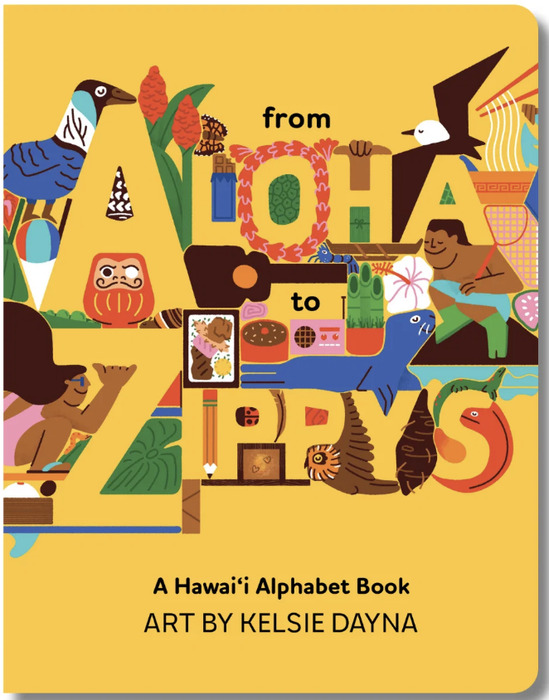
Your book, From Aloha to Zippy’s, is described by your publisher, Bess Press, as a reimaging of the classic 2007 book. How did you get involved in the project? What was the journey like?
I was lucky enough to work with Bess Press a few years ago on another project, so being asked to reimagine their beloved From Aloha to Zippy’s was such an exciting opportunity.
The process was one of the smoothest and most enjoyable projects I’ve ever worked on, thanks to the incredible team at Bess Press. From our first meeting to the final drafts, the project took about a year. We took our time brainstorming and exploring ideas, and I’m thrilled with how fun and fresh everything turned out.
When you began work on the book, what do you do first? Character design? Page layout? Or just explore setting?
Since this book is a reimagining of the 2007 edition, our first step was to rethink how each page would function visually. We knew we didn’t want to simply replicate the original photos with illustrations, so we approached it as a fresh start.
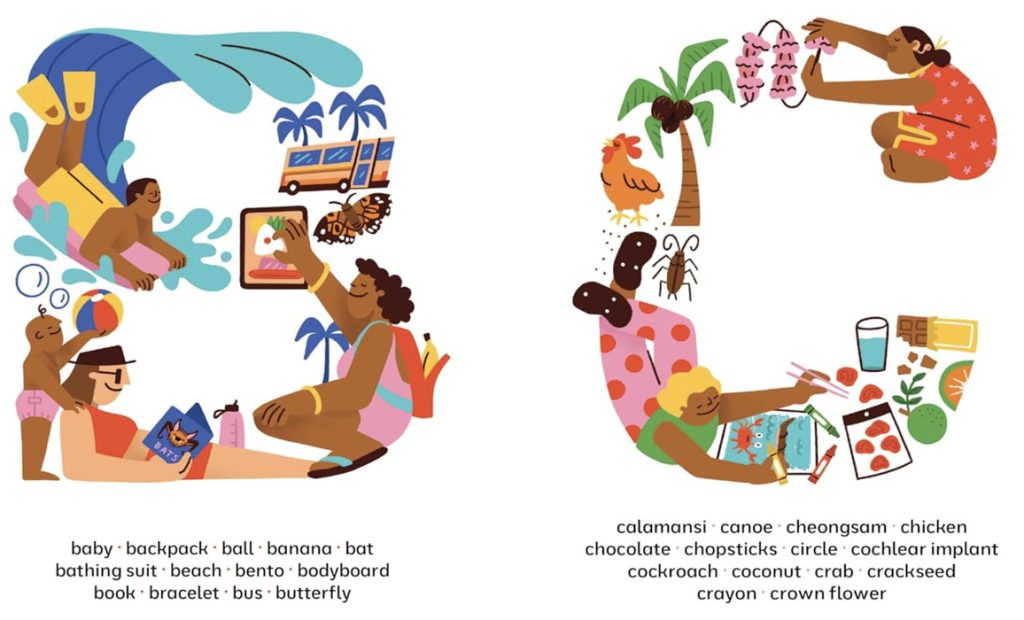
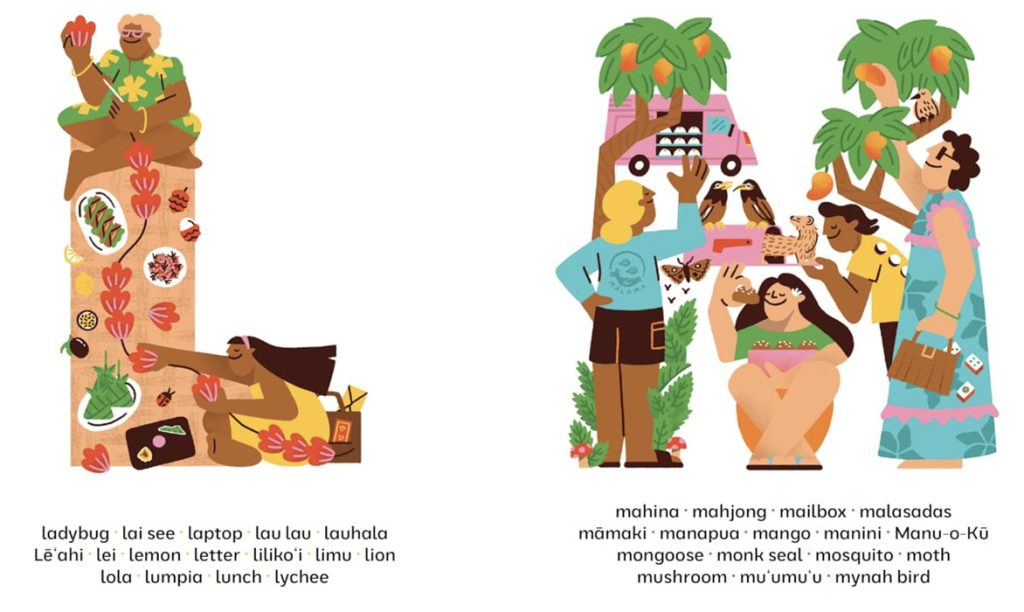
Once we decided to structure each letter as its own scene, that framework became a helpful guide for the entire process. From there, I looked at the list of words for each letter and tried to piece together a local Hawaii setting that could naturally incorporate them.
Each page was a creative workout to design compositions that worked within the unique constraints of each letterform. Balancing readability, visual interest, and storytelling within those shapes really pushed me to think more intentionally about layout and flow.
The board book includes a number of Hawaiian language words for each alphabet. How did you decide which words to include? And how did you choose the specific objects or characters for each letter?
Choosing the list of words for each letter was one of the first tasks we tackled, before any illustration or artwork began. Some letters have a lot of word possibilities, while other letters were much more limited, so it was a challenge to create a balanced, cohesive experience from page to page.
What ultimately helped pull everything together was the idea of treating each letter as its own scene or vignette. That approach allowed me to thoughtfully incorporate the chosen words by building a visual story around them—placing objects and characters in a way that felt natural and engaging.
That shift was a real turning point for me, creatively speaking, and I believe it’s one of the most unique aspects about the book.
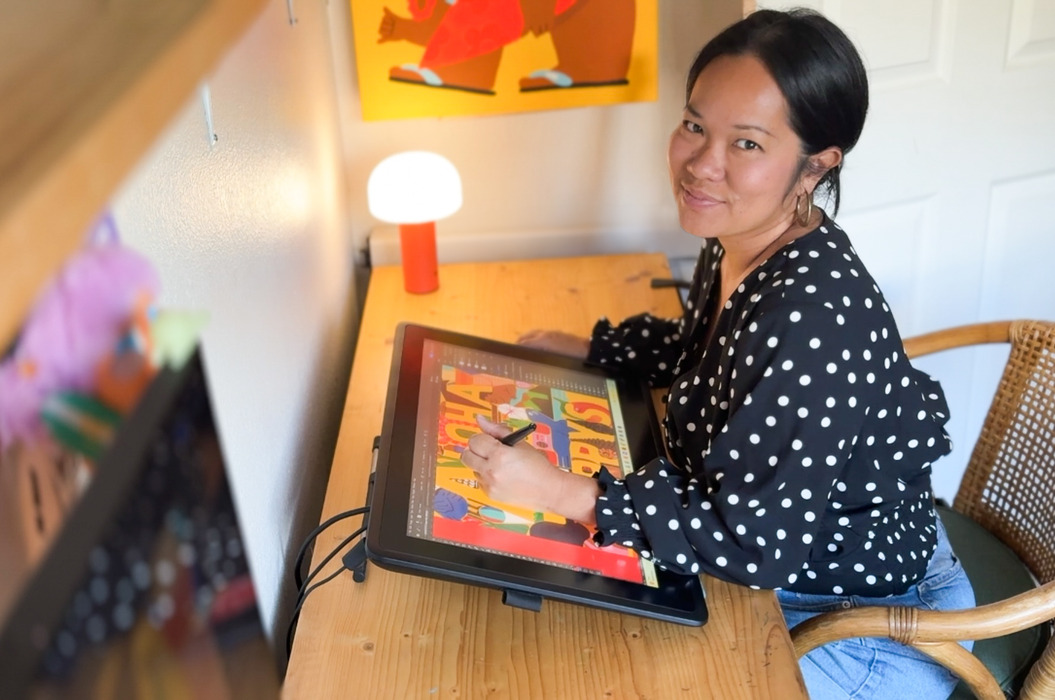
 Freelance artist and illustrator Kelsie Dayna has a new title to add to her list of accomplishments: author-illustrator! Her alphabet board book, From Aloha to Zippy’s (