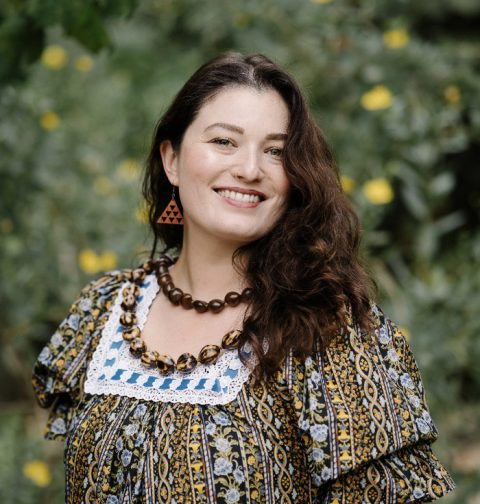
Interview with Native Hawaiian Author/Poet Kauakanilehua Māhoe Adams

Kaua-Mahoe-Adams-portrait

Kaua-Mahoe-Adams-portrait

Growing up as part of the Native Hawaiian diaspora means constantly navigating the space between two worlds. It means holding onto your roots while living miles away from the pae ʻāina. Kauakanilehua Māhoe Adams is an up-and-coming talent who deftly captures that delicate, emotional balance. Named “a new voice to watch” by Kirkus Reviews, her poetry weaves images of modern life with inherited indigenous wisdom. 

In this post, we sit down to talk story about her creative process and how being a native storyteller is key to understanding her as a poet.
 

Welcome, Kaua! For those who havenʻt met you yet, please tell us a little about yourself.

My name is Kauakanilehua Māhoe Adams, and I am an author and poet of Native Hawaiian, Japanese, Chinese, and European descent originally from the Pacific Northwest. Today, I live in North County San Diego with my lovely husband, Charlie and our two pups, Guava and Lei.

I earned my BA in English and Creative Writing from the University of Washington (Go Dawgs!) and my MFA in Writing for Children and Young Adults from Vermont College of Fine Arts.

I’ve published poems and short stories in several different anthologies and collections, including my poem, HAWAIIAN BABY FOOD CIRCA 1997 which was a finalist for the 2024 Steve Kowit Poetry Prize and my short story in verse, BRAVING THE STORM, which appears in the Printz Award anthology Legendary Frybread Drive-In (Heartdrum). My debut novel, AN EXPANSE OF BLUE (Heartdrum), hit shelves on May 19.

When I am not writing, I am a haumana hula (hula student) as well as the Director of Programs for a local non-profit that provides access to Native Hawaiian cultural education to the San Diego County community. I also enjoy sitting in the sun, daydreaming, taking the occasional hot yoga class, eating cheese and crackers for dinner, and spoiling my dogs rotten.

Love it! Do you consider yourself an author or a poet? How did you know that you had such a talent for creative expression? Did you always want to write?

I like to think of myself as a storyteller and poet first and an author second, because it is my career as an author which allows me to pursue my passion for telling stories and writing poetry.

I think that many authors, especially debut authors such as myself, struggle with Imposter Syndrome. So it is hard for me to point to a time when I discovered my talent for creative expression because I am still trying to convince myself that I do have a talent for it! I will say though, the time that I have felt most proud of my ability to tell stories was when I started getting messages in response to my short story in verse, BRAVING THE STORM. A lot of Native readers reached out to me to let me know they felt really seen by that story, which is the highest compliment I can receive.

And YES, I have always known I wanted to write. I’ve been telling stories for as long as I can remember. Publishing a book of my own has been a lifelong dream. I am so humbled and honored that I get to see that dream come to fruition. 
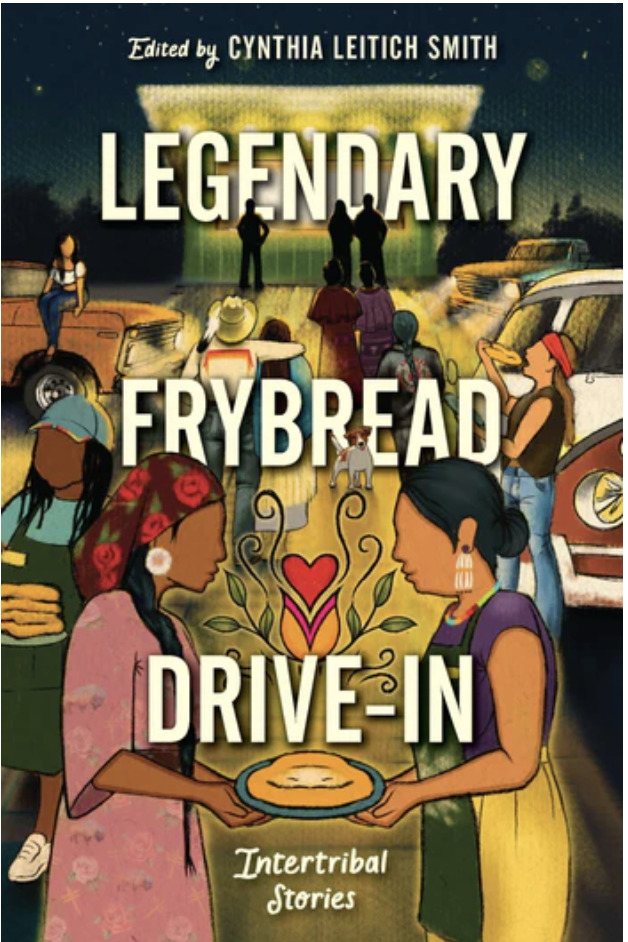
Legendary-Frybread-cover
Cover illustration @ Paula TopSky Houtz for Legendary Frybread Drive-In (Heartdrum, 2025)

I love your poem, BRAVING THE STORM, in the multi-award winning anthology edited by Cynthia Leitich Smith. I admit that when Papa encourages Nohealani to “go be brave,” I was so touched, I started bawling. Can you talk about this poem and how it came about? Are you more like Marley or Nohealani (or both? Or neither?)

I am so sorry I made you cry! To be honest, I cried a lot when I wrote that part too.

I wrote BRAVING THE STORM to honor the memory of my own papa who passed away in 2019. This story was a personal one, which made it both easy and difficult to write. I had to reckon with a lot of my own lasting grief around the death of my grandfather and find a way to channel it into a story for young readers. Writing the story in verse really helped me achieve that goal. When I’m writing poetry, I find it so much easier to be vulnerable and honest.

Oh, I am totally a Marley! I love to make lists, I can get quite anxious sometimes, and I absolutely hate driving in the rain. But Nohealani is who I think I am in the process of becoming. Someone who feels fear but chooses to be brave anyways, someone who embraces their Hawaiian name, and someone who loves their kūpuna fiercely and refuses to let their memory fade even once they are gone.

Your debut YA book, AN EXPANSE OF BLUE, earned a starred review from Publisher’s Weekly – congratulations! Without giving too much away, what is it about? 

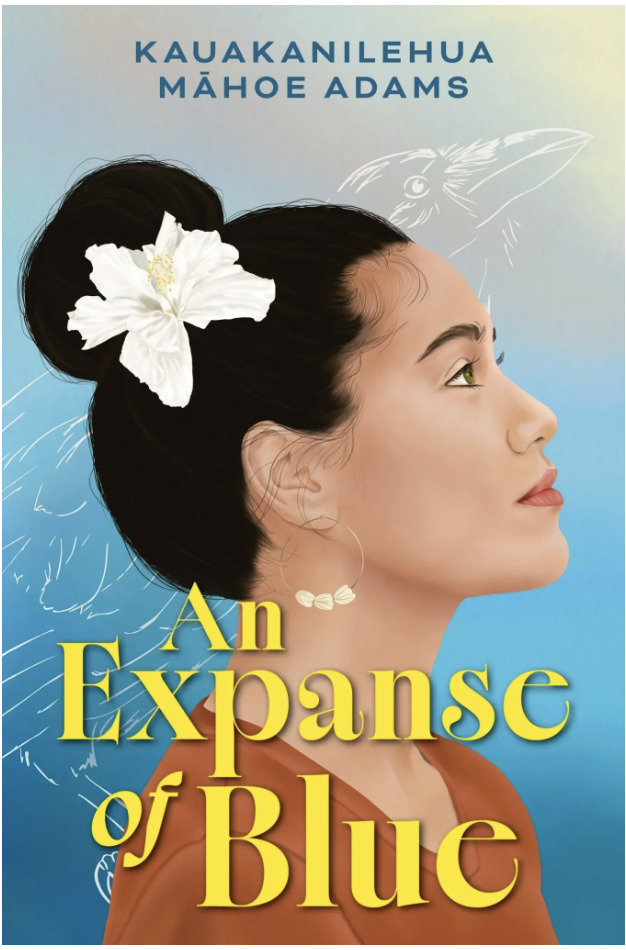
Mahalo nui loa! AN EXPANSE OF BLUE is a young adult verse novel about 17-year-old Aouli Elizabeth Smith’s journey towards self-discovery, cultural reconnection, and first love in the wake of uncovering a heartbreaking secret about her father.

What characteristics do you love about the protagonist? Is she modeled after someone specific? 

I know I am biased, but I love everything about Aouli. I especially love her humor, her angst, her desire for freedom, and her deep appreciation for her culture, her ancestors, and her kūpuna.

In some ways I modeled her after myself as a teenager. An advisor of mine at Vermont College of Fine Arts, Jennifer Ziegler, told me once that it was impossible not to put a little bit of ourselves into every character that we write. I think that touch of oneself in the art they create is really what brings it to life. I will say I think Aouli is much braver than I ever was but her innate longing for connection is definitely one I identify with and used to shape her emotional arc through the story.

Expanse-of-Blue-cover
Cover illustration @ JT Ojerio from Expanse of Blue by Kauakanilehua Māhoe Adams (Heartdrum, 2026)

 Is there a particular scene or passage you’re incredibly proud of?

Definitely the Stations of the Cross scene. I based each poem off of different stations (though I purposefully didn’t include every station because there are…a lot!). Using the steps of Jesus’ journey to shape Aouli’s own moment of transformation forced me to really think about each poem in a way I hadn’t yet in the writing process thus far. The outcome made for one of my favorite scenes in the whole book.

What surprising discoveries did you make during the writing process?

That it is okay to let your characters speak for themselves. Sometimes, as authors, we really want our characters to do something specific. But a lot of times, they’re going to push back! Let them, follow their voice, allow the story to unfold how it must rather than how you think it should.

What was your favorite part of writing your novel? 

Getting to play with space and layout! Poetry doesn’t have to be just organized stanzas and clean line breaks. I especially loved writing all of my concrete poem, where I made shapes with words on the page to deliver a layered message through both what is actually being said and the image created.

Bonus favorite part was writing the romance between Aouli and Nalu. Love, in all its forms, is always the best part of any story in my opinion.

That makes two of your works thus far at Heartdrum. Did you work with Cynthia Leitich Smith both times? What was it like working with her?

I actually have three at Heartdrum! My debut picture book WE ARE HAPA, which will be illustrated by Malia Pila (Native Hawaiian/Kanaka Maoli), will be published by Heartdrum sometime in the fall of next year. And yes, I’ve worked with Cyn on each project, as the anthologist for LEGENDARY FRYBREAD DRIVE-IN and as Heartdrum’s author-curator for both AN EXPANSE OF BLUE and WE ARE HAPA.

Working with Cyn is a dream. She is a magical storyteller, an incredible educator, and a most-appreciated mentor. I am grateful to her dedication to uplifting Native storytellers and for the community she’s built of Native writers that I have found a home within. She believed in AN EXPANSE OF BLUE when I didn’t, and I will never be able to express just how thankful I am to her for that support and confidence.

Thatʻs wonderful. Do you have any experiences as a Native Hawaiian writer and poet that you might share with our readers? 

I have been so touched and frankly, a bit shocked, by the outpouring of love and support I have received from early readers of AN EXPANSE OF BLUE. This experience has shown me that people want Kanaka stories and that just makes my heart really full.

Can you share a bit about what you’re working on next?

I am working on another YA verse novel while also going through the editorial process with my fantastic editor, Rosemary Brosnan, of my forthcoming picture book WE ARE HAPA (Heartdrum).

Canʻt wait! What’s one writing rule you believe in and one you think is made to be broken?

Believe in: Write what you know, though this shouldn’t limit what genre you write in. Writing what you know doesn’t just look like writing about your own life. It also looks like infusing your own thoughts, feelings, and experiences into stories of any genre!

Break: Write everyday. Some people thrive with a consistent writing schedule. For me, I need the flexibility to write some days and spend others filling the creative well by daydreaming, resting, dancing hula, and spending time with friends and family.

Absolutely! What advice would you give aspiring writers? What do you know now that you wish you’d known when you were starting out?

Read. Read widely across form, genre, and time. Don’t just read the type of books you want to write. You will learn so much more if you push yourself to branch out. And keep a pen with you while you read, write in the margins (use sticky notes if renting from the library of course or borrowing from a friend). Or if you prefer audiobooks or e‑books, keep notes in your phone or in a journal. However you do it, take notes! Make note of favorite lines, moments that make your heart stop, scenes that you know you will think about for a long time to come. By engaging with what you read you are better shaping yourself as a writer.

This is truly great advice. What’s your online presence? And how can readers show their support?

You can find me on Instagram and Threads at @kauawrites and on my website kauamahoeadams.com. Readers can show their support by ordering their copy of AN EXPANSE OF BLUE from their favorite bookseller and by requesting that their local library order a copy for their collection if they haven’t already. And if you love AN EXPANSE OF BLUE and want to post about it, tag me!

Mahalo nui, Kaua, for such a fun interview! We canʻt wait to read more from you soon! To learn more about the poet, including her upcoming works, visit her website and follow her on social media.

Image credit Marie Monforte, courtesy of Kauakanilehua Māhoe Adams.

Interview with Hawai’i Author-Illustrator Kelsie Dayna

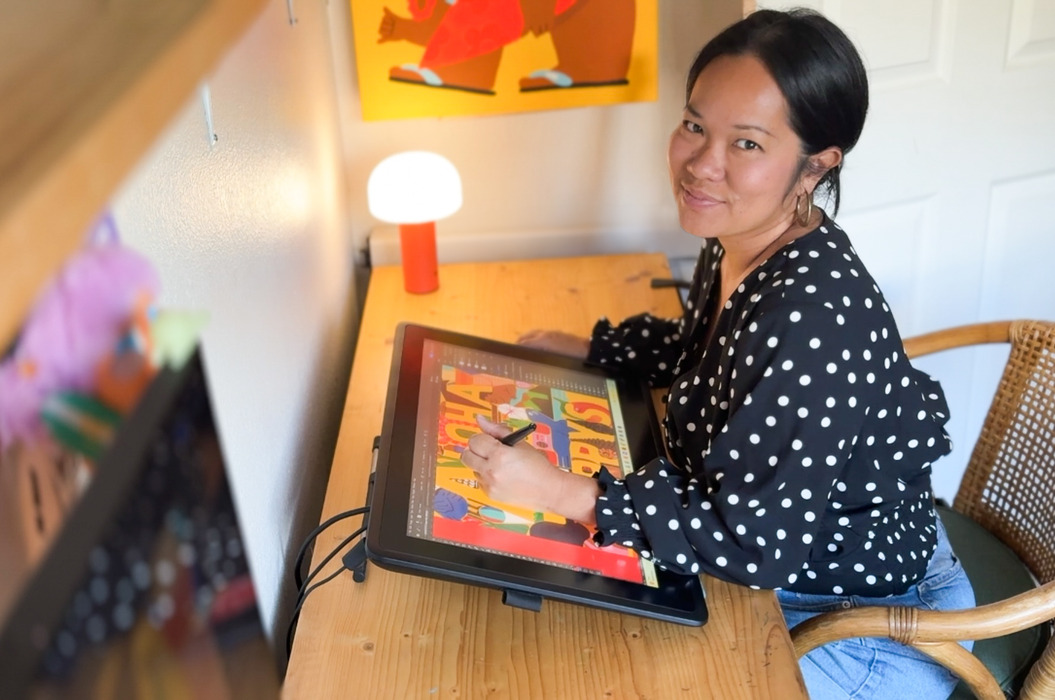
Kelsei Dayna

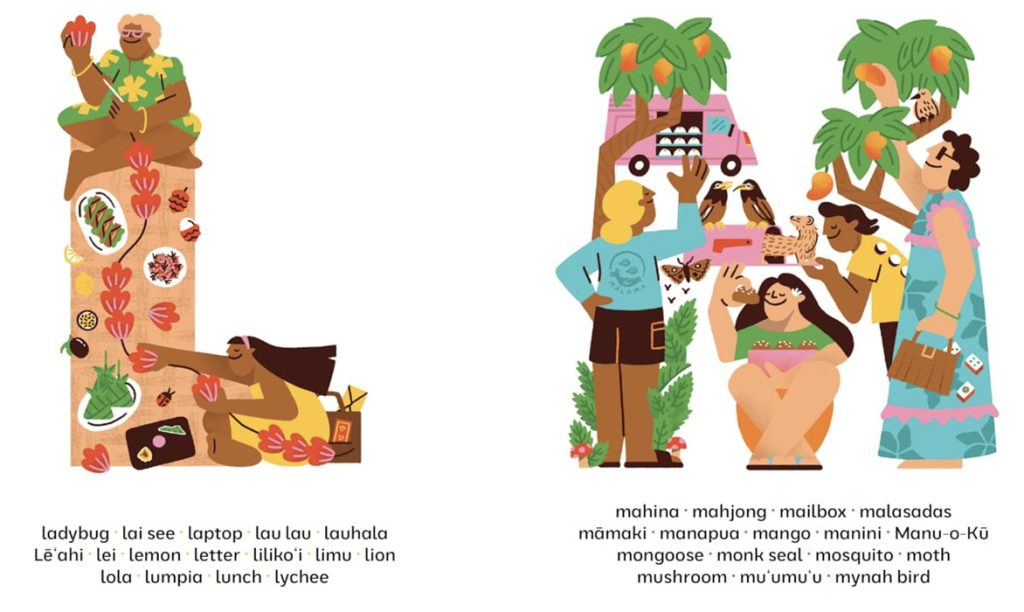
Kelsei Dayna at deskFreelance artist and illustrator Kelsie Dayna has a new title to add to her list of accomplishments: author-illustrator! Her alphabet board book, From Aloha to Zippy’s (Bess Press, 2026) reimagines Carol Colbath’s original with gorgeous art and ʻōlelo Hawai’i. 
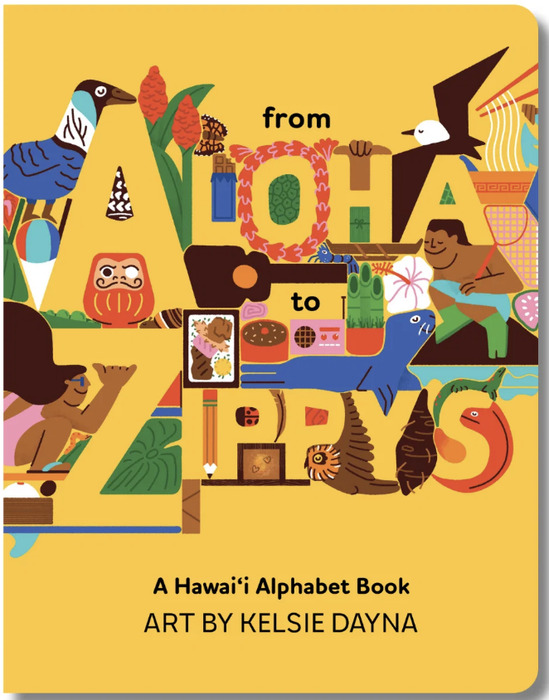
We are delighted to talk story with Kelsie.

Aloha, Kelsie, and congratulations on your debut children’s book! Could you please introduce yourself for those readers who haven’t met you yet? Where did you grow up? What high school did you grad from?

Mahalo! My name is Kelsie Dayna. I am a freelance artist and illustrator in Honolulu. I was born and raised here on ‘Oahu. I graduated from Maryknoll High School. Go Spartans!

I studied for a year at the University of San Francisco, before returning back home and finishing my bachelor’s degree at UH Mānoa, Shidler College of Business.

How did you get into illustrating? Was it something that you studied or did it blossom from a passion? What made you decide to start writing children’s books?

I have always loved art, but it wasn’t something I ever took seriously or even considered as a career choice. I didn’t study art formally or take classes–my path into illustration was much more organic (and some might say, accidental).

After graduating with a business degree, I began working an office marketing job, but I was laid off during the pandemic. It was a challenging and uncertain time, and I found myself turning to art as a way to cope with everything I was going through.

What started as a personal outlet gradually became something more. I began sharing my art–and my journey–online, and over time, that led to new opportunities that eventually allowed me to transition into illustration full-time.

As for children’s book, it felt like a natural extension of my work. I’ve always been drawn to storytelling and fun, colorful imagery, and children’s books offered a space where those elements could really come together in a meaningful way.

Cover
Illustration @ Kelsie Dayna from From Aloha to Zippy’s (Bess Press, 2026)

Your book, From Aloha to Zippy’s, is described by your publisher, Bess Press, as a reimaging of the classic 2007 book. How did you get involved in the project? What was the journey like?

I was lucky enough to work with Bess Press a few years ago on another project, so being asked to reimagine their beloved From Aloha to Zippy’s was such an exciting opportunity.

The process was one of the smoothest and most enjoyable projects I’ve ever worked on, thanks to the incredible team at Bess Press. From our first meeting to the final drafts, the project took about a year. We took our time brainstorming and exploring ideas, and I’m thrilled with how fun and fresh everything turned out.

When you began work on the book, what do you do first? Character design? Page layout? Or just explore setting?

Since this book is a reimagining of the 2007 edition, our first step was to rethink how each page would function visually. We knew we didn’t want to simply replicate the original photos with illustrations, so we approached it as a fresh start.

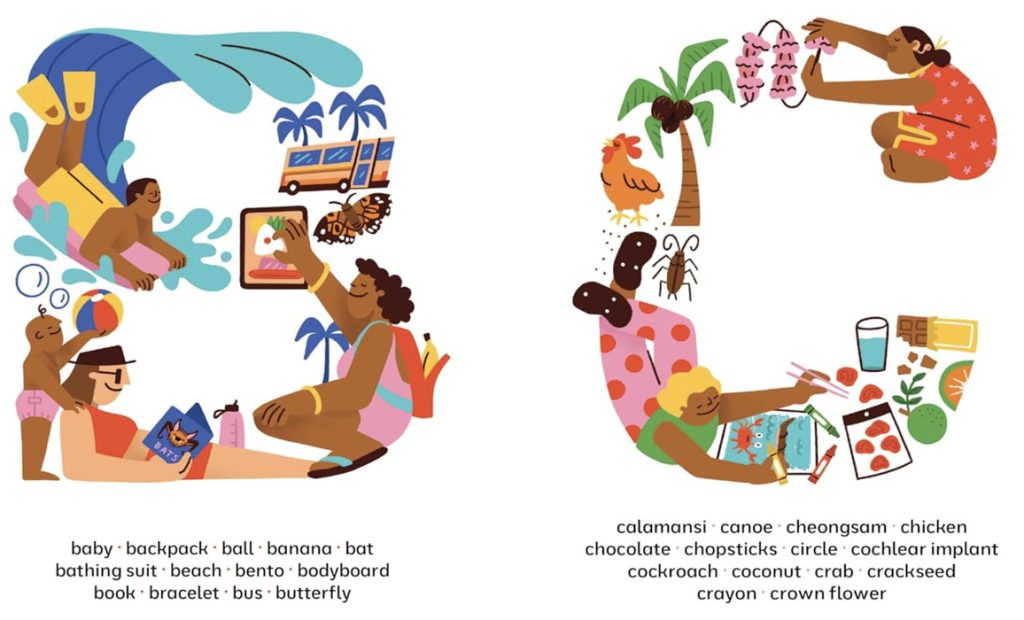
Once we decided to structure each letter as its own scene, that framework became a helpful guide for the entire process. From there, I looked at the list of words for each letter and tried to piece together a local Hawaii setting that could naturally incorporate them.

Each page was a creative workout to design compositions that worked within the unique constraints of each letterform. Balancing readability, visual interest, and storytelling within those shapes really pushed me to think more intentionally about layout and flow.

The board book includes a number of Hawaiian language words for each alphabet. How did you decide which words to include? And how did you choose the specific objects or characters for each letter?

Choosing the list of words for each letter was one of the first tasks we tackled, before any illustration or artwork began. Some letters have a lot of word possibilities, while other letters were much more limited, so it was a challenge to create a balanced, cohesive experience from page to page.

What ultimately helped pull everything together was the idea of treating each letter as its own scene or vignette. That approach allowed me to thoughtfully incorporate the chosen words by building a visual story around them—placing objects and characters in a way that felt natural and engaging.

That shift was a real turning point for me, creatively speaking, and I believe it’s one of the most unique aspects about the book.


BC
Illustration @ Kelsie Dayna from From Aloha to Zippy’s (Bess Press, 2026)

Your illustrations have a joyfulness to them and are incredibly fun. What’s the inspiration for them? How did you hone your personal illustrating style?

A lot of the joy in my work comes from wanting to create the kind of imagery that feels inviting and approachable. I’m inspired by simple, everyday moments and little things that spark nostalgia.

I think most creatives will agree with this, but I feel like I’m still honing in on my style. And to be honest, I’ll probably be on that quest forever. My style today didn’t happen overnight but came through a mix of experimentation and consistency. I’ve explored different techniques, colors, compositions and eventually noticed patterns in what I gravitated towards. Honing in on my style has been less about forcing something specific and more about refining what already felt true to me.

What is the most rewarding aspect of creating an alphabet book for children?

I am happy knowing the book can be part of a keiki’s earliest experience with language and storytelling. As a parent, that feels especially meaningful.

It also feels really special to root the book in Hawai’i. Being able to reflect familiar places, language, and everyday moments adds another layer of connection, especially for local Hawai’i families. I love the idea that keiki might see parts of their own word in the illustrations while also discovering new details each time they read it.

LM
Illustration @ Kelsie Dayna from From Aloha to Zippy’s (Bess Press, 2026)

What advice would you give to someone wanting to start writing/illustrating children’s books?

I’d say just start creating — don’t wait for everything to be perfect. Begin with an idea, a character, or even just a few pages and see where it goes! 

More importantly, make something that feels true to you. If you enjoy the process and your work is genuine, it will show! 

That’s great advice! So … Next Stop Zippy’s? I planned to ask you what you like to there, but I see Megan Kakimoto beat me to it in her Honolulu magazine interview 🙂 

I have so many childhood memories there with my parents and grandparents. My family are I are Zippy’s regulars. It’s always our next stop! 

Ours, too! Mahalo nui, Kelsie, for a wonderful talk story! We can’t wait to see what’s next for you. 

To see more of her work, please visit her at Kelsie Dayna Designs. You can find also find Kelsie on Instagram and Facebook. 

Images courtesy of Kelsie Dayna.

Interview with I am a Bon Dancer author Brandi-Ann Uyemura

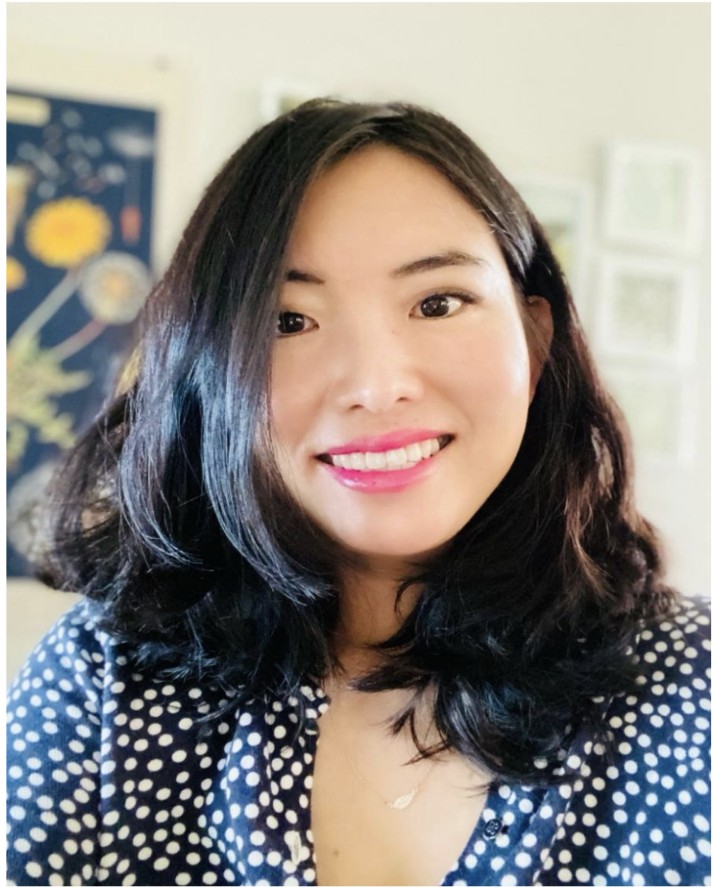
Brandi-Ann-Uyemura

As readers of this blog know, we highlight the talented creators of our AANHPI — Asian American, Native Hawaiian, Pacific Islander — community.

We are excited that our longtime friend, Brandi-Ann Uyemura, has a new book out this month! A lot has happened since we first featured her in 2022. She recently sat down to talk story and catch us up about her debut picture book, I am a Bon Dancer. 

Can you share a bit of your debut picture book, I am a Bon Dancer? Without giving away too much for those who haven’t read it yet, what is it about?

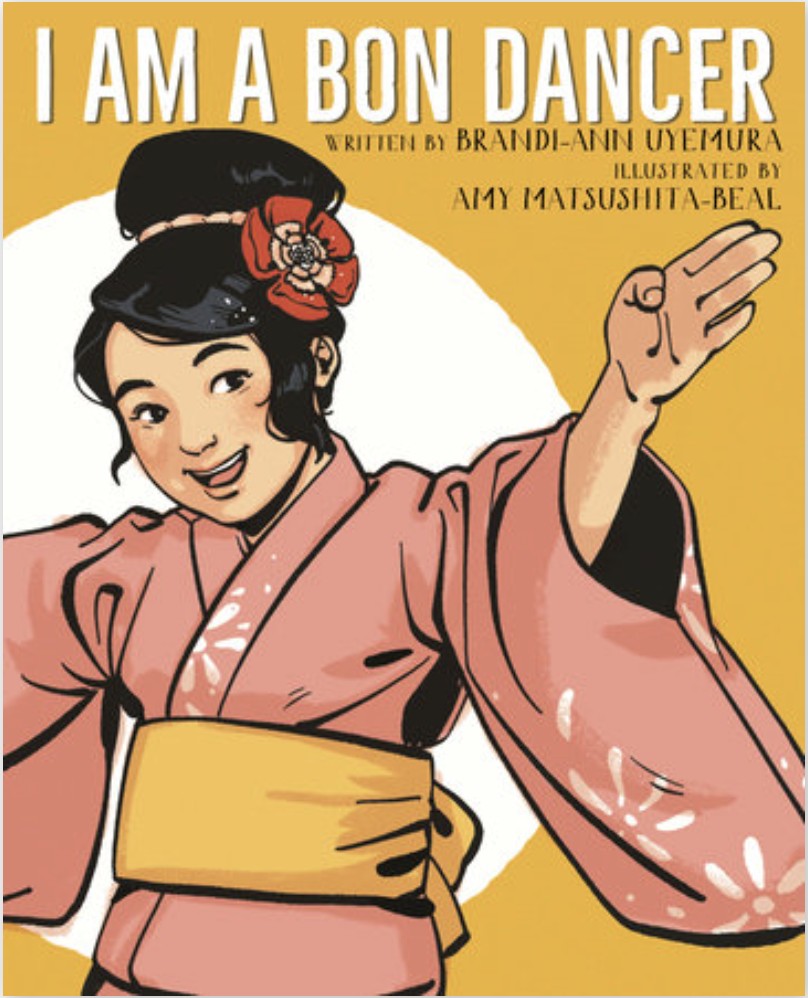
Sure! I am a Bon Dancer is about a little girl who hasn’t been to the Bon dance before, but has heard her grandfather talk about it. His excitement is contagious, and she feels excited, too, until she gets there and realizes everyone seems to know how to dance. She is afraid to make a mistake in the glow of the lanterns and with everyone looking at her, but she gains courage when she learns the meaning behind the dance.

What inspired you to write the book?

Oh this has been in my mind for a very long time. I used to go to Obon with my grandfather on the island of Kauaʻi as a kid. He loved to go, and I remember how excited he would get on that day. He would whistle as he got dressed. He had this hair oil that he would use to pat down the few hairs on his balding head. He was so cute.

He had a station wagon and he would take my cousins and me early. My grandma would be there helping in the kitchen. It was something we all looked forward to. And all the details from the lanterns, the ono food, and my grandfather’s joy stayed with me all these years and inspired me to write this book.

Such sweet memories! What characteristics do you love best about the young protagonist? About Grandpa Jo? Are they modeled after specific people?

I love that she is afraid and yet still tries to dance. I was also scared to dance, so I sat on the bench and watched my grandpa dance. She is who I wish I was as a kid. Grandpa Jo is based on my grandpa Wakamatsu. I was really close to him. Having said that, while the characters were created because of my relationship with my grandparents, they are very different from real life. My grandpa worked in the sugar cane fields, for example, not my grandmother.

What was your favorite part of writing your book?

I love writing, and I love coming up with the sensory details of Bon Odori itself. I also loved working with Watercress author Andrea Wang. That part was so inspiring and really pushed me to be a better writer. I learned so much from Andrea and am forever grateful for her mentoring me. She was super generous with her time in helping me get my manuscript in the best shape possible.

Cover I am a Bon Dancer
Cover illustration @ Amy Matsushita-Beal, from I am a Bon Dancer by Brandi-Ann Uyemura (Holiday House, 2026)

How lucky to have Andrea as your mentor! The illustrations are wonderful. What was it like working with Amy Matsushita-Beal?

Thank you! I agree. The closest I got to working with Amy was just suggesting the type of illustrations I was looking for.

I never actually had a chance to work with them directly, but it was one of the highlights of my year to visit Amy in Japan. She is multi-talented and extremely creative. During our meeting, we got to talk about the process. I learned, for example, that the main character was inspired by a TV character and that there were suggestions in one of the drafts that were never used. I didn’t realize how fun it would be to talk to the illustrator, and I am so glad I got a chance to!

I love the book’s back matter. How do you hope this additional content influences the reader’s experience of the book? 

Thank you, Kamalani! That means a lot to me because Kaho’olawe: The True Story of an Island and Her People was such a powerhouse of information. I hope that my readers will understand the significance of obon with that level of awareness and understanding.

But I also want readers to know that while the Bon dance has religious roots, today’s Bon dance is more about community and spending time with those you love.

In terms of the reader’s experience with the book, I hope that reading it will help them gain a deeper emotional understanding of why dancing is so important to the characters in the book and to appreciate the people behind some of the movements. While they appear simple, the hand movements often convey history, hard work, and real-life sacrifice for the Japanese people.

That’s fascinating! What do you hope teachers or librarians do with your book?

I just hope they share it! I gave a presentation once for an online class I took with author Marcie Colleen on “Windows and Mirrors.” I really hope librarians and teachers know how much I appreciate what they do, how important their roles are, and what a gift they can give children in providing both windows for children to learn about a new culture or learning something new about the Bon dance, but also mirrors for kids who want to see themselves in a book.

Mirrors and windows — what a terrific concept! What do you hope young readers will take away from your book? That is, what is the main message or feeling you hope kids get from this book?

I hope they will see themselves in it. I hope they will feel inspired and encouraged to do something that scares them and feel brave because of their own ancestors and the struggles they have been through.

Can you share a bit about what you’re working on next?

I am working on multiple manuscripts. Some about my culture. Other zany ones are about animals and dragons. I am also continuing to work on my middle-grade mystery about chocolate, which now has ghosts in it. The market keeps changing, and I like to write different things. The tricky part is finding a publishing home for them!

Mystery about chocolate and ghosts? I can’t wait for that book! Mahalo for your time and mana’o, Brandi! Visit Brandi at her website, Brandi-Ann Uyemura, and on Istagram at @brandialwayswrites.

Learn about I am a Bon Dancer in our picture book review!

Images courtesy of Brandi-Ann Uyemura

Interview with Native Hawaiian Author Kealani Netane

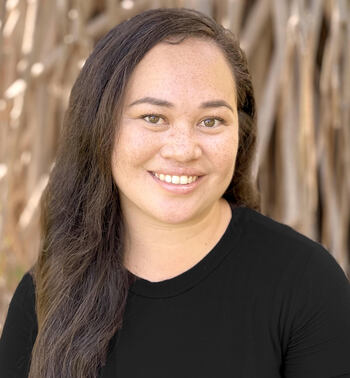
If you recognize Native Hawaiian/Sāmoan writer Kealani Netane’s name, you’re probably a fan of her popular bookstagram, Little Pasifika Readers. Or you might you recognize her from her thoughtful blog posts at Pacific Islanders in Publishing. Now add children’s book author to her list of professional accomplishments.

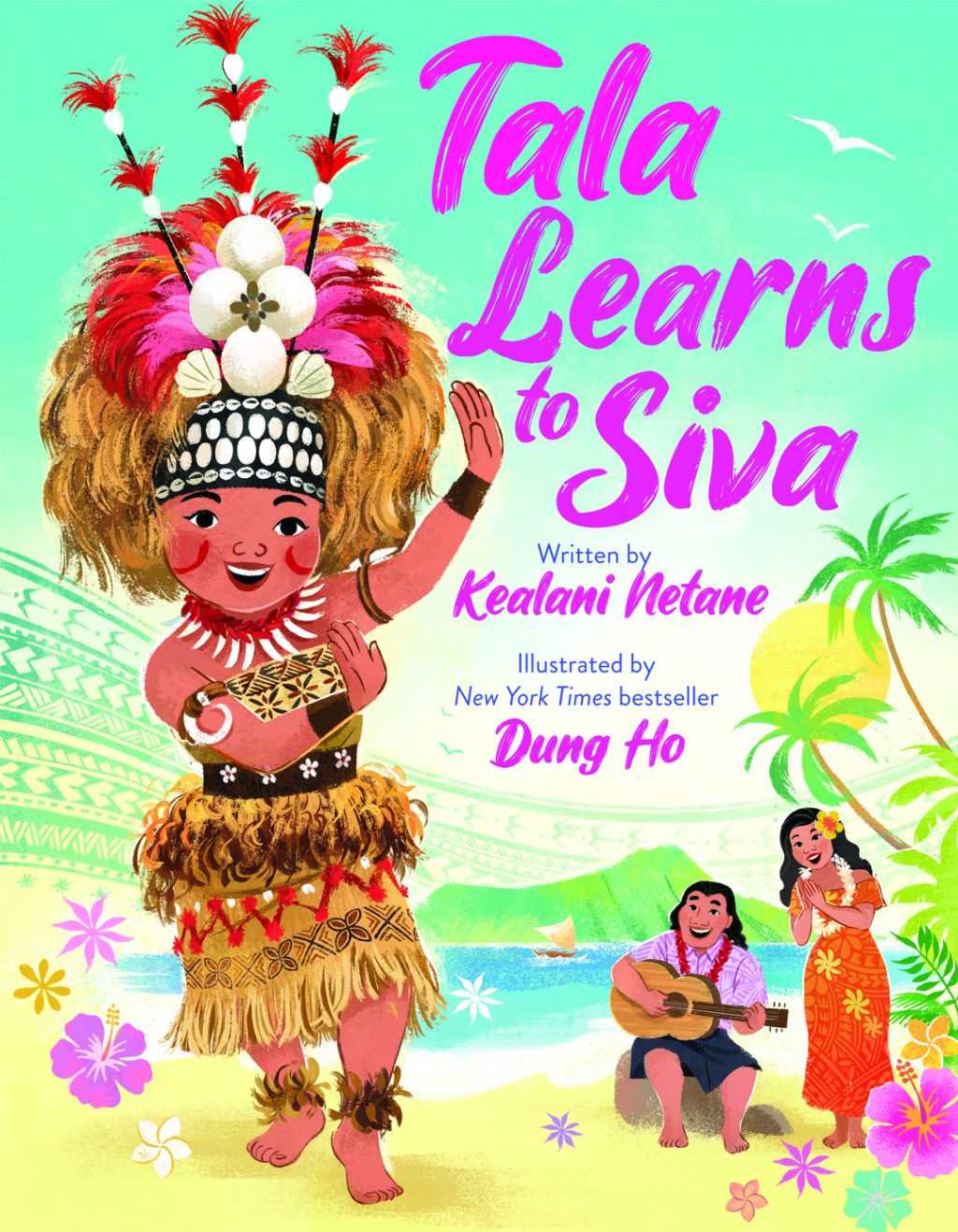
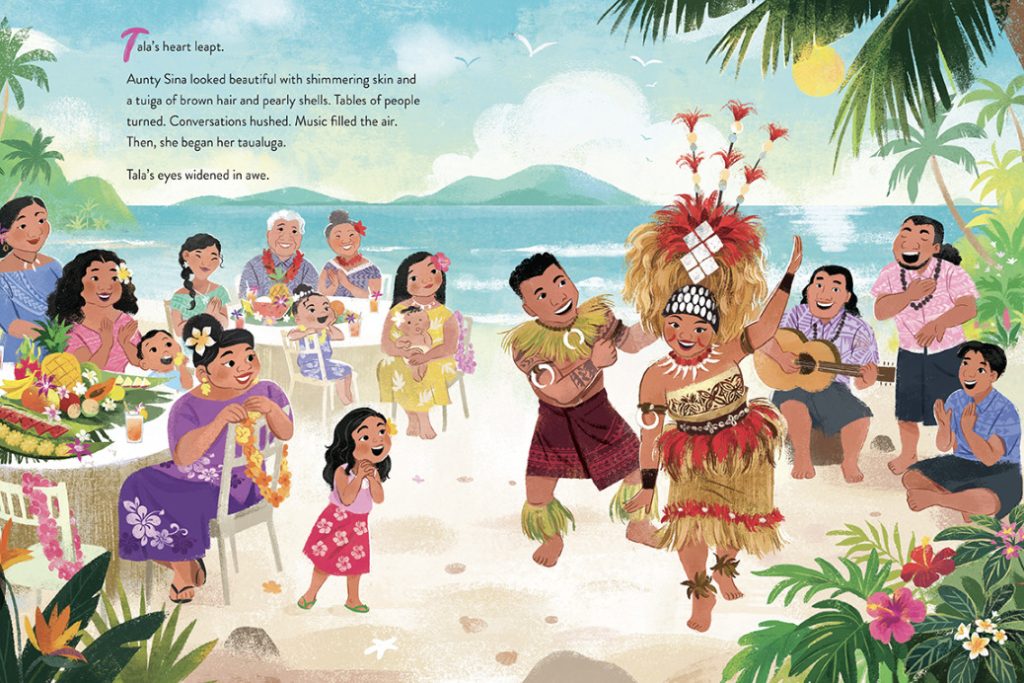
Her wonderful debut picture book, TALA LEARNS TO SIVA (Scholastic, 2024) is the sweetest story of a child’s desire to dance the traditional Sāmoan taualuga just as like graceful aunt. Through engaging text and beautiful illustrations by award-winning illustrator Dung Ho, young readers learn, like Tala, that they can do anything with practice and patience.

We are thrilled to talk story with Kealani today.

Aloha mai, Kealani! For those readers who haven’t met you yet, could you please tell us a little about yourself? 

Aloha! I’m Kealani Netane. I am the author of TALA LEARNS TO SIVA, published by Scholastic. I am Hawaiian and Samoan. My dad is from ʻUpolu, Sāmoa, and my mom is from Waialua, Oʻahu and Honokaʻa, Hawaiʻi. I currently stay home with my three kids though I previously worked in education.

My biggest supporter is my husband, Xavier. He is my first critique partner and my last before I send a manuscript to my agent. He’s not a reader or a writer, but he is Samoan/Tongan so his cultural perspective is really helpful.We live in Kapolei, Hawaiʻi.

Where did you grow up? What high school did you grad from?

I was raised in Kailua, Oʻahu until my tween years when we moved to Kapolei. I graduated from Kamehameha-Kapālama in 2008.

Cover-Tala-Learns-to-Siva
Illustration @ Dung Ho from Tala Learns to Siva by Kealani Natane (Scholastic, 2024)

Congratulations on your debut picture book! There are not a lot of books for kids by Native Hawaiian and Pacific Islander writers. Why do you think that is? What do you think we can do the change that?

Thank you! My grandma was a great storyteller. We would holoholo around the island and she’d tell fantastic stories about every area, but she was rarely interested in writing those stories down. For most of our culture’s existence, there wasn’t a need for books because we passed things down orally. As our world changed, books became more important. Now there is a need for children’s books by Pacific Islander writers. There are many efforts by local organizations to create books for our children, and there is a small but growing community of Pacific Islanders in U.S. traditional publishing. Even with all the current work being done, there is room for much more.

The CCBC found that only .002% of the books published in 2021 that they received were by Pacific Islanders (Link). That number doesn’t include the books published locally, only nationally. My biggest goal for my writing and my social media is for our children to have accessible books that mirror their life. Dr. Rudine Sims Bishop stated, “When children cannot find themselves in the books they read…they learn a powerful lesson about how they are devalued in the society of which they are a part” (Link). In order for there to be more books by, about, and for Pacific Islander children, there needs to be more Pacific Islanders in every sector of the publishing world. We should all be helping to lift and build others up to ensure that our children have access to our stories.

I’m really excited about the growing number of Māori and Pasifika authors in Aotearoa. The work they are doing there is truly inspiring. I’m hoping there will be more upcoming Pacific Islander authors in the U.S., especially those of Micronesian and Melanesian descent. Many people have reached out to me asking specifically for books from those communities. We definitely need more books for all of Oceania.

We agree! So what inspired you to choose Sāmoan dance for your debut novel?

I am a dancer. I grew up dancing hula, but I always loved watching older girls dance the taualuga. I thought they were the most beautiful and graceful dancers. As I grew older, I learned how to dance the Samoan siva and slowly came to understand the meaning behind the dance. In some ways, this picture book is a reflection of my own life. And in other ways, it’s reflective of how I want to pass on this traditional knowledge to my own children.

Illustration @ Dung Ho from Tala Learns to Siva by Kealani Natane (Scholastic, 2024)

What beliefs are your work challenging?

TALA LEARNS TO SIVA is challenging the belief some people that Polynesian dances are purely for their entertainment. I do want to push back on the tourist-centric ideas people have about our islands and cultures. I want our children to see that their culture is for them first.

You also run a popular bookstagram. When did you start Little Pasifika Readers and why? What are your goals? What inspires you to write your posts and articles?

I started my bookstagram, Little Pasifika Readers, in early 2021. When I started writing in 2020, I collected resources on Pacific Islander children’s literature. It was difficult to find books, and I imagined others also had a hard time, so I created an avenue to share those resources. I was already following a few other Pasifika bookstagrams and found a community with them when I created my own.

My prevailing requirement for posting a book is that the book has to be written or illustrated by a Pacific Islander. There are many books about us, but not as many books by us. My next requirement is that the book has to be accessible, meaning the book either needs to be available at public libraries or there needs to be a website where people can easily purchase the book.

What are your hopes and dreams for the year and beyond in terms of your social media/writing career and what you would like to see published in the future?

I have so many book and career ideas that I don’t have the time to do all of them, so I have to pick and choose which projects I want to take on. My bookstagram account is something fun that I do on the side, and my focus with that is to continue to share resources for people to find Pacific Islander authored children’s books. I don’t keep up with it as much as I’d like because my focus is more on Pacific Islanders in Publishing and the work I do with Keala Kendall and Manuia Henrich. We are working on creating development opportunities for Pacific Islander writers and continuing to share new book releases.

For my writing, I hope to finish the edits of a picture book I’m working on, and then I hope to keep working on my middle grade and young adult projects. I don’t know if I’ll finish those projects this year, but hopefully they will be ready for submission in the next couple of years. I also have other picture book ideas lingering on my computer that I’m unsure about, but I hope to find ways for them to work.

As for projects outside of my own, I’d love to see more Pacific Islander authored books in all genres, especially adult romance and contemporary middle grade and young adult.

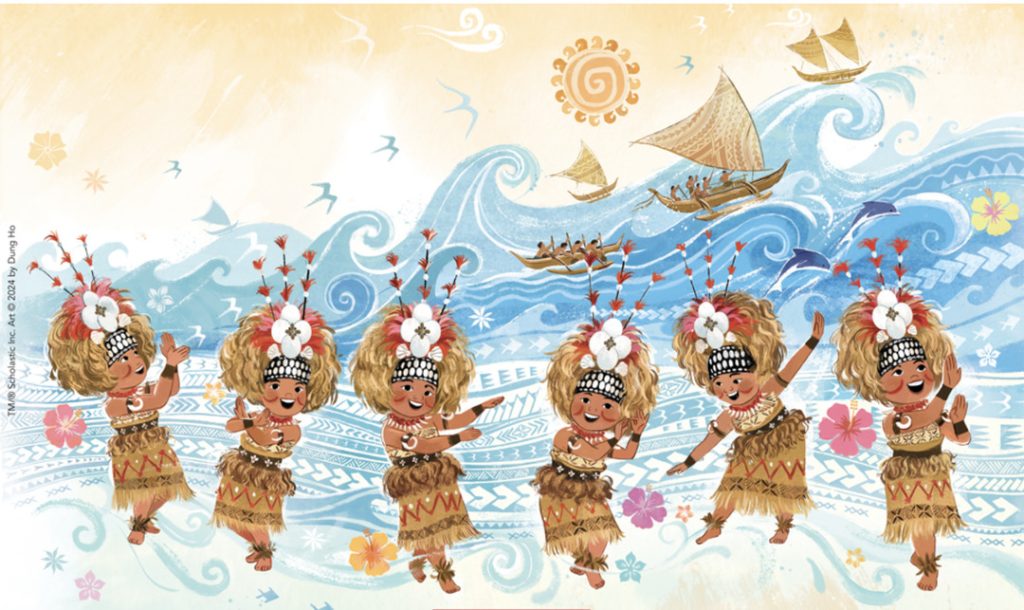
Illustration @ Dung Ho from Tala Learns to Siva by Kealani Natane (Scholastic, 2024)

Can you share a bit about what youʻre working on next?

I have another picture book project that I’m looking forward to announcing soon. I am also working on a middle grade novel and a young adult novel. Both of those projects are still in the early phases, so it’ll be many years before they will be ready for publication.

What do you enjoy most about writing, especially for kids? What are some of your greatest challenges?

What I love most about writing for kids is that kids are very glued into the specifics. When writing, I have to look at things from the mind of a child and children notice everything so I have to notice everything. Children are fascinated by the things adults often take for granted, so writing children’s books helps me slow down and appreciate life a bit more.

The greatest challenge when writing picture books is being able to tell an entire story arc in very little words. We also have to leave space for the illustrator to tell their story. So it’s a balancing act.

What kinds of books do you enjoy reading? Any favorites?

I love all kinds of books. I read across age groups and genres. There are a bunch of books I’ve recently read and enjoyed. In the picture book category, I loved Finding Papa by Angela Pham Krans and We Who Produce Pearls: An Anthem for Asian America by Joanna Ho. I really enjoyed the middle grade novel, Mani Semilla Finds Her Quetzal Voice by Anna Lapera. I felt like a proud aunty reading Mani’s feminism journey. My favorite young adult book so far this year is Dragonfruit by Makiia Lucier. The story is so heartwarming and adventurous.

In the adult category, I love reading romance and genre fiction. My favorite romance authors right now are Kennedy Ryan and Tia Williams. My favorite genre fiction book is Evil Eye by Etaf Rum.

I also love non-fiction books, especially books focused on Indigenous knowledge like Braiding Sweetgrass by Robin Wall Kimmerer and social justice like Angela Davis’ Freedom is a Constant Struggle. I’ve been getting into more historical books, and I learned so much from Aloha, Betrayed by Noenoe Silva and The Hundred Year Walk: An Armenian Odyssey by Dawn Anahid MacKeen. I’ve also been slowly reading more poetry books, and my favorite right now is ‘Āina Hānau/Birth Land by Brandy Nālani McDougall. I truly feel seen by her poems.

As you can probably tell, I love reading, and I try to read as much as I can although I don’t nearly have enough time to do so. I do keep a running list on my phone of books I want to read.

What advice would you give an aspiring author/blogger?

My advice for aspiring writers is to observe, learn, write, edit, seek feedback, and edit more. Observe yourself. Observe those around you. Learn from our chants, songs, legends. Learn from your own family history. Learn from what has already been written. Learn from other writers. Then, write. There’s only so much we can do in our heads. As the ʻōlelo noʻeau tells us, ma ka hana ka ʻike. We learn best when we actually write. Next, find a writing community. They will help with feedback. And edit, edit, edit. Once everything is ready, either self-publish or query agents/publishers. Also, you don’t have to write something cultural. Write whatever you want.

Are you active on social media? How can readers find out more about you and your work?

My website is kealaninetane.com. I also write the blog posts for Pacific Islanders in Publishing. Our blog posts are focused on showcasing the latest published books by Pacific Islanders and helping Pacific Islanders navigate the publishing industry. 

Mahalo nui, Kealani, for sharing your manaʻo with us and for the good work you’re going to encourage more Pacific Islander creators. We look forward to seeing more from you! To learn more about Kealani Netane, please visit her website, Kealani Netane.com, her blog posts at Pacific Islanders in Publishing, and her bookstagram, Little Pasifika Readers.

Images courtesy of Kealani Netane.