Book Review: Lei and the Fire Goddess, by Malia Maunakea

Lei-and-the-Fire-Goddess

Lei-and-the-Fire-Goddess

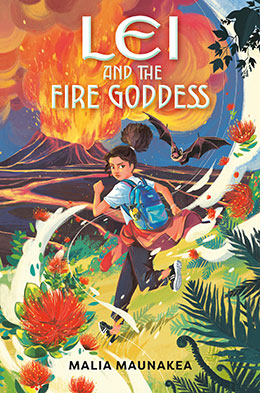
Lei and the Fire Goddess by Malia Maunakea is a rare gem in kid lit: an epic coming-of-age story written by a Native Hawaiian author featuring Native Hawaiian characters.

The story introduces us to twelve year old Lei, with all the joy and snarkiness and insecurity that are part of growing up. It didn’t take long for me to get into the story. From the very moment she steps off that airplane at Hilo airport, Lei is a fully developed, fully likeable character.

So are the secondary characters, especially Tūtū, ʻIlikea, Moʻo, Kamapuaʻa, and the formidable Pele. I won’t spoil it for you by revealing too much. Just know that the characters of Hawaiian legends come alive in the author’s vivid storytelling and are integral to Lei’s growing awareness and maturity.

There is so much I love about this book.

I loved Lei’s character arc, watching her grow, facing her fears, devising solutions, and facing the consequences. The exciting major scenes — between Lei and Kamapuaʻa, between Pele and Poliʻahu, the holua sled race — grab the reader and donʻt let go.

But even the quiet moments, such as Lei vowing not to share the waterfall on social media and later realizing why telescopes donʻt belong on Maunakea, speak volumes,  especially to ʻōiwi readers.

I love how the language is geared to today’s audience without being dismissive of the memories and upbringing of the older readers the story might appeal to. The ʻōlelo Hawaiʻi is not a trope but a real storytelling device. For example, Tūtūʻs “close the mouth” line in an early scene is such a Hawaiian way of teaching and learning.

I loved what felt like inside jokes but are really evidence of the author’s authentic voice: KTA, the tin roof, Iz’s song, li hing mui snacks, pidgin. I love that the first hula that comes to Lei’s mind is the one we all learn as kids, Kahuli Aku. And I laughed out loud at the chapter titled “Ma-ke Die Dead.”

Now the elephant in the room. At first I was super nervous about Pele being a main character. Our kūpuna teach us to respect and revere her. There will always be traditionalists who feel the Pele story should never be retold in a modern voice.

Yet, for me, more than anything, I love how creative the story is. It’s respectful and authentic and adds to the Pele and Kamapuaʻa canon for today’s kids. Pele truly sounds like the goddess I grew up hearing about. That she becomes Lei’s frenemy is edgy and feels right. 

Kids’ books by lived experience/own voices authors are so important. I am Native Hawaiian and grew up in the 1960s. There were no books – not one! – where the characters looked like me, did the things I did as a kid, ate the foods I ate, or used the pidgin I spoke. All kids deserve to see themselves in children’s lit.

This is why books like Lei and the Fire Goddess are so important. It’s a beautifully written, rollicking exciting-scary-funny story that kids everywhere will love. For all these reasons, LEI is a must-read.

Lei and the Fire Goddess  
By Malia Maunakea   
Penguin Random House
2023
ISBN 9780593522035
Suggested for ages 8 – 12

Mahalo to Sierra Pregosin at Penguin Random House for access to the galley! 

Learn about author Malia Maunakea in our talk-story interview. To look up the definitions of the Hawaiian terms used in this post, please visit Wehewehe.org


Interview with Native Hawaiian Author Malia Maunakea

Malia-Maunakea-Kahiki-Photography

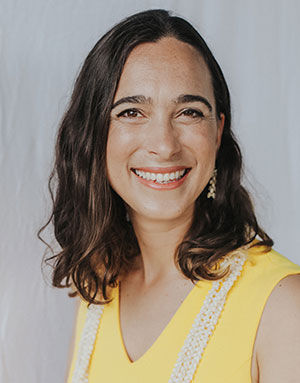
Malia-Maunakea-Kahiki-PhotographyMalia Maunkea is Native Hawaiian author of middle grade and non-fiction. Her new novel, LEI AND THE FIRE GODDESS, a rollicking story about an adventurous Native Hawaiian twelve-year-old, is a rarity in childrenʻs literature: a story for middle grade kids written by an ʻōiwi author that features an ʻōiwi character. We are proud to feature Malia in todayʻs talk-story.

Hoʻomaikaʻiʻana on your new novel! For those who haven’t met you yet, please tell us a little about yourself.

Sure! My name’s Malia, named for the Olomana song O Malia since my parents’ first date was to an Olomana concert. My mom is from upstate New York and is pure Polish. My dad is from Māʻili (West Side) on Oʻahu. I’ve been married to my awesome partner for nearly two decades, and we have two kids who are teens at the time of this interview. I love hiking and backpacking and traveling around the continent in our tiny campervan.

Where did you grow up? What high school did you grad from?

I grew up on Hawaiʻi Island ’til 7th grade and Oʻahu thru high school. I got accepted into Kamehameha Schools in 7th grade. I was a boarder for one year, then my family moved over to Oʻahu and, much to my dismay, I had to move back in with them. I graduated from Kamehameha Schools in 1999. My dad is class of ʻ72. My great-grandpa is class of ʻ17.

I mua! Go Warriors! Can you share a bit of your upcoming debut novel, LEI AND THE FIRE GODDESS? Without giving too much away, what is it about? 

Lei-and-the-Fire-GoddessLEI is about a girl who is raised in Colorado but goes to stay with her tūtū in Volcano, Hawaiʻi every summer for three weeks. She’s part Hawaiian but doesn’t feel like she’s Hawaiian enough to fit in there, and she also struggles fitting in back home in Colorado where no one believes the things her grandma tells her.

This summer she decides she doesn’t believe them either, and all she wants to do is go do touristy things so she can have fun stories to tell her friends when she gets home. Unfortunately, Lei ends up insulting Pele, the fire goddess, who sends her giant hawk to kidnap her best friend. When Lei goes to rescue him, she realizes just how real Tūtū’s moʻolelo are as she teams up with demigods and talking bats to battle mythical creatures and evade the traps Pele hurls her way. For if Lei hopes to get her friend back, she has to dig deep into her Hawaiian roots and embrace all of who she is.

That’s an exciting idea! What inspired you to choose that topic for your debut novel? 

My son was big into Greek mythology for a while, and I tried explaining to him that we Hawaiians have our own amazing gods and legends, but he sorta brushed me off. I decided the only way I could get him to listen was maybe if I put it in a book that could be on a shelf that his classmates might pick up and read, like a Percy Jackson type story. So I came up with this story to try share a lot of the myths and moʻolelo I learned growing up in Hawaii with a new generation of readers who may or may not be familiar with our stories.

What was your favorite part of writing your novel? What was most challenging? 

My favorite part was going back through my memories and pictures from living in Volcano and visiting Hawaiʻi Volcanoes National Park and remembering all the iconic art and songs that I was able to thread throughout the story. The most challenging was bringing it up to speed. Things have changed since I moved from the island, and I wanted to make sure I was still on point with various landmarks and understandings.

What characteristics do you love best about your protagonist, Anna Leilani Kamaʻehu? Is she modeled after someone specific? 

I love that she’s sort of a jump-right-in-and-figure-it-out-as-we-go kind of a person. I pulled a lot of my own struggles of not feeling Hawaiian enough and difficulties making and keeping friends as material for Anna.

What was the journey to getting your novel published like? How long did it take to write your book?

I drafted this book from April to August of 2020 then spent two years in revisions. My journey was super fast compared to some folks, and not as fast as others.

In the fall of 2020 I applied for a number of mentorships and ended up being selected for both We Need Diverse Books (WNDB) and my regional Society of Children’s Book Writers and Illustrators (SCBWI) programs. I worked intensively with Alan Gratz and Andrea Wang to rewrite, revise, and improve my story from January to May of 2021, then submitted it to #APIPit (a pitch event on Twitter) in May of 2021. I received interest from a number of agents, so I sent out my queries and interviewed different agents, selected an agent, did more revisions, sent the book out on submission to publishers in June, ended up having multiple publishing houses interested and went to auction in August.

We sold in September 2021 in a two book deal and started working with my fabulous editor Elizabeth Lee at Penguin Workshop (an imprint of Penguin Random House). So since then it has been many more rounds of revisions, and now working on book two!

Why did you become author? Have you always wanted to be an author? 

I loved writing when I was young but was advised by teachers that it wasn’t necessarily my strong suit and that I was better at the maths and sciences. I also loved reading but abhorred book reports and most of the required reading from my classes. It wasn’t until I was an adult with a couple of careers under my belt when I popped my head up from the grind and wondered if it was possible for me to try writing again.

We are so glad you did. What do you enjoy most about writing, especially for kids? What are some of your greatest challenges? 

I love writing exciting, fast-paced action scenes—showing kids how clever and strong and brave they can be. My greatest challenge is to get the characters to have an arc, to have them change over the course of the story. A mentor told me once that people don’t fall in love with plot; they fall in love with characters. The character needs to be three dimensional and flawed, so readers can root for them and understand why they’re going through what they’re going through. That is challenging for me as I usually come up with fun circumstances that I want to have happen to my character, but they usually don’t tie in to a theme or deeper meaning (which probably ties into why I struggled with Language Arts and book reports in school.)

You also wrote another book, BACKPACKING WITH CHILDREN book, which is on a very different topic. What made you decide to write this book?

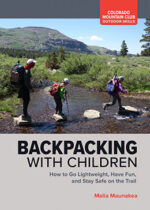
Backpacking-with-ChildrenI actually started that one before LEI AND THE FIRE GODDESS. A friend of mine published a book for beginner backpackers, and I thought that if he could do it, I could do it. They say to “write what you know,” so I wrote about my experiences backpacking with our kids over the past ten years and 600+ miles. While that book was on submission, I had a lot of time to wait, and so I decided to write the next thing, and the next thing, and then another thing. And that last thing ended up becoming LEI!

What are your hopes and dreams for the year and beyond in terms of your publishing career and what you would like to see published in the future? 

I have so many ideas and not enough time! I’m working on revising the sequel for LEI right now and working on a young adult contemporary novel that I describe as Pride and Prejudice meets WILD. I’d love to do well enough that I’m able to get back to Hawaiʻi and spend time with keiki in the schools there.

Hopes and dreams? How big you want to know? Heck, if we go big time, I’d love for someone like Dwayne Johnson or Jason Momoa or Barack Obama to pick it up (they all have daughters and probably other kids that they could gift it to after they’re pau reading) and talk about it so that it gets on the radar of Taika Waititi and scooped up into a movie. Then some mysterious benefactor who is looking to give back to kānaka in Hawaiʻi offers to give a copy to every kid in Hawaiʻi (so many times growing up I never had money to get a book at those book fairs) and rents out the movie theaters so all the kids and their families can go see it for free. 

Clearly I’m not realistic when it comes down to the fact that this is a business since I want to just give it all away. I’d absolutely love to have a long, steady career in writing, but even if LEI is the only fiction book I ever sell, it’ll have been an incredible experience.

I love your big dreams, Malia. What beliefs are your work challenging?

I’m not sure if this is challenging beliefs, necessarily, but I’m trying to do a couple things with this story:

  1. Help kids who might not feel like they are representative of their own cultures or ethnicities understand that they are enough and
  2. Help increase awareness of some of the issues Hawaiians are facing in an age appropriate way that doesn’t feel overly teachy/preachy— mentioning the day the Hawaiian flag was taken down from ‘Iolani Palace, by mentioning the telescopes on Maunakea and protection efforts there, having Anna face discrimination by a local girl when she doesn’t pick the right sticky rice at the grocery store.

Do you have any experiences as a Native Hawaiian writer that you might share with our readers? What would you like to see change in the industry regarding the acceptance of BIPOC creators? 

Our voices are so important! The way we view the world, interact with nature and our families, process trauma, and perhaps come from a more collectivist culture (prioritizing the group above the individual) are all so different than experiences traditionally portrayed in stories.

Some of us don’t follow traditional western storytelling patterns, and that’s okay! I’m really excited about some new up and coming Kanaka authors, like Makana Yamamoto’s Hammajang Luck and Megan Kakimoto’s Every Drop Is A Man’s Nightmare and your own Kahoʻolawe! All of our stories are important, and it’s necessary for a plethora of us to have our voices out there so none of us is burdened with representing the entire lāhui, the entire Native Hawaiian population. We are each so unique within our shared experiences, it is critical that readers are able to see Hawaiians as individual flavors, not just all coconut all the time.

What advice would you give an aspiring writer? 

Find other writers to learn with, practice with, and commiserate with! If you love it, it isn’t a waste of time. If your strengths lie elsewhere, you can do both! Keep this as a hobby as you explore other things as well.

Is there a fun fact youʻd like to share about yourself with young readers? 

Hmm, one of my earlobes is attached, and the other isn’t. Oh, and I have a preauricular pit on one ear. And I get random songs stuck in my head a lot of times and end up making epic mash ups of songs but can never remember any of them. Otherwise, I’d have been an awesome DJ.

What kinds of books do you enjoy reading? Any favorites? 

As a kid I loved Garfield and The Far Side (I probably would have devoured graphic novels if they’d been around!). Then I got into creepier things, RL Stine to Christopher Pike to Stephen King (it was quite the jump, but there weren’t many young adult options that I knew of way back in the 1900s). Now I love reading funny, action-packed middle grade stories and young adult or adult rom-coms with strong female leads and lots of witty banter. I go through them too quickly to remember a favorite!

Do you have an online presence? Do your readers contact you? What do they say? 

My website is MaliaMaunakea.com, and on social media I’m on Instagram and Facebook. My book wasn’t out then, but I did some virtual classroom visits in February and read a couple chapters of my book to kids, and a number of the classes sent me thank you notes. Oh, my goodness, my heart was not prepared for the sweetness and loveliness of their expressions. They are why writing for kids is the best thing ever. 

It was so much fun talking story with you, Malia! Mahalo nui loa for sharing your mana’o with us! E pili mau nā pōmaikaʻi me ʻoe (best wishes!)

To read more about Malia, including her cool list of fun facts, visit her website, MaliaMaunakea.com. Photo credit: Kahiki Photography


My Debut Picture Book is Announced at Publisherʻs Weekly!

PW announcement

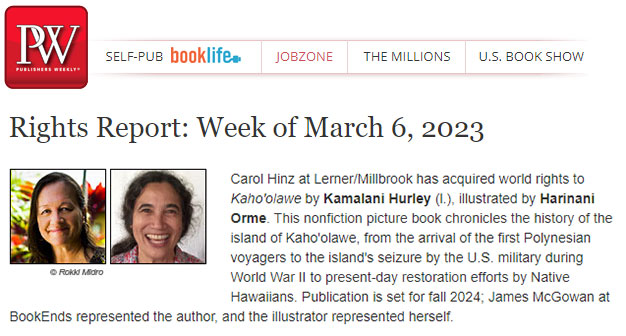
Mahalo ke Akua! After a long career teaching writing (which I really loved), I thrilled beyond words that my debut picture book, KAHOʻOLAWE, has been officially announced at Publisherʻs Weekly!


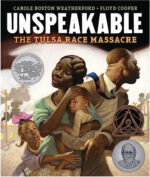
Kahoʻolawe is a story of loss and erasure, of sacrifice and dedication, and, ultimately, of restoration and resilience. Written and illustrated by Native Hawaiians Kamalani Hurley and Harinani Orme, this childrenʻs picture book is the story of aloha ʻāina — a deep love of the land — and explores what happened to Kahoʻolawe and how she is a beacon of hope for the Native Hawaiian people and for people everywhere who fight against social and environmental injustice. 

Mahalo nui …

  • to the leaders of the Protect Kaho’olawe ‘Ohana for their expertise and support of this project. Their dedication to Kahoʻolawe and to the Hawaiian people continues to inspire. 
  • to editor and publisher, Carol Hinz, whose expertise and patience we are counting on to get the book into the world.
  • to my agent James McGowan, who always knew this story needed to be told.


image credit: Vicki Palmquist — Winding Oak

Interview with Author Vera Arita

Vera-Arita

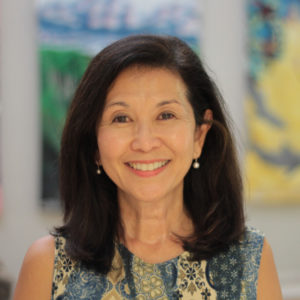
Hawaiʻi-based author Vera Arita has spent her life helping special-needs children to succeed. Her childrenʻs books focus on Hawaiʻi themes and encourage children to  delight in the world around them. 

Vera-AritaMahalo, Vera, for allowing me to feature you on my blog. For those who haven’t met you, could you please tell us a little about yourself?

Aloha all! I’m Vera Arita, and I am a retired special education teacher.  I taught for 32 years, and then I retired from Mililani Ike Elementary in Central Oʻahu in 2016. I am currently a half time field service instructor at the University of Hawaiʻi at Manoa, and I help students learn how to be special education teachers. I live in Mililani with my husband, Neal, and we have two sons/two daughters-in-laws, two grandsons and a granddaughter. 

Where did you grow up? What high school did you grad from?

I grew up in Waipahu and went to Waipahu Elementary, Intermediate and High School.

Go, Marauders! Who is your biggest supporter?

For sure my husband, Neal, our sons and extended family! I also have great teacher and church friends who come out full force to support my book signings.

Why did you become a writer? What inspired you to write for children?

All-Around-The-IslandsIn my teaching career, I always had a dream to write children’s books to share the love, care and life lessons I’d grown to appreciate. I believe the inspiration also comes through my faith in Christ. My first book, All Around the Islands, came out in 2005.  I dedicated my first book to my parents, Bolo and Eileen Soneda, because my dad was very ill, and Iʻd promised him that I would write a book someday. 

What do you enjoy most about writing for kids? What are some of your greatest challenges in writing for children?

Alphabet-HukilauI think having kids learn about animals or the sounds of the letters in rhyme is very rewarding. My fourth book, Alphabet Hukilau, was written on an iPad! I was just kicking around with the idea of a net catching letters instead of sea animals. At the back of the book there is non-fiction information of the sea animals since much of our content standards deals with reading non-fiction books. 

The challenge for any author is finding a publishing company who is willing to risk creating a book with your words. 

What are your hopes and dreams for the year and beyond in terms of your writing career and what you would like to see published in the future?

Teaching children has been, and is, my passion, and currently my publisher is considering a counting book that is quite whimsical.

There are not a lot of stories for or by Native Hawaiians and Pacific Islanders. Why do you think that is? What do you think we can do the change that?

Again, you have to find a publishing company who believes in your writing.  I believe that in Hawaii, most publishers have to cater to the tourist market for their books to sell. I’m hoping that my new book, which promotes character education, will be in all schools in Hawaii and nationwide.

Do you have a website? Are you on social media? Do you do school visits?

I do not currently have a website, but I am on Instagram Verasonedaarita or you can email me. I do school visits where I share the writing process and share sketches of how a book is formed.  I often browse through reviews on Amazon of my books and find it very humbling to get such rave reviews.

What advice do you have for aspiring writers?

Never give up on your dreams. You have to reach out to many publishers and not get discouraged. My publisher told me she receives submissions nearly every day, and few are picked up to be published.

Can you share a bit of your current work?

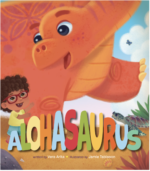
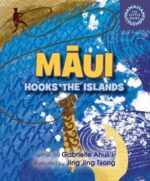
Alohasaurus is a story that I think many people can really relate to.  It’s about a dinosaur who has no friends because he looks different, and he sounds different.  In Alohasaurusmany ways it’s like my brother, Mike, who, was socially“different.”  Mike was born with mental and physical challenges.  Sadly, Mike recently passed away in early September 2022, so he did not get a chance to see the book.

In the story, a group of curious and courageous children befriend the dinosaur, and in turn, he teaches them ways to be kind and how to model aloha. Through their newly found friendship, they name him “Alohasaurus.”

As a substitute teacher, I’ve been test marketing the draft of the book with students, and it has gotten “5 star” reviews from them! I have even shared the book with some middle school students, and they really liked the story. Their encouragement has been uplifting and so precious.

Which of your books did you have the most fun writing? Which was the most challenging?

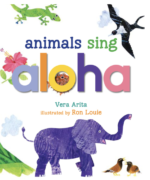
Animals-Sing-AlohaMy third book, Animals Sing Aloha. It is a phonics book that teaches how to write and sound out the alphabets correctly. It was a surprise because the draft was literally written on the back of an anniversary card while I was in a Maui hotel lobby on vacation. I tell students that when inspiration hits, you have to be ready to write!  That book has been my best-selling book to date.

Most challenging is Alohasaurus because it’s been on the back burner since 2007!  I wrote the draft on the back of sermon notes in church and always felt that this would be a great book; however, the publisher wisely was waiting for the right time to create it — and now is the time!

What beliefs are your books challenging?
They challenge peoples’ beliefs that you have to look and act like everyone else to be successful. The lesson to the readers is that you can be a success if you are kind to others, speak respectfully, work hard and are a team player.

What’s your experience with publishing your books?

I learned that when you sign a contract, all your future manuscripts go to them first and if they reject it, then you are free to go to another publisher. Also, the publisher can edit your writing if they feel it flows better a different way. There needs to be trust that the publisher knows what it takes for a successful book; however, there may be times when you must persevere and not give up on a rejected book.

Where do you get ideas for your books?

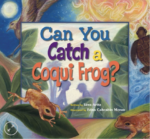
Can-You-Catch-A_Coqui-FrogIt seems that difficult family times provided inspiration for me to write. In 2006 my brother, Mike, had a seizure and hit his head very hard and became brain-damaged.  While he was in an extended coma, I promised to write another book and dedicate it to him. Thus, Can you Catch a Coqui Frog was written. 

Authors write to persuade, inform or entertain.  My books fall between informing and entertaining. As a teacher I couldn’t find a book that mentioned all eight Hawaiian Islands, so that’s how All Around the Islands came about.  Alohasaurus mentions different kinds of caring for people and for our ʻāina.

Which characters do you relate with easily? Why?

In fictional stories, I relate to the character who really aren’t outstanding, but through much determination and hard work, they are able to achieve a lot.  One of my favorite bible verses is Philippians 4:13: I can do all things through Christ Jesus. A good example of this is that I recently decided to enter the Honolulu Marathon with three months left to train. I did it 10 years ago but trained for a year back then. With the Lord’s help, I can do it again.

Mahalo nui, Vera! To contact Vera Arita and learn more about her books, please follow her Verasonedaarita in Instagram.

March On, a Short Film by Courtney Takabayashi

March On

Come along with Joe and Mara as they hunt for the night marchers in March On, the hilariously spooky video by my friend, the writer and storyteller Courtney Takabayashi. Be sure to watch through the credits for the lovable eccentric, Uncle Kimo. Courtneyʻs video is a past winner of the Halloween Video Contest sponsored by the Honolulu Star-Advertiser and Hawaii News Now.

The working mom of a toddler and a couple of fun-loving cats, Courtney admits that her website is a bit out of date, so to contact her, follow her on Instagram

Posted with permission by Courtney Takabayashi. 

Moke Action, by Award-Winning Native Hawaiian Filmmaker ʻĀina Paikai

pupu-a-o-ewa-logoHawaiʻi Creole English — called “pidgin” by its native speakers — dates back 100 years to the sugar plantation days. Immigrant workers, first from China, then Japan and other countries, needed a way to communicate with their fellow workers and with the people who lived among them, the Native Hawaiians. Pidgin is still spoken in Hawaiʻi, and being fluent is a source of great pride by its speakers. Pidgin is what makes us local.

One of the most popular videos we published at Pūpū was this little gem, Moke Action, an early film directed by the talented Native Hawaiian filmmaker ʻĀina Paikai. Not surprisingly, ʻĀina would go on to make many award-winning short films, including the wonderful Hawaiian Soul in 2020. Moke Action, starring Brutus LaBenz, Brahma Furtado, and Liona Arruda, is the tale of two young men who nearly get into an unfortunate scuffle. Happily, they are prevented from committing violence, thanks to their respect for their elder. Or, in pidgin:

Two guys like scrap til aunty wen scold dem.

Exactly.

Posted with permission by ʻĀina Paikai. 

Interview with Author Dani Hickman

How About a Pineapple?

Welcome to our latest interview with Native Hawaiian and local Hawaiʻi writers!  Author Dani Hickman is the author of four delightful children’s books published by Island Heritage. 

Hi, Dani. For those who haven’t met you, could you please tell us a little about yourself?Dani Hickman

I’m a married local girl with four adult children. My youngest, who co-authored two of my books (How About a Pineapple? and Tako Lends a Helping Hand) just went off to college. My home in Waipio is still full with four dogs, one cat and one very fat beta fish. My day job is in Human Resources at a local adult in-home care service.

Where did you grow up? What high school did you grad from?

I’m a townie who graduated from McKinley High School. Go Tigers!

Indeed! Who is your biggest supporter?

My husband, Jeff, is my partner in all things. From raising the kids, to editing my writing, to being my arm candy at author events, Jeff has always been my rock. He is a Kamehameha grad and retired National Guard Veteran. His feedback and contributions in my stories definitely helps me add more “flavor” to anything I do.

Why did you become a writer? What inspired you to write for children?

I’ve always written short stories and poems since I was little. Publishing always seemed like something that was too difficult to achieve and I had no idea where to even begin. I had a co-worker, Tammy Paikai, who published a few children’s books and inspired me to give it a try. She was incredibly helpful and encouraging with all the behind the scenes stuff, like setting up for a book signing and being resilient during the editing process. I also LOVE her books. “Too Many Mangos” is my favorite Tammy Paikai book, so relatable in Hawaii and a great lesson of giving.

What do you enjoy most about writing for kids? What are some of your greatest challenges in writing for children?

I love the book signings and reading at the schools! Meeting children and hearing them say how much they love the story is such a heartwarming experience. My biggest problem when writing for children is my love for big words. Keeping stories at 2nd grade reading level and replacing “verbose” with “talkative” or “mean” in place of “malicious” is a challenge. My kids always loved “big” words but my editor has a different viewpoint.

What are your hopes and dreams for the year and beyond in terms of your writing career and what you would like to see published in the future?

I’d like to publish a chapter book for teens with a Hawaiʻi storyline. Maybe even a Pono the Garden GuardianHawaiʻi graphic novel. I’d also love to do a sequel for my first book, Pono, the Garden Guardian. He’s my favorite little guy with a big heart. I have a rough idea of what I’d like his next chapter to be. Publishing another adventure for him would be amazing.

There are not a lot of stories for or by Native Hawaiians and Pacific Islanders. Why do you think that is? What do you think we can do the change that?

I agree that there are not enough Hawaiian/Pacific Islander children’s book authors. In my opinion, I think part of that stems from the Hawaiian culture itself. Hawaiian is a spoken language, traditionally passing stories through chants, song and dance. The lack of a written Hawaiian language did not become issue until the arrival of the missionaries. Today, there seems to be a limited group of traditional kumu who are perpetuating the culture as they always have, through oral teachings. I think more in the community are trying to reach out to keiki, but unfortunately, the pool of knowledgeable experts with a passion for writing and a focus on children’s stories is small. It may be helpful to have more outreach by cultural groups to encourage keiki to put their demands out there for books and also writing their own stories.

Do you have a website? Are you on social media? Do social media play a role for you as an author? Do your readers contact you? What do they say?

My website is sorely out of date. Iʻm also on Facebook. I been have slacking off considerably in promoting my books in the last couple of years. My focus was on my family and getting my daughter set up for college. Now that she is in college, I hope to get back to it. I have gotten email sent from my website, direct messages and comments on facebook and my direct email. Most of the feedback was through social media. A majority of the comments were around how much they liked the characters. A few made welcome critiques of different directions the How About a Pineapple?story could have gone. My favorite bit of feedback was that I didn’t name the puppy in How About a Pineapple? I purposefully left out a name because I noticed many children coming to book signings mentioned that their dog was the dog in the book. I felt naming the dog excluded all those keiki with white dogs that wanted to imagine their puppy on an adventure. The dog is named Kea in the book description but not in the story, and I still appreciate the comment.

What advice do you have for aspiring writers?

READ READ READ! Learn how others weave their stories and develop their characters. All those different styles helps you find your own. Be open to feedback from others, it can only make you better. Write about what inspires you. Don’t be discouraged — keep trying.

Can you share a bit of your current work?

Rainbow Friends in the SeaThe last book I published was a baby book, Rainbow Friends in the Sea. I’ve always loved rainbows and wanted to write a color book for little ones. It’s a board book with a simple rhyming theme showing the basic colors of the rainbow in sea life. My favorite part of the book is a mirror in the end, because “You’re my newest Rainbow Friend.”

Which of your books did you have the most fun writing? Which were the most challenging?

Writing How About a Pineapple? with my daughter was the best experience. At 12 years old she was bursting with ideas and edits. It was a blessing working with her.

My first book, Pono the Garden Guardian, was the hardest to write. I invested a great deal of my heart in that book, and it was too long. The text needed to be cut in half. Cutting something you love down to its core was very difficult for me but also a valuable lesson. Great stories can be a relationship between the author and the reader. Using fewer words allows the reader to fill their mind with the pictures they create. The writing is just there to point and to guide.

What beliefs are your books challenging? 

I think there are many stories about heroes. I believe everyone can be a hero. You just have to decide how. My characters aren’t “super,” they’re YOU in different situations. They’re YOU choosing to be a good person in a small, but significant way.

What’s your experience with publishing your books?

I’ve had good experiences with my publisher. Island Heritage is well known for quality and has a history of amazing works. I’m honored that they allowed me to share my stories and support me as an author.

Where do you get ideas for your books?

I write stories I want my children to learn from. I take a lesson like self-less giving, doing what’s right and working well with others, and I have the characters show you why that lesson matters. Inspiration is everywhere and in common everyday things. Children’s stories should shine a light on a different way to look at something, from different perspective. It’s a great way to learn no matter what your age. 

Which characters do you relate with easily? Why?

The character closest to me is Tako Lends a Helping Hand. Tako wants to Tako Lends a Handhelp everyone but takes on more than she can do and ends up forgetting everything she’s already promised. Managing tasks and time while working with others to get things done is something I think many people can relate to. Tako is an octopus, so it’s a little wishful thinking to hope for a few extra hands on busy days.

Can you share a bit about your next book?

 I always have 10–12 books in different stages at all times. It’s common for me to put something down for months and come back to it with fresh eyes. The book I have that’s a bit farther along than most is a story about not wanting to go to bed. It’s got more of a national theme, and it rhymes, which is always a bit more challenging to get the rhythm right. Many parents can connect to a story of a child wanting to stay up a little later than they should.

Mahalo, Dani, for sharing your manaʻo with us! To contact Dani Hickman and learn more about her books, please visit her website at thedanihickman.com

Fishing for Grandma by David Manu Bird

Fishing for Grandma

pupu-a-o-ewa-logo

Some of my favorite popular posts when I published Pūpū A ‘O ‘Ewa Native Hawaiian Writing and Arts at Leeward Community College were personal essays by students and faculty.

Fishing for Grandma, by my colleague and longtime friend, Dave Ka’apuwai “Manu” Bird, was first published in 2014.  About this essay, one of our readers wrote, “I especially loved reading Manu’s narrative…brought back some memories with my own ʻohana!” I know that in sharing his story, Manu was glad that someone else connected to their own kupuna. 

Manu joined his ancestors earlier this year after a brief illness. He leaves behind his loving family — wife Mary, son Keoni, daughters Mālia and Tinan, and moʻopuna — as well as his many students, colleagues, and friends. E Manu-Tok, nui ke aloha ia ʻoe.

Watch our video interview with Manu Bird.

Fishing for Grandma by Dave Manu Bird

“Goddam dis buggah!” I exclaimed as the kūkū of the pua hilahila dug into my hand. Like the entire old cemetery beside the Waikāne Congregational Church, the grave I was cleaning was infested with the thorny plants.

“Please remember where you are,” Mary scolded, taking umbrage with my profane language.

“How can forget?” I shot back.

“Well, if you cannot respect God, you could at least respect the dead.”

“So?” I muttered to myself. “Stay make da kine make guys anyway.” With that, I knew that I was getting stink eye from my wife.

My sarcasm was the result of stress, not how I felt. As I surveyed the graves around me, I still couldn’t believe that Grandma was gone. Her death still didn’t seem real. What was real, however, was the pain of the kūkū poking my knees through my jeans. Once again I bent over, carefully pushed my fingers under the branches of another pua hilahila plant, pinched its stem tightly, and yanked the whole thing out of the ground by its long tap root. I threw the plant on a nearby ‘ōpala pile and reached for another.

It was hot, and I was sweating, but as I worked I could not help but remember Grandma’s voice even though it had been physically stilled forever. I couldn’t help but think how much Mary and Grandma often sounded alike. They both usually spoke that crisp English locals always speak when they don’t want to sound local. They e‑nun-ci-ate care-ful-ly.

“When are we going?” 13 year-old Keoni whined, pulling me out of my reminiscing. He was bored and wanted to get on with our picnic and fishing expedition to Kahana Bay, our destination after the graveyard.

“‘E Keoni, kulikuli, ‘eh,” I responded.

I didn’t need a punk kid’s hassles adding to my misery. I was wilting because of the heat, the kūkū, and the complaints. I was also getting tired of the general uneasiness I felt because only Mary, Keoni, Mālia, Tinan, and I were there at the graveyard. It did not seem right to me that only our nuclear family was taking part in Grandma’s post-funeral funeral without representatives from the extended family, even though no-one else was able to join us.

Grandma’s formal funeral had been held the month before. Family members hadFishing for Grandma gathered together from Kaʻimukī, Kailua, Kāne’ohe, Nānākuli, and the Mainland. That day, we scattered most of Grandma’s ashes along with thousands of flowers and prayers off of Kahala Beach Park. We gave Grandma back to her beloved moana and ‘āina at that place because it had been one of her favorite fishing spots, at least in the days when Kahala consisted of groves of kiawe trees, a dairy farm, and a hodgepodge of week-end beach cottages. Before the main funeral started, Mary and I put a kapu on a little bit of Grandma. We wanted to bring a part of her to the windward side, another of her favorite fishing areas. That day in Waikāne, we had two film canisters filled with Grandma’s ashes, all that was left of her in this world.

Finally we could read the inscription on the grave headstone that I was cleaning:

Martha Koolau
Died Dec 10, 1931
Age 50 Years

Martha Ko’olau was Grandma’s mother; Grandma had lived to be 92.

My cleaning work finished, I stood and stretched. One of the kids retrieved a discarded pua hilahila and used it to brush the dirt off of the gravestone.

I suddenly felt strangely light-headed and absent minded. “Pau dis,” I said. “Mu fek ea nunuw nga. . . I mean time for da lei and stuffs.”

Without thinking, I had momentarily switched into our hānai daughter’s native language. Then as I looked down at the grave, it struck me how kapakahi we all were – and are. We are like cultural schizophrenics who switch personae seemingly without reason. We were exactly like what Grandma had been. For years I tried to understand Grandma, the last family member born in the 19th Century and the only one we knew who had seen, talked to, and had even sung for Queen Lili’uokalani. But Grandma had been like a mo’o that changes its colors. She was hard to see because she blended in with her immediate surroundings. She never told us very much about herself. She was excessively reticent about her childhood and early adult life. She never talked about her mother. So what about us?

My sudden question was a revelation. If Grandma was an enigma, then so are we. Who was Grandma? By extension, who are we?

Mary and the girls began laying lei, flowers, and lā’ī around the headstone. As they did, I looked out at the vehicles roaring past on Kamehameha Highway a few yards from us. The sight of the cars pulled my thoughts back to long ago when we were traveling down the same road …

… Has it really been 20 years since we passed here in Mom Z’s old Chevy II station wagon? We were headed for Uncle AP and Auntie Sam’s beach house in Ka’a’awa for a week’s worth of fishing and swimming, a mid-summer break and the ‘oama season we always looked forward to. Grandma’s voice and Grandma’s words that day are still as clear to me now as a Kāne’ohe Bay reef when there’s no run-off pollution to silt the water. She was scolding me.

Auntie is stupid. You are stupid for letting her make you take these bananas. I would never have gotten in the car if I had seen them. You never take bananas and manure to the beach. When you “ go to the mountains,” you must do things properly.

I no like take kūkae no place, especially holoholo.

Boy, no tok lai’ dat! Speak pro-per Eng-lish .…

That was vintage Grandma. Rarely, though, did she raise her voice like this to me or her other mo’opuna. She didn’t have to. She never touched us, but she could whack us aside the head with a withering look if we did something that displeased her or violated her sense of propriety. To this day, she is alive. I know so. I can no longer give her a hug or kiss her on her velvety cheek, but there is little I do unless beforehand I ask myself If I do this, would Grandma’s maka smile at me or give me stink eye?

But who was this woman? And by extension, who are we?

Occasionally Grandma would pass on to us snippets of Hawaiian lore and protocol, especially about fishing – her life-long passion. But what about the rest of the mana’o she had gathered during the course of her long life? What about growing up in rural Puna, attending Saint Andrew’s Priory as a boarding student, and singing on the Hawaii Calls radio program in the 1930s and 1940s? What adventures did she have? Whom did she know? Why could she understand spoken Hawaiian but not put two words of the language together to speak it?

As I stood by the grave watching Mary and the kids arrange the lei, I could only speculate. She was not atypical for her generation or the next in her reticence. Could the effects of 1893 have silenced them all? Hawai’i was once one of the most literate nations on earth with an active Hawaiian language publishing industry and citizens who were avid readers and writers. In 1896, the haole leaders of the Republic of Hawai’i passed a law banning Hawaiian as a language of instruction in schools, a law that was not repealed until 1983. Teachers physically beat children if they spoke Hawaiian, and teachers visited their students’ homes and scolded their parents for speaking Hawaiian in front of their children. The Hawaiian language almost went the way of Latin. Were these the reasons for generations of kūpuna silence?

Who was Grandma, a person who was born in Old Hawai’i but who died in Modern America? Who was this person who worked as a faithful cashier at the original Willows restaurant in Mo’ili’ili for decades until she was in her 70s? She had a strong American work ethic, but still she would occasionally drink Scotch before work or call in sick to go fishing. What caused her to be kolohe?

And who are we? As we stood by the gravesite, I could not help but wonder what perspectives we no longer understood and probably never would because of Grandma’s silence. I felt like we were already at Kahana Bay, trying to catch fish in depleted and degraded waters.

Mary brought me back into reality, for the ho’okupu was in place. We stood around the grave holding hands over a prayer, and then we took turns sprinkling Grandma’s remaining ashes over her mother’s grave. We knew that eventually the life-giving ua would soak her remains into the sacred ‘āina, mingling her with her mother’s iwi and binding us once again to the long line of kūpuna and ‘aumakua that stretches back into antiquity.

After we finished scattering Grandma’s ashes, we once again joined hands for pule. “E ko mākou makua i loko o ka lani,” Mary began to intone. But just then a long line of tourist buses heading for the Polynesian Cultural Center roared past 15 feet from us, drowning out Mary’s words. The buses’ diesel engines blasted us with storms of blue-black exhaust and silenced our prayer to Grandma and to God.

Photo credit: Mary Bird. Interview video: Rokki Midro.

E Heluhelu Kākou: No ke Anilā

E-heluhelu-kakou

The Hawaiian language — ʻŌlelo Hawaiʻi — is a beautiful, rich language. Thanks to the internet, ʻōlelo can now be heard across the globe. E-heluhelu-kakou

Read-aloud versions of childrenʻs books in English are readily available online. And now thanks to Kamehameha Publishing, books in ōlelo are, too.

I am pleased to feature No ke Ahilā — Our Hawaiʻi Weather, a delightful bilingual boardbook for keiki, written by Kaulana Domeg and Mahealani Kobashigawa and read by fluent ʻōlelo speaker, and wonderful presenter, Makiʻilei Ishihara.

Credits: Used with permission from Kamehameha Schools (Mahalo!)

A Nation of Our Own, Spoken Poetry by Chris Oliveira

pupu-a-o-ewa-logoNative Hawaiians have a rich oral tradition that spans over a thousand years. Our stories are told in many forms: songs, chants, hula, legends, ʻōlelo noʻeau, and word play. Modern Hawaiians continue our ancient tradition by weaving their stories into beautiful spoken poetry.

Chris Oliveira is a fluent Hawaiian language speaker and a dedicated Hawaiian activist. Hailing from the Waiʻanae Coast, he is the Vice President and Executive Director of Koa ʻIke, a community non-profit organization that focuses on place-based, service learning educational initiatives and student exchanges.

First published in 2014 by Pūpū A ʻO ʻEwa, A Nation of Our Own is a powerful, provocative lamentation on the loss of our sovereignty dating to the 1893 U.S.-backed coup dʻetat that overthrew our indigenous government. Mahalo nui, Chris.

Watch our interview with Chris

A Nation of Our Own, by Christophor Oliveira

When will there be an end to this occupation, a nation of our own choosing

Imbedded in the population were waiting for retribution

Suspended in animation by paperwork so confusing

Their faulty documentations for faking a revolution

Pretended the annexation with a blemished joint-resolutions

The same old operation they’ve been using since since back with Newlands

A general pacification intended as restitution

But we want repatriation and the reinstatement of our constitution

Now we contend with the aggravation, the sentence is destitution

With the falsest of allegations implementing our execution

We suffer from mass enslavement they profit off institutions

Were put in for misbehaving, but their guiltʻs already been proven

Much more than edification were offended and disillusioned

So we focus on education and nothing less for our future

Look to our past in admiration in reverence for our kupuna.

Credits: Posted with permission by Chris Oliveira. Performance recorded by Leeward Community College Educational Media Center; interview video by Rokki Midro.