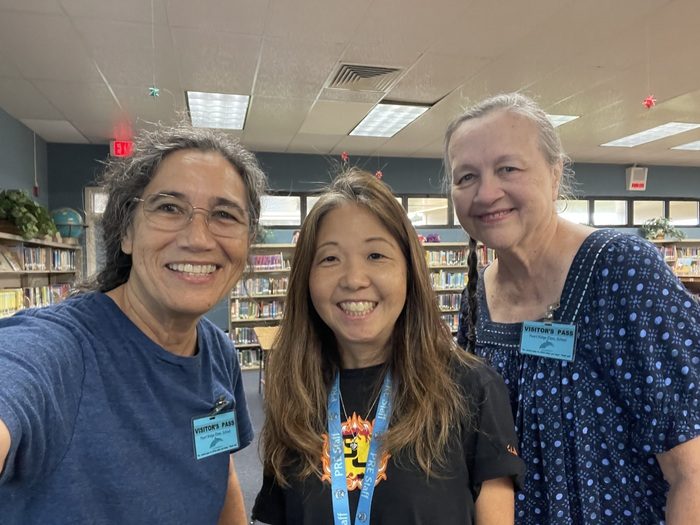
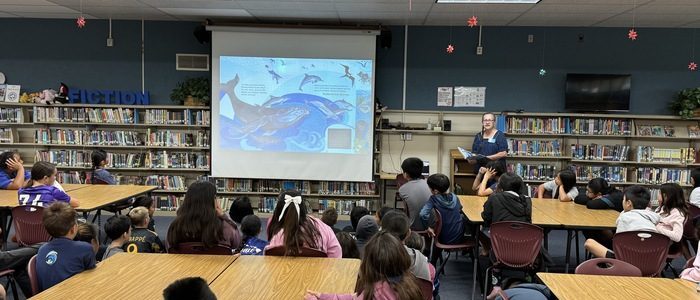
Book Review: Tala Learns to Siva

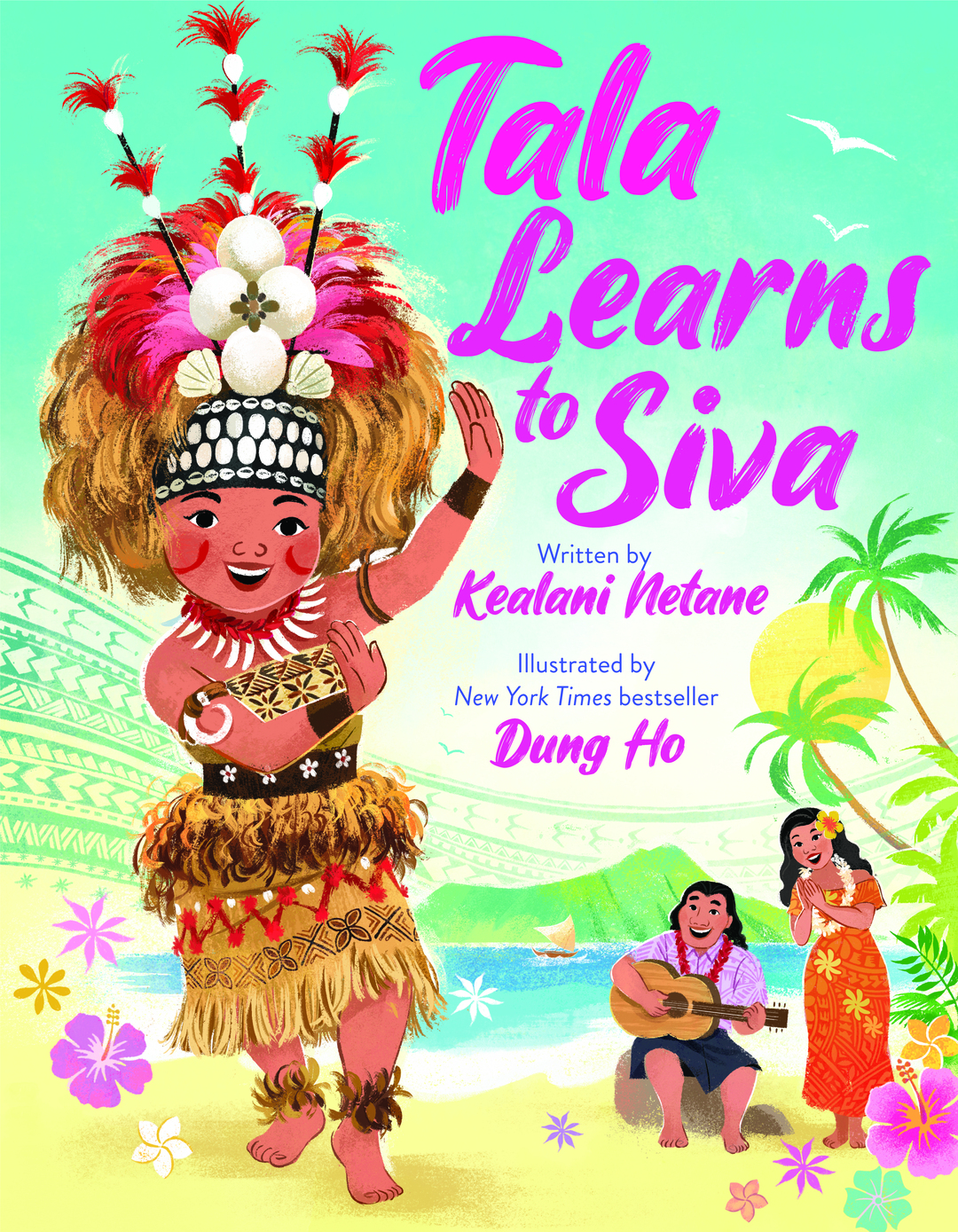
Cover

There’s something magical about children’s books written by Native Hawaiian and Pacific Island authors.

Until recently, stories about our communities told by our people were largely missing in children’s literature. Thankfully, the times are changing, and more voices are emerging to tell our own stories. The best of these narratives sing with heart and authenticity that comes from being rooted in the community.

Tala Learns to Siva is one of those stories. This delightful Pacific Island story by talented author Kealani Netane deserves a space not just on a child’s bookshelf but on school library shelves everywhere. 

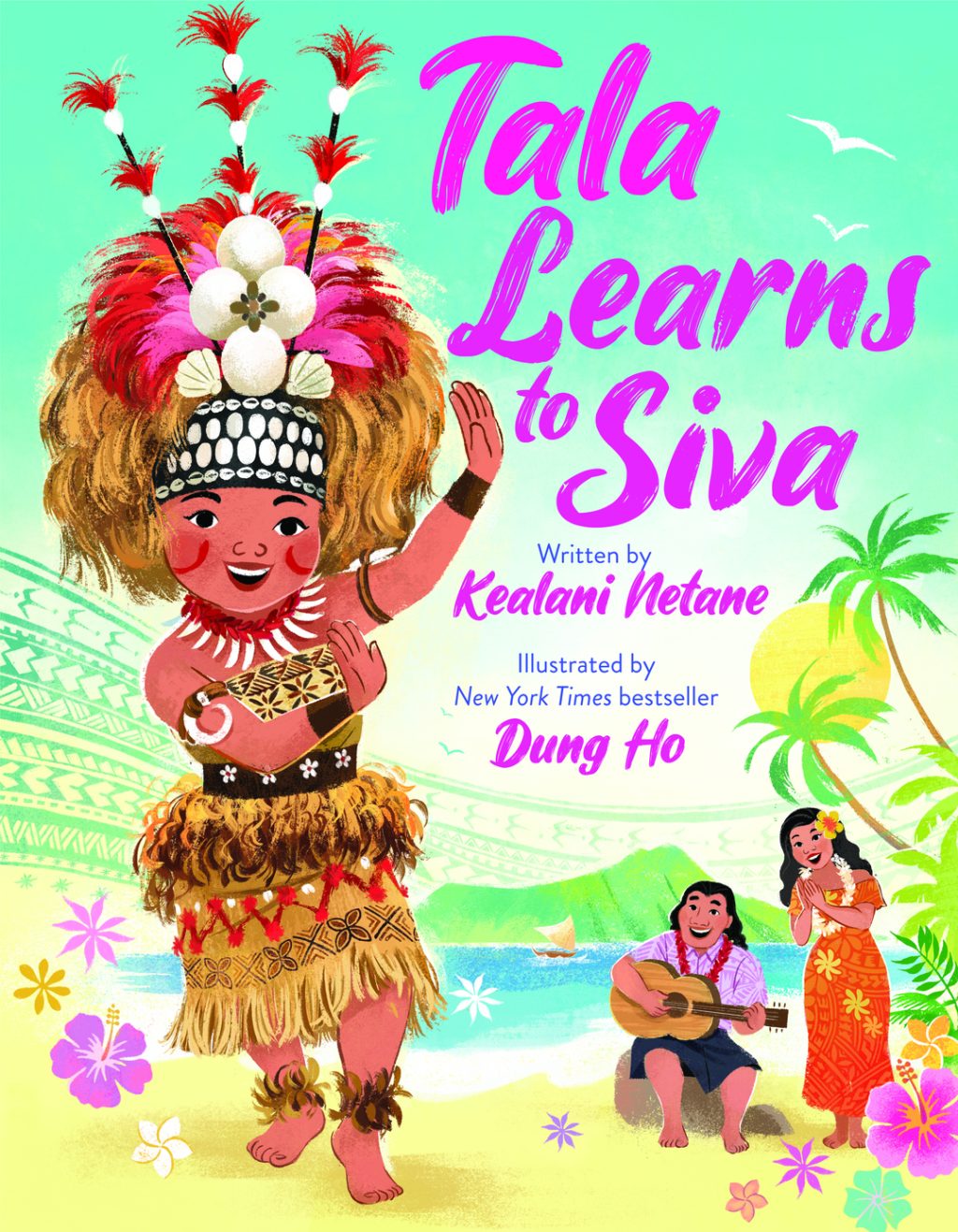
Cover
Illustration @ Dung Ho from Tala Learns to Siva by Kealani Netane (Scholastic/Orchard Books, 2024)

Young Tala watches her Aunty Siva perform the traditional Samoan taualuga. Captivated by her aunt’s grace and beauty, Tala asks her to teach her to dance in time for her grandmother’s birthday party. But as with most things worth learning, what at first seems easy actually takes work and practice. Will Tala learn to dance in time to share her siva with her grandmother? She decides to do her best.

Like all good stories for children, Tala Learns to Siva resonates with young readers everywhere. They will easily relate to the universal story of the young protagonist’s determination to overcome her doubts and fears. Tala practices everywhere she goes and works hard to master the hand and foot movements. But it’s when Tala understands that the dance connects her to her ancestors that she truly begins to shine.

Tala-and-Family
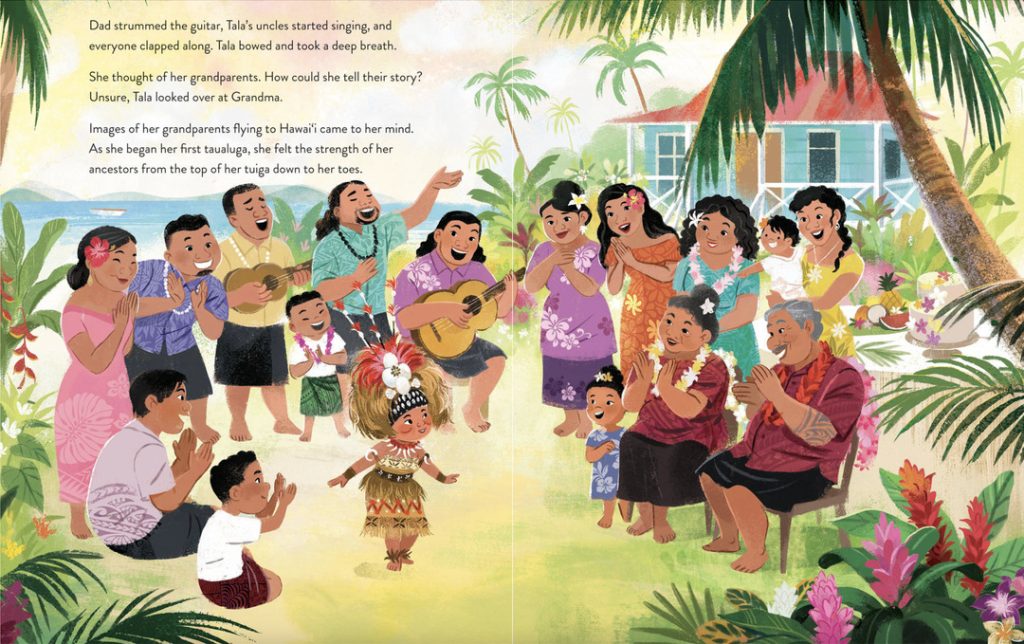
Illustration @ Dung Ho from Tala Learns to Siva by Kealani Netane (Scholastic/Orchard Books, 2024)

The illustrations by New York Times bestselling illustrator Dung Ho are colorful and vibrant. The art beautifully invites the reader to become a part of Tala’s island family.

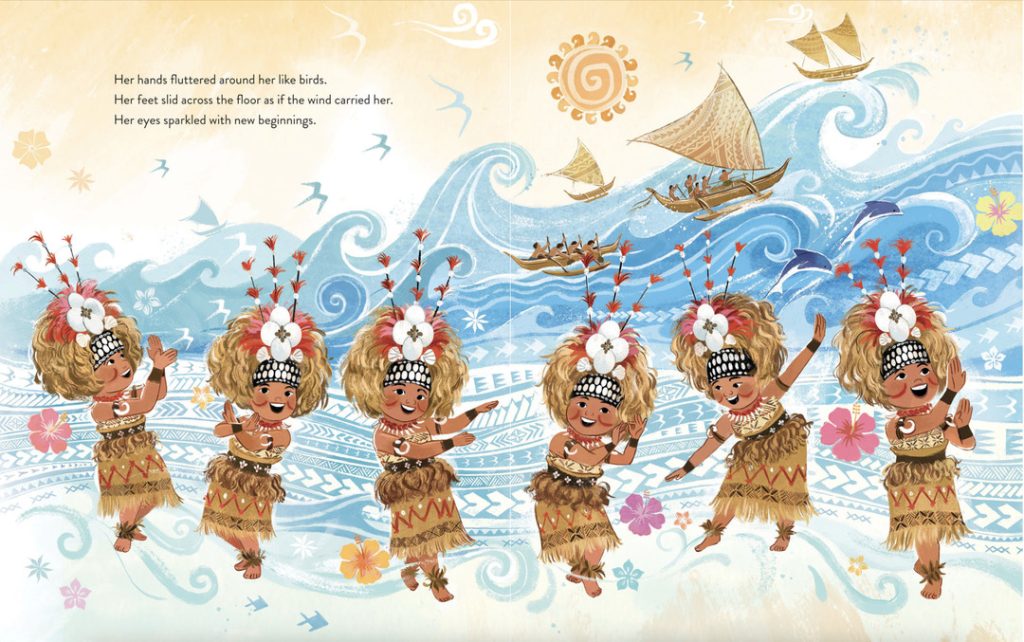
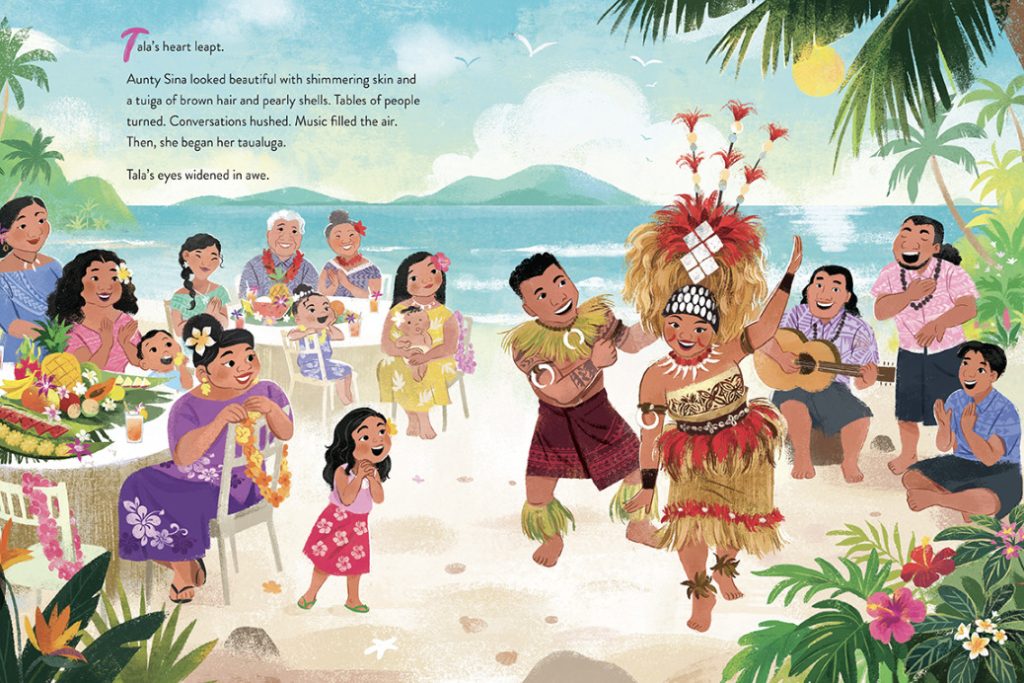
Two spreads are my particular favorites. I love the dance spread on pages 20–21. Both text and art do a wonderful job of capturing Tala’s joy and triumph as she dances the taualuga solo for her family and friends. 

And I especially adore the family’s reaction to Tala’s solo on page 22. Growing up in Hawai’i, I’ve attended many Samoan parties and celebrations, and they often end just as page 22 so effectively shows, with elders and others joining in on the fun. This page is my very favorite, I think, because it speaks to me personally, because these folks could be my own friends and neighbors. And isn’t being able to relate to a character or to a piece of art what makes a book special?

Tala-dances-solo
Illustration @ Dung Ho from Tala Learns to Siva by Kealani Netane (Scholastic/Orchard Books, 2024)

The back matter includes a glossary of terms and an author’s note. In it Kealani expresses her love for Samoan dance and traditions that she gratefully passes on to her children.

Tala Learns to Siva is a wonderful introduction to Pacific Island culture and a most worthy addition to any bookshelf.

Tala Learns to Siva
Written by Kealani Netane, illustrated by Dung Ho
Orchard Books, an imprint of Scholastic Books, 2024
ISBN 978–1338859317
Suggested for ages 4 — 8 

Meet author Kealani Netane in our talk story interview! 

Please read our disclaimer to learn our book review policy. Mahalo!

Galley review copy and images courtesy of Kealani Netane.

Publisher’s Weekly Sneak Peak: Kaho’olawe Picture Book!

PW-sneak-peak

I’ve missed you, my reading and writing friends! It’s been a little while since my last blog post, but that’s because I’ve been working on a couple of manuscripts. As Stephen King once said, When you’re writing, the book is boss. No kidding.

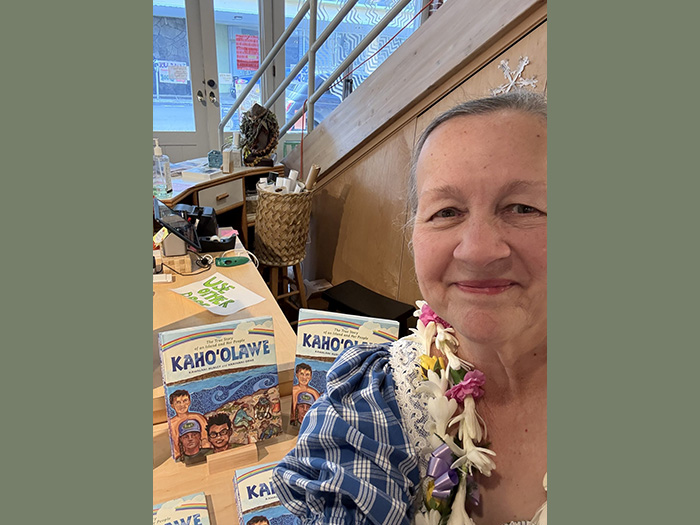
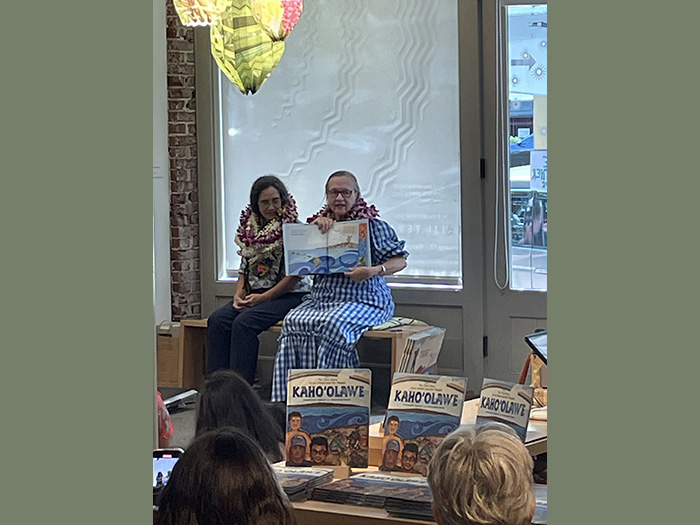
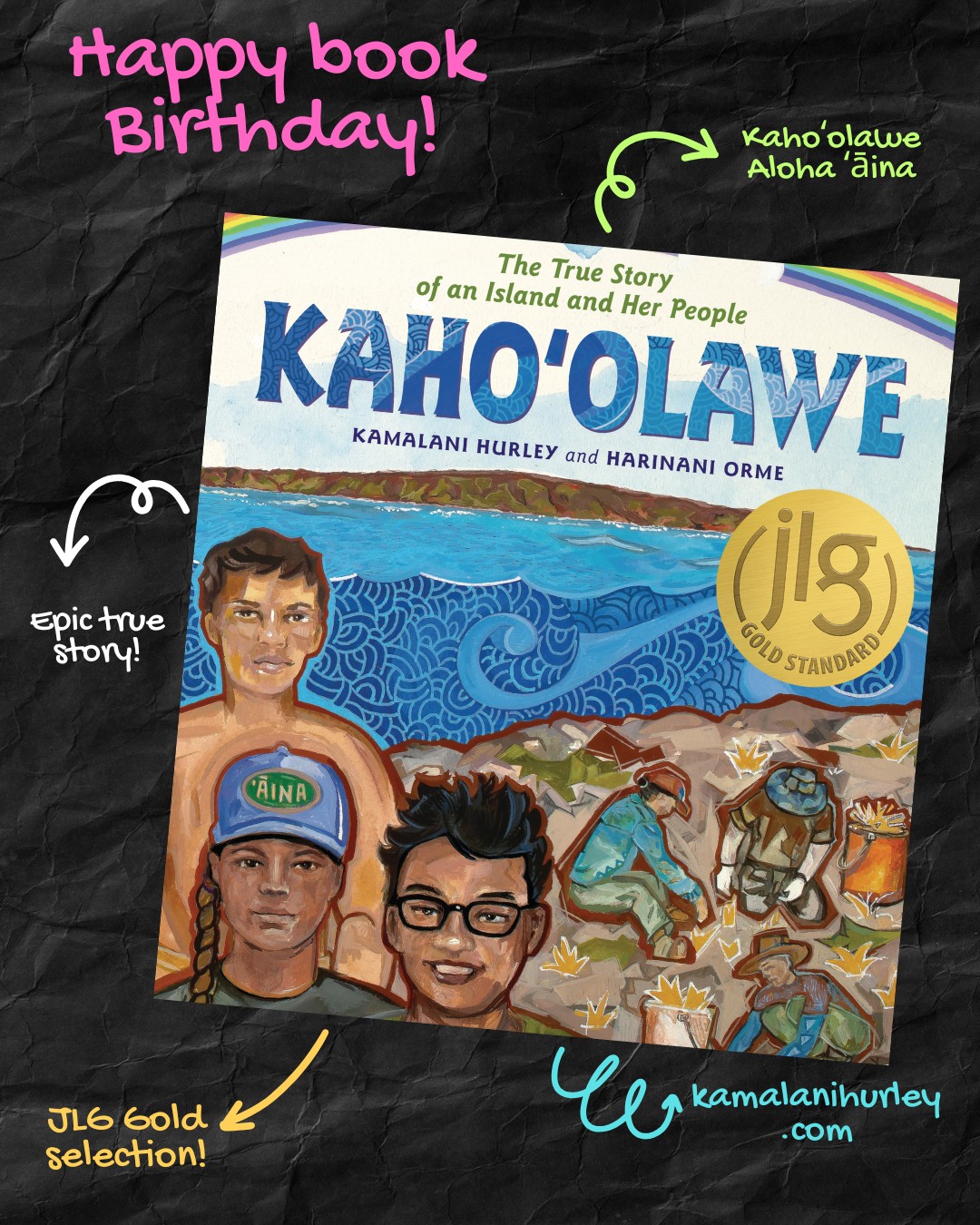
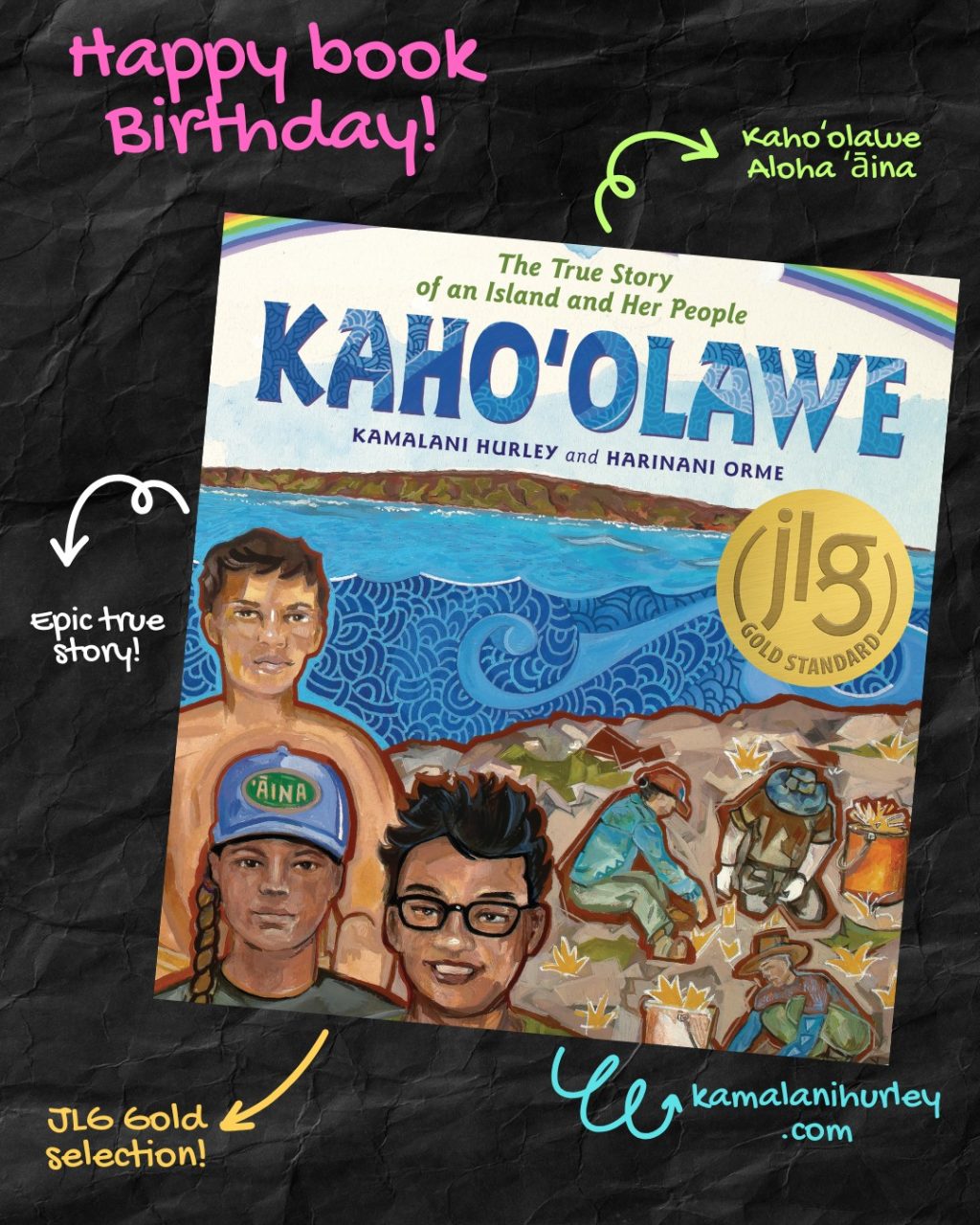
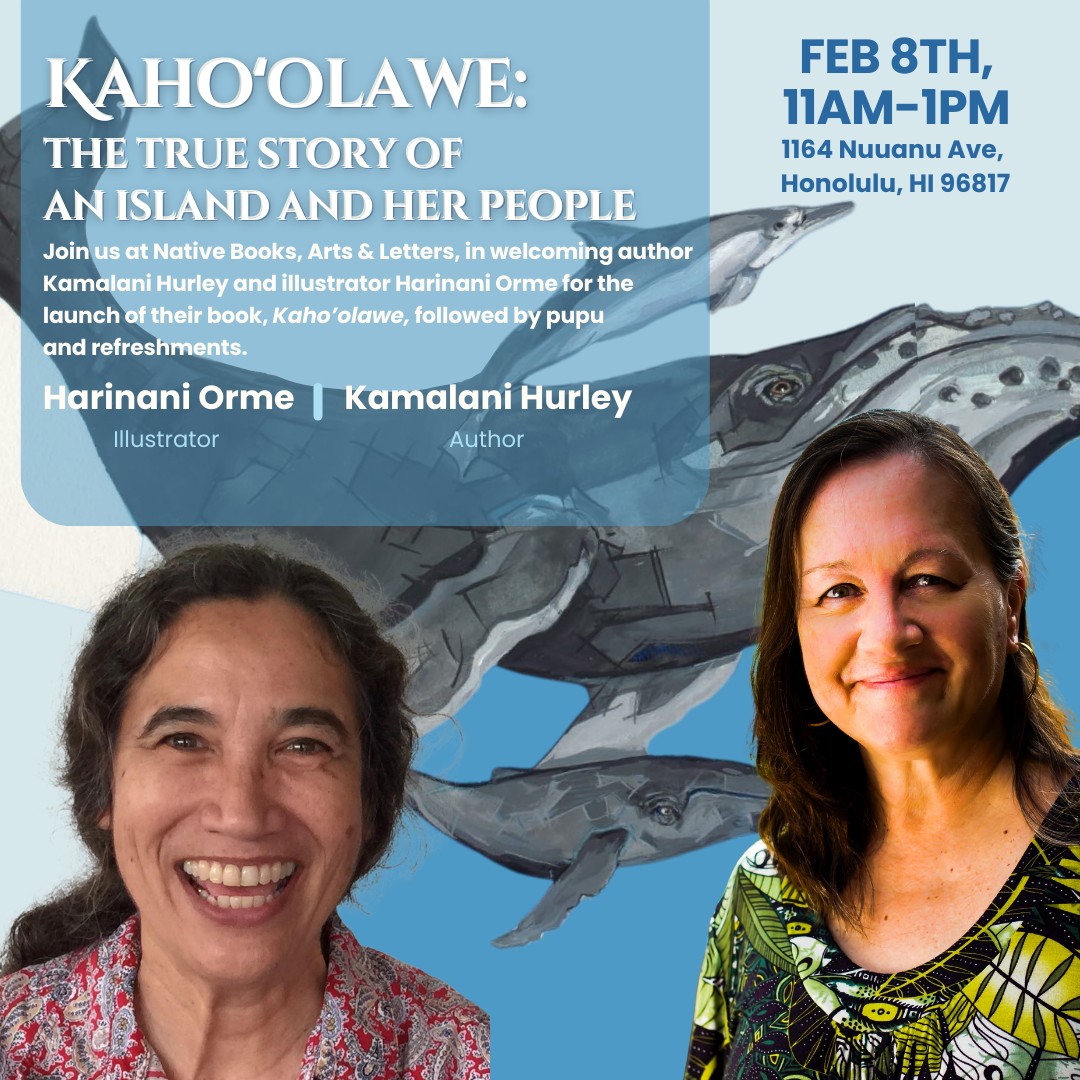
My debut picture book, Kaho’olawe: The True Story of An Island and Her People (illustrated by Harinani Orme) is scheduled for Spring 2025. And look what I found in Publisher’s Weekly Spring 2025 Children’s Sneak Peak issue! 

PW-sneak-peak
from Publisher’s Weekly Children’ Seank Peak Spring 2025 

Woohoo!

It’s been two-years from idea to almost publication, and I can’t wait to share this book as well as my other projects with you!

Mahalo to Michael Nahoʻopiʻi of the Kahoʻolawe Island Reserve Commission and especially Davianna McGregor of the Protect Kahooolawe ‘Ohana for their generosity and encouragement.

More soon!

Book Review: I See Color, by Valerie Bolling and Kailei Pew

I-see-color-cover

Author Valerie Bollingʻs picture books are always great choices for kids. Her colorful, lyrical early readers and picture books focus on the simple joys and triumphs of childhood.

Her first non-fiction picture book is a collection of biographical sketches, I See Color: An Affirmation and Celebration of Our Diverse World. Featured are leaders, many little-known to today’s kids, who have made profound impacts on the world. The collection’s short, engaging format makes it the perfect introduction of short biographies to children.

I am delighted that our own Native Hawaiian activist and scholar, the late Dr. Haunani-Kay Trask, is one of the featured unsung heroes! Haunani is presented in a lovely a two-page spread: a concise yet thoughtful passage highlighting her key contributions accompanied by a beautiful illustration. 

I-see-color-cover
Cover Illustration @ Laylie Frazier from I See Color by Valerie Bolling and Kailei Pew (HarperCollins, 2024)

The passage has all the hallmarks of author Bolling’s wonderful books with lyrical, approachable language, and the artwork is gorgeous. Most of all, I love that I See Color can become a jumping off point for kids everywhere to discover more about the people featured but especially about Haunani-Kay Trask and her fierce aloha for our lāhui.

This beautifully illustrated picture book is the ideal gateway for kids to learn about the people of color who continue to make a difference in our lives. 

I See Color: An Affirmation and Celebration of our Diverse World
Written by Valerie Bolling and Kailei Pew, illustrated by Laylie Frazier
HarperCollins, 2024
ISBN 978–0063234260
Suggested for ages 4 — 8 

Please read our disclaimer to learn our book review policy. Mahalo!

Review copy and image courtesy of Valerie Bolling.

Interview with Native Hawaiian Author Kealani Netane
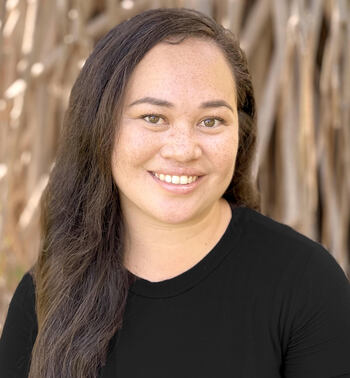
If you recognize Native Hawaiian/Sāmoan writer Kealani Netane’s name, you’re probably a fan of her popular bookstagram, Little Pasifika Readers. Or you might you recognize her from her thoughtful blog posts at Pacific Islanders in Publishing. Now add children’s book author to her list of professional accomplishments.

Her wonderful debut picture book, TALA LEARNS TO SIVA (Scholastic, 2024) is the sweetest story of a child’s desire to dance the traditional Sāmoan taualuga just as like graceful aunt. Through engaging text and beautiful illustrations by award-winning illustrator Dung Ho, young readers learn, like Tala, that they can do anything with practice and patience.

We are thrilled to talk story with Kealani today.

Aloha mai, Kealani! For those readers who haven’t met you yet, could you please tell us a little about yourself? 

Aloha! I’m Kealani Netane. I am the author of TALA LEARNS TO SIVA, published by Scholastic. I am Hawaiian and Samoan. My dad is from ʻUpolu, Sāmoa, and my mom is from Waialua, Oʻahu and Honokaʻa, Hawaiʻi. I currently stay home with my three kids though I previously worked in education.

My biggest supporter is my husband, Xavier. He is my first critique partner and my last before I send a manuscript to my agent. He’s not a reader or a writer, but he is Samoan/Tongan so his cultural perspective is really helpful.We live in Kapolei, Hawaiʻi.

Where did you grow up? What high school did you grad from?

I was raised in Kailua, Oʻahu until my tween years when we moved to Kapolei. I graduated from Kamehameha-Kapālama in 2008.
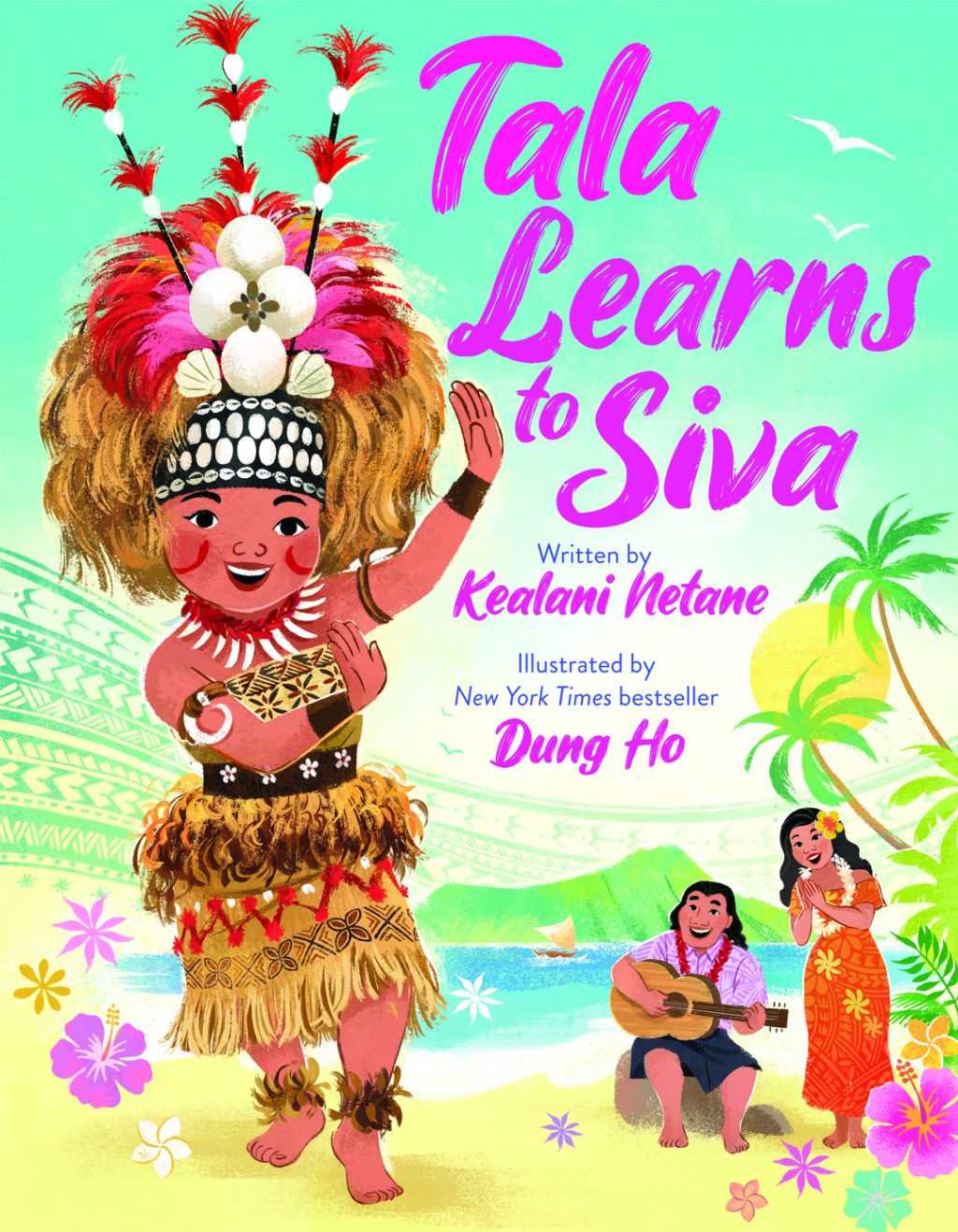
Cover-Tala-Learns-to-Siva
Illustration @ Dung Ho from Tala Learns to Siva by Kealani Natane (Scholastic, 2024)

Congratulations on your debut picture book! There are not a lot of books for kids by Native Hawaiian and Pacific Islander writers. Why do you think that is? What do you think we can do the change that?

Thank you! My grandma was a great storyteller. We would holoholo around the island and she’d tell fantastic stories about every area, but she was rarely interested in writing those stories down. For most of our culture’s existence, there wasn’t a need for books because we passed things down orally. As our world changed, books became more important. Now there is a need for children’s books by Pacific Islander writers. There are many efforts by local organizations to create books for our children, and there is a small but growing community of Pacific Islanders in U.S. traditional publishing. Even with all the current work being done, there is room for much more.

The CCBC found that only .002% of the books published in 2021 that they received were by Pacific Islanders (Link). That number doesn’t include the books published locally, only nationally. My biggest goal for my writing and my social media is for our children to have accessible books that mirror their life. Dr. Rudine Sims Bishop stated, “When children cannot find themselves in the books they read…they learn a powerful lesson about how they are devalued in the society of which they are a part” (Link). In order for there to be more books by, about, and for Pacific Islander children, there needs to be more Pacific Islanders in every sector of the publishing world. We should all be helping to lift and build others up to ensure that our children have access to our stories.

I’m really excited about the growing number of Māori and Pasifika authors in Aotearoa. The work they are doing there is truly inspiring. I’m hoping there will be more upcoming Pacific Islander authors in the U.S., especially those of Micronesian and Melanesian descent. Many people have reached out to me asking specifically for books from those communities. We definitely need more books for all of Oceania.

We agree! So what inspired you to choose Sāmoan dance for your debut novel?

I am a dancer. I grew up dancing hula, but I always loved watching older girls dance the taualuga. I thought they were the most beautiful and graceful dancers. As I grew older, I learned how to dance the Samoan siva and slowly came to understand the meaning behind the dance. In some ways, this picture book is a reflection of my own life. And in other ways, it’s reflective of how I want to pass on this traditional knowledge to my own children.

Illustration @ Dung Ho from Tala Learns to Siva by Kealani Natane (Scholastic, 2024)

What beliefs are your work challenging?

TALA LEARNS TO SIVA is challenging the belief some people that Polynesian dances are purely for their entertainment. I do want to push back on the tourist-centric ideas people have about our islands and cultures. I want our children to see that their culture is for them first.

You also run a popular bookstagram. When did you start Little Pasifika Readers and why? What are your goals? What inspires you to write your posts and articles?

I started my bookstagram, Little Pasifika Readers, in early 2021. When I started writing in 2020, I collected resources on Pacific Islander children’s literature. It was difficult to find books, and I imagined others also had a hard time, so I created an avenue to share those resources. I was already following a few other Pasifika bookstagrams and found a community with them when I created my own.
My prevailing requirement for posting a book is that the book has to be written or illustrated by a Pacific Islander. There are many books about us, but not as many books by us. My next requirement is that the book has to be accessible, meaning the book either needs to be available at public libraries or there needs to be a website where people can easily purchase the book.

What are your hopes and dreams for the year and beyond in terms of your social media/writing career and what you would like to see published in the future?

I have so many book and career ideas that I don’t have the time to do all of them, so I have to pick and choose which projects I want to take on. My bookstagram account is something fun that I do on the side, and my focus with that is to continue to share resources for people to find Pacific Islander authored children’s books. I don’t keep up with it as much as I’d like because my focus is more on Pacific Islanders in Publishing and the work I do with Keala Kendall and Manuia Henrich. We are working on creating development opportunities for Pacific Islander writers and continuing to share new book releases.

For my writing, I hope to finish the edits of a picture book I’m working on, and then I hope to keep working on my middle grade and young adult projects. I don’t know if I’ll finish those projects this year, but hopefully they will be ready for submission in the next couple of years. I also have other picture book ideas lingering on my computer that I’m unsure about, but I hope to find ways for them to work.

As for projects outside of my own, I’d love to see more Pacific Islander authored books in all genres, especially adult romance and contemporary middle grade and young adult.
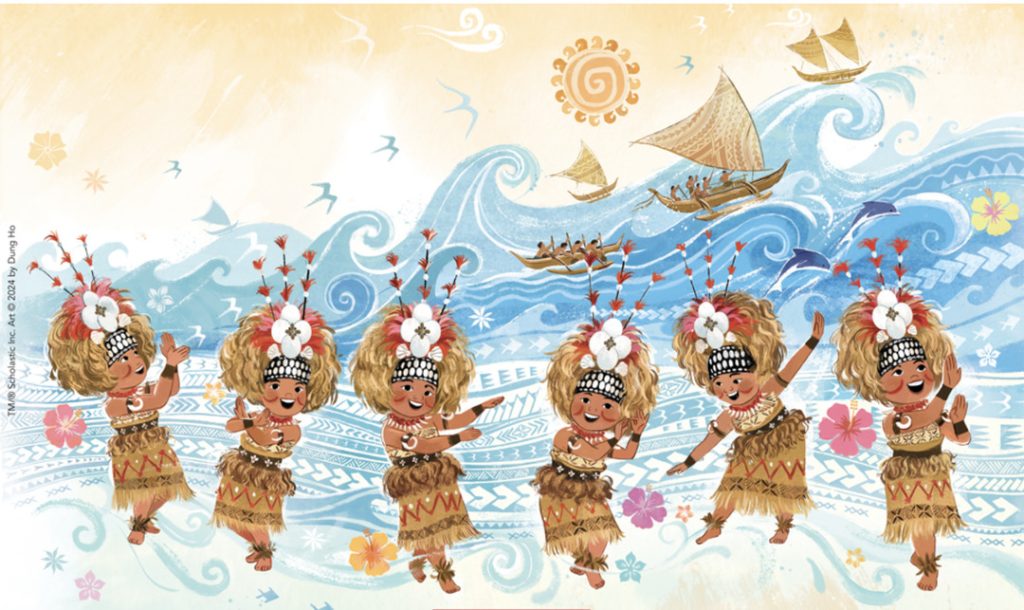
Illustration @ Dung Ho from Tala Learns to Siva by Kealani Natane (Scholastic, 2024)

Can you share a bit about what youʻre working on next?

I have another picture book project that I’m looking forward to announcing soon. I am also working on a middle grade novel and a young adult novel. Both of those projects are still in the early phases, so it’ll be many years before they will be ready for publication.

What do you enjoy most about writing, especially for kids? What are some of your greatest challenges?

What I love most about writing for kids is that kids are very glued into the specifics. When writing, I have to look at things from the mind of a child and children notice everything so I have to notice everything. Children are fascinated by the things adults often take for granted, so writing children’s books helps me slow down and appreciate life a bit more.

The greatest challenge when writing picture books is being able to tell an entire story arc in very little words. We also have to leave space for the illustrator to tell their story. So it’s a balancing act.

What kinds of books do you enjoy reading? Any favorites?

I love all kinds of books. I read across age groups and genres. There are a bunch of books I’ve recently read and enjoyed. In the picture book category, I loved Finding Papa by Angela Pham Krans and We Who Produce Pearls: An Anthem for Asian America by Joanna Ho. I really enjoyed the middle grade novel, Mani Semilla Finds Her Quetzal Voice by Anna Lapera. I felt like a proud aunty reading Mani’s feminism journey. My favorite young adult book so far this year is Dragonfruit by Makiia Lucier. The story is so heartwarming and adventurous.

In the adult category, I love reading romance and genre fiction. My favorite romance authors right now are Kennedy Ryan and Tia Williams. My favorite genre fiction book is Evil Eye by Etaf Rum.

I also love non-fiction books, especially books focused on Indigenous knowledge like Braiding Sweetgrass by Robin Wall Kimmerer and social justice like Angela Davis’ Freedom is a Constant Struggle. I’ve been getting into more historical books, and I learned so much from Aloha, Betrayed by Noenoe Silva and The Hundred Year Walk: An Armenian Odyssey by Dawn Anahid MacKeen. I’ve also been slowly reading more poetry books, and my favorite right now is ‘Āina Hānau/Birth Land by Brandy Nālani McDougall. I truly feel seen by her poems.

As you can probably tell, I love reading, and I try to read as much as I can although I don’t nearly have enough time to do so. I do keep a running list on my phone of books I want to read.

What advice would you give an aspiring author/blogger?

My advice for aspiring writers is to observe, learn, write, edit, seek feedback, and edit more. Observe yourself. Observe those around you. Learn from our chants, songs, legends. Learn from your own family history. Learn from what has already been written. Learn from other writers. Then, write. There’s only so much we can do in our heads. As the ʻōlelo noʻeau tells us, ma ka hana ka ʻike. We learn best when we actually write. Next, find a writing community. They will help with feedback. And edit, edit, edit. Once everything is ready, either self-publish or query agents/publishers. Also, you don’t have to write something cultural. Write whatever you want.

Are you active on social media? How can readers find out more about you and your work?

My website is kealaninetane.com. I also write the blog posts for Pacific Islanders in Publishing. Our blog posts are focused on showcasing the latest published books by Pacific Islanders and helping Pacific Islanders navigate the publishing industry. 

Mahalo nui, Kealani, for sharing your manaʻo with us and for the good work you’re going to encourage more Pacific Islander creators. We look forward to seeing more from you! To learn more about Kealani Netane, please visit her website, Kealani Netane.com, her blog posts at Pacific Islanders in Publishing, and her bookstagram, Little Pasifika Readers.

Images courtesy of Kealani Netane.

Interview with Author/Illustrator Yuko Green

Yuko-green

Yuko-greenPick up any popular children’s book in Hawai’i, and chances are that it is illustrated by Yuko Green. The award-winning author/illustrator of dozens of children’s picture and activity books, Yuko’s mixed-media artwork is unmistakable with its vibrant colors and delightful subjects that children love. Her work celebrates the people, nature, and traditions of our islands.

We are so pleased to talk story with Yuko today.

Aloha, Yuko, and welcome! For those who havenʻt met you yet, could you please tell us a little about yourself?

Aloha mai kākou! I am an illustrator and author of children’s books, living on the Big Island of Hawaiʻi. I am grateful to have had opportunities to illustrate and/or written more than forty children’s books and many childrenʻs activity books, with Hawaiian themes since 1989. I am also an art teacher for children.

I moved to Hawaiʻi from Japan in 1987. I have lived in Hawaiʻi more than 35 years, so I call Hawaiʻi my home now and like to call myself kamaʻāina 🙂

Your art is so expressive and colorful. If you had to choose a favorite project, which would it be and why?

Mahalo for your kind words!

I love to create illustration with an array of colors I see everyday in Hawaiʻi, and these vibrant and multicolored illustration has become my signature style. For my art, I use watercolor, collage, and digital mixed media to create illustrations. Working with textual mixed media (traditionally or digitally) adds visual interest to my illustrations, so mixed media collage is my favorite technique I use at this moment, and I have been using this technique for most of my recent books, including my latest children’s book Tūtū’s Secret written by Gloria Itman Blum.

I was illustrating this book when our first granddaughter was born, and since this story was about the relationship between tūtū and granddaughter, the story resonated with me. This book also allowed me to grow as an illustrator, learning to add the details digitally to my large forms of collage and finding the balance of those two elements. So this book turned out to be my favorite project.

Tutus-secret
Illustration @ Yuko Green from Tūtūʻs Secret by Gloria Itman Blum (Island Heritage, 2023)

What was the journey like to becoming an artist? Did you always knew you could create art?

As long as I remember, my dream was to illustrate children’s books, from my young age. That dream came true when God brought me to Hawaiʻi. In my early career, I was given the opportunity to illustrate a textbook by Bess Press in 1989 and illustrated and designed many island products by Island Heritage Publishers. I also illustrated many cultural paper dolls for magazines and a publisher on the continent, Dover Publications, for about ten years.

Then from around 1996 through 2000, I illustrated a series of Hawaiian theme educational coloring books, including Hawaiian Plants and Animals and Exotic Flowers for artists (76 pages), for Dover. To accomplish the task, I did intensive research and study, and that knowledge became my foundation for illustrating Hawaiian childrenʻs books. I give thanks to God how He has guided my illustrating career, which I have never dreamed I’d have when I first landed on the Big Island.

I also cannot thank enough for the relationship I have with Island Heritage since my first encounter in 1993 designing island products and my first book in 1997. I illustrated many childrenʻs books, board books, paper doll books, and coloring and activity books, and we continue to work to create for island keiki to this day. One of the longest selling books I illustrated with them, Humu: The Little Fish Who Wished Away His Colors, is 23 years old now! The author Kimberly A. Jackson and I are still good friend, and we are learning ʻōlelo Hawaiʻi, Hawaiian language, together now.

What do you enjoy most about creating art? 

When I see keiki reading my books in the library or other public places, or when moms of my art class students tells me they used to read my books when they were young, I feel so humbled and grateful, and feel rewarded for my hard work.

Song-for-the-colors
Illustration @ Yuko Green from A Song for the Colors and Flowers of Hawaiʻi by Kawaikapuokalani Hewett (Island Heritage, 2019)

Who would you say are your biggest supporters?

My family. My two daughters have seen their mom illustrating children’s books from their young age, and have been my best critics, giving me honest and valuable feedback.

My husband, Stephen, has always been there for me in every way to encourage me and support me, whether to assist me to decide on the career path or to decide between this color or that color for the keiki’s dress on a page. He was born and raised in Hawaiʻi, with knowledge and love for Hawaiʻi’s nature and culture, that has given me tremendous insight to all aspects of island themes. He always believe in me, even when I lose confidence, and so I know his faith in me made me to be the artist I am today.

Can you share a bit of your current work?

Being a Japanese native, I have always wanted to work for Japanese publishers one day. Since 2017, I have illustrated two coloring books for a Japanese Christian publisher, Olives Press, and currently am working on the third one.

I am also working on the 5th coloring book with a local organization, Keiki Heroes, on local keiki characters I developed with community leaders when COVID started. This project led me to work with several non-profit organizations in Hawaiʻi to help and educate keiki on various issues. I am very grateful that I can help these causes through my art. 

What are your hopes and dreams for the year and beyond in terms of your artistic career and what you would like to see published in the future?

As much as I love creating and illustrating books, I enjoy having real relationships with my young readers. So my hopes and dreams for the year to come is to develop relationships in my community and on the Big Island, and in Hawaiʻi at large, to reach out and doing art with children. My on-going goal is to do more keiki art workshops and teach art in the classroom.

I also have this dream of creating a book illustrated with children’s art, and it looks like it will happen soon thanks to a workshop I offered on “Coloring Book Creation” for ages 13–18 at East Hawaiʻi Cultural Center in Hilo. The workshop theme is “Mālama ʻāina”, about endangered animals and plants of Hawaiʻi and how kids can help to protect them. 

Honu-honu-where-are-you
Illustration @ Yuoko Green from Honu, Honu, Where are You? by Tammy Paikai (Island Heritage, 2016)

Where do you get your inspirations?

Hawaiʻi’s rich and diverse culture, history and nature have become my primary subject and inspiration for creating my children’s books. Over the years, my aloha for the ʻāina has grown deeply in me and is reflected in my books for keiki, whether in vivid stories of traditions of Hawaiʻi or illustrations featuring many native plants and animals.

In addition to books, what other kinds of art do you do?

Besides illustrating and writing children’s books, I am also an art educator. Currently, I enjoy teaching in the K‑5 art program at Waimea Elementary School. Teaching young children is my other passion, and I feel so grateful that I can share our beautiful world through art with them.

What advice would you give an aspiring illustrator?

Besides improving your artistic skills, knowing who you are can help you navigate your illustrating career. For example, when I just started, I concentrated on creating my paper doll books. It’s such a niche market, but it was a good decision for me to focus on that niche because I really enjoyed doing it and not many people was doing it at the time. Over time, my illustration skills improved because I was creating lots of art.

Another advice is to start locally instead of targeting big markets and competing with a large group of artists. When you start locally, such as on local magazines, newsletters, and businesses, you start to develop your style. You also learn about the illustrating business as you hone your skills. You become more experienced, and your portfolio grows.

Are you active on social media? Do your readers contact you? What do they say?

My website is www.yukogreen.com, and my Instragram account is @yukogreen.art. I also always appreciate hearing from my readers. I have received such nice messages from teachers, parents, and grandparents. I read and respond to all of them, even just to say hello. 🙂

Mahalo, Yuko, for talking story with us! We wish you all the success in the world! To learn more about Yuko Green and her books, please visit her website or at Instagram

Images courtesy of Yuko Green.

Interview with Native Hawaiian/Guamanian Author Catherine Payne

Catherine-Payne

Native Hawaiian/Guamanian author Catherine Payne lives by the ancient ChamorroCatherine-Payne value of inafaʻ maolek, or making things right. An important aspect of inafaʻ maolek is that the whole community, not just the nuclear family, is responsible for raising healthy, happy children. Picture books, says the author of five books for kids, can be key to opening conversations between children and grown-ups.

We certainly agree. Welcome, Cathy, to our talk story! 

Aloha and håfa adai! Before we begin, please allow me to explain a little about our language.

The CHamoru Language Commission on Guam decided to use the CHamoru spelling for its orthography, but some people still use the Chamorro spelling. The Chamorro people in the Commonwealth of the Northern Mariana Islands still use the Chamorro spelling. To avoid the debate, I used CHamoru/Chamorro in my answers.

Since I’m mixed race but born and raised on Guam, I prefer to be called Guamanian.

Mahalo for that, Cathy. For those who haven’t met you yet, please tell us a little about yourself. 

My mother is from Oahu, and my father is from Guam. I was born and raised on Guam where I ate CHamoru/Chamorro food as much as I could! I graduated from the Academy of Our Lady of Guam. My biggest supporter was my maternal grandfather, who was from Oahu. He passed away when I was in high school, but his support still means a lot to me.

Why did you become author? Have you always wanted to be an author?

I’ve loved writing since I could grip a pencil, but I didn’t try children’s literature until about a decade ago. There are so many kinds of writing that it took me a while to figure out that I should consider children’s literature.

Chepchop-Unai
Chepchop Unai by Catherine Payne (University of Guam Press, 2018))

What do you enjoy most about writing, especially for kids? What are some of your greatest challenges?

I love reading my books to children and seeing their reactions! My greatest challenge is finding time to grow as a writer. I’m busy as an English instructor and tutor, but I read craft books and watch craft webinars when I can.

What is your writing process like?

I spend a lot of time thinking and talking about story ideas before drafting. I usually revise drafts countless times.

Three of your books are co-authored by your brother, John Payne. What is it like to work with a family member? What strengths do each of you bring to a project?

I like working with my brother to develop stories. He brings his imagination; I bring my analysis. While he comes up with new ideas, I follow industry standards for plotting.

Please tell us about Chepchop Unai. What inspired you to write that story? Who inspired your main characters? What do you like best about them?

I’ve always wanted to write about Guam because it’s my home. Chepchop Unai is written mostly in English, but it has a sprinkling of CHamoru/Chamorro words. It reflects the way I speak. My first language is English, but I use CHamoru/Chamorro words to express certain ideas. My family inspired my main characters because the story depicts a close relationship between a child and his grandparents. I like showing how grandparents are important in children’s lives.

Mole-and-Tell
Mole and Tell by Catherine and John Payne (Science Naturally, 2023)

Mole and Tell is your STEM picture book. Itʻs quite different from your other titles. What was the journey like to write that book? What was your favorite part of writing your books? What was most challenging?

Yes, I ventured outside my comfort zone to write a science book like Mole and Tell. One of my favorite parts of the process was having incidental diversity. It features a Native Hawaiian girl named Leilani! The most challenging part was making scientific concepts understandable and engaging at the same time.

Youʻve also written two board books for younger kids, Ten Little Surfers in Hawaiʻi and These Little Kittens in Hawaiʻi. What inspired you to write those books? How did those books come about? What did you enjoy about writing them? 

I’ve always wanted to write about Hawaiʻi because I love visiting there. After writing and revising stories set in Hawaiʻi, I sent them to a publisher. Luckily, they’ve done well.

Without giving too much away, what is I Lalai i Bilembaotuyuan about? Can you talk about your main character? What characteristics do you love about her? 

I Lalai i Bilembaotuyan is a picture book about a girl learning how to play the bilembaotuyan, a CHamoru musical instrument, from her grandfather. At the same time, she learns how to cope with anticipatory grief. 

Through her curiosity, Lalai finds her passion for playing the bilembaotuyan. I love Lalai’s curiosity and her desire to learn. It’s important for children to explore and try things to find their interests and passions. 

I-Lalai-i-Bilembaotuyan
I Lalai i Bilembaotuyan by Catherine Payne and John Payne (University of Guam Press, 2022)

Do you have any experiences as a Guamanian writer that you might share with our readers? What would you like to see change in the industry regarding the acceptance of BIPOC creators? 

The U.S. book industry focuses on Western story structures like Freytag’s Pyramid, but following that model doesn’t come naturally to me. I hope that the industry becomes more open to alternative narrative structures.

What beliefs do you think your work challenging?

I’ve met people who didn’t think it was possible to have a literary career while living on Guam. Thanks to the internet, I’ve joined online writing communities, taken classes, and collaborated with publishers beyond Guam’s shores. Living on Guam hasn’t hindered me.

What are your hopes and dreams for the year and beyond in terms of your publishing career and what you would like to see published in the future?

I’m having fun writing more science picture books, and I’m also learning how to write chapter books and middle-grade novels.

What advice would you give an aspiring writer?

Please don’t let your location limit you. You can thrive even if you live on an island in Typhoon Alley like Guam. Sure, storms make life harder, but they run out of rain.

As you know, we always end our interviews with niele questions … Is there a fun fact youʻd like to share about yourself with young readers?

When I was a little girl, I wanted a name like Leilani, so I gave a character in Mole and Tell that name.

What kinds of books do you enjoy reading? Any favorites?

I enjoy reading short stories with plot twists like Ray Bradbury’s “A Sound of Thunder.”

Who is your hero?

I admire Queen Liliʻuokalani’s leadership and artistry. She is a good role model for females.

She’s my hero, too. What advice would you give your younger self?

It’s ok to not know what you want to be when you grow up. I eventually found my purpose in life after taking paths with dead ends.

Good advice, for sure. Mahalo, Cathy, for talking story with us! To learn more about Cathy, visit her on Instagram and listen to her watch her interview with Read with Rosa on YouTube. 

Images courtesy of Catherine Payne.

Interview with Native Hawaiian Author Megan Kamalei Kakimoto

Megan-Kamalei-Kakimoto

Native Hawaiian author Megan Kamalei Kakimoto is a rare literary gem: aMegan-Kamalei-Kakimoto storyteller of YA (young adult) and adult subject matter that is authentically rooted in Native Hawaiian life experiences.

Her USA Today National Bestseller, Every Drop is a Man’s Nightmare, is a short story collection that reviewers describe as “powerful coming-of-age stories that prove it is possible to be many things, all the time, all at once” (Author Amy Hempel), “rich and wise, humming with confidence” (New York Times Book Review), and “a blazing, bodily, raucous journey through contemporary Hawaiian identity and womanhood” (Bloomsbury Publishing) 

We are so pleased to talk story with Megan today.

Aloha kaua e Megan. Congratulations on your new book! For those who haven’t met you, please tell us a little about yourself?

Mahalo nui! My name is Megan Kamalei Kakimoto, and I’m a Japanese and Native Hawaiian writer living in Honolulu. I recently received my MFA at the Michener Center for Writers, where I studied both fiction and screenwriting. Aside from my lifelong passion for writing and reading, I’m also a runner, a stationary cycling enthusiast, and a proud pet mom to a kolohe dog and queen-of-the-house cat.

Where did you grow up? What high school did you grad from? 

I grew up in Makiki and graduated from Kamehameha Schools Kapālama

Me, too! Go Warriors! Can you share a bit of your upcoming short story collection, Every Drop is a Manʻs Nightmare? Without giving too much away, what is it about? 

Every Drop is a Manʻs Nightmare is a collection of 11 stories centering native Hawaiian and hapa identity, female sexuality, local superstitions, and the lasting wounds of colonization. Many of the stories lean into the speculative, and at their heart are uniquely Hawaiian experiences that play out in a contemporary landscape.

Every-drop-is-a-mans-nightmare
Cover, Every Drop is a Man’s Nightmare by Megan Kamalei Kakimoto (Bloomsbury, 2023)

What inspired you to write these stories? Is there any particular story that speaks to you? 

I’ve always loved writing short stories and living in their world of brevity and subtlety. These stories in particular came to me over a long period of time (the first story I began around 2015, I believe) and emerged out of a love and admiration of our Hawaiian community and particularly the mana and ferocity of our women.

In terms of stories that speak to me, I’d say “The Love and Decline of the Corpse Flower” has a special place in my heart, in that it came to me almost fully formed. I felt an instant affinity for the women in this piece, and knew right away I wanted to do right by them.

I love that story, too. What was your favorite part of writing your collection? What was most challenging? 

My favorite part of writing this collection is also my favorite part of writing stories in general—I love living in the language and taking the time to play with my sentences. Usually on the line level is where characters first emerge for me, so seeing how these women slowly started to reveal themselves in the collection’s many stories was such a pleasure.

The biggest challenge I faced was more of an internal struggle in that for many months I feared how these stories would be received by kānaka readers. I so badly want to make native Hawaiian readers proud, which creates a twofold emotional response for me, in that I also have lots of anxiety around disappointing them. While I know there’s no universal or monolithic Hawaiian experience, I couldn’t help but feel paralyzed by the fear that the experiences I was writing into through these stories simply weren’t valid, and this brought a lot of pressures to stories that were still in their infancy. I really had to work through this fear for a while, and sometimes it still creeps up.

Oh, yes, I understand the pressure. What characteristics do you love best about the protagonists in Every Drop? Are they modeled after specific people?

I just love messy women and seeing them be messy on the page! I also really admire when characters in fiction are afforded the full range of their humanity, which I tried to do for the women in Every Drop. While none of the women are modeled after specific people, there are so many strong, resilient, messy women among my friends, family, and community who I’m sure have seeped into these characters with or without my knowledge.

What was the journey to getting Every Drop published like? How long did it take to write your book? 

It’s strange — the journey feels both incredibly long and very compressed simultaneously! There’s a pretty wide range in terms of when these stories came to be; I began a few of them as early as 2015, while one I wrote as recently as 2021. I had been nursing the majority of the book’s stories for many years before I was able to conceive of them as a collection. Then COVID hit, I began my MFA at the Michener Center for Writers remotely and really got to work on curating a collection and taking it very seriously. I signed with my agent Iwalani Kim in April 2021, after which we spent over six months revising and polishing the stories before she went out on submission. The book sold at auction fairly quickly after that.

Why did you become author? Have you always wanted to be an author?

Yes, it’s the only thing I’ve ever wanted to be and honestly likely one of the only things I’m good at! In all seriousness, I’ve taken artmaking seriously since I was a child and always knew I wanted to do something in the literary space. For a while, I dreamed of becoming a journalist, then a novelist. Reading widely and being exposed to so many incredibly gifted authors was what propelled forward my passion to become an author myself.

What do you enjoy most about writing? What are some of your greatest challenges? 

I love the playful and generative space of starting a story. Before any pressure is put on it to become the thing it wants to be, there exists a sense of endless possibility that just thrills me. I think one of my greatest challenges is learning when to end something. I have a tendency to overwrite (which is why I also take so much time with the revision stage), and it can be hard for me to see an ending clearly because I often just want to keep going with a character, a world, an atmosphere, etc.

What are your hopes and dreams for the year and beyond in terms of your publishing career and what you would like to see published in the future? Can you share a bit about what youre working on next?

I would love to see the story collection welcomed into the larger literary landscape, particularly because there are so few works being published on a large scale by native Hawaiian authors. There are plenty of books written about Hawaiʻi and Hawaiians, but few have been penned by Hawaiian authors, and it’s really important for me to champion Indigenous writers and their work.

In terms of future projects, I’m on contract with Bloomsbury (my publisher) for my first novel. It’s tentatively titled Bloodsick, and while I won’t give too much away, I can share the book is invested in the topics of motherhood, menstruation, and anxiety.

What beliefs are your work challenging? 

One of the beliefs I hope my work challenges is the aforementioned idea of a monolithic Hawaiian experience that stems from a lack of representation of Hawaiian experiences in contemporary literature. I also hope to push against the idea that Indigenous characters in fiction should be represented well and admirably—this expectation ends up stripping them of so much of their humanity. Instead, I wanted these stories to champion characters who made bad decisions and said the wrong things—and were ultimately still capable of receiving and returning love.

What advice would you give an aspiring writer?

Take pleasure in the work. It’s easy for writers to aspire to publicity and rave reviews and awards, but no external recognition can compare to the pleasures of a fully realized story. A writing career also takes a lot of grit, persistence, and patience, so it’s important for you to locate your love and inspiration first and foremost in the work itself.

What’s your online presence like? Do your readers contact you? What do they say? 

I have a humble online presence, mostly in the form of my website and Instagram. A few readers have contacted me with overwhelmingly kind things to say about the collection, which truly means the world to me. When the readers in question are kānaka, my heart absolutely soars. 

And now a few niele questions, if you’d like to answer. Who is your biggest supporter?

My parents are my biggest, longest running supporters, without question. My partner Van has also been in my corner since day one.

Is there a fun fact youʻd like to share about yourself with readers?

Since book promotion began, I’ve become obsessed with taking stationary rhythmic cycling classes as a stress relief and now cannot imagine my life without it!

What kinds of stories do you enjoy reading? Any favorites?

I love stories that yield deep insights into what it means to be human and in a body. I also gravitate toward stories that subvert my expectations, are playful on the line level, and demand an attention to the language, sometimes so much so that I must return to them again and again. Just a few story collections that stand out to me: The Visiting Privilege (and especially “Honored Guest”) by Joy Williams, Sabrina & Corina by Kali Fajardo-Anstine, Milk Blood Heat by Dantiel W. Moniz, Sing to It by Amy Hempel, and most recently The Sorrows of Others by Ada Zhang.

This has been so fun! Mahalo nui, Megan, for talking story and sharing your mana’o with us. Our best wishes always for your continued success! To learn more about Megan and to read more of her work, visit her website and follow her on Instagram.

Images courtesy of Megan Kamalei Kakimoto

Mahalo, 2023!

Christmas 2023

What a year it’s been! As 2023 ends, I look back with much aloha and gratitude for the many people who have made such a difference in my writing life.

Christmas 2023

Mahalo nui loa …

  • to the amazing writers, artists, and filmmakers who shared their manaʻo here on my blog this past year. Their accomplishments and hard work continue to inspire us!
  • to the many wonderful writing friends, critique partners, and mentors, especially at Writing Barn’s Courage to Create community, my aloha always. You are a source of encouragement and wisdom I know I can count on.
  • to my computer gurus, Vicki and Steve Palmquist of Winding Oak, for your patience and tech genius.
  • to my awesome agent, James MacGowan of BookEnds Literary, for believing in me. Team James all the way! 
  • To my husband, Tim, and my daughters, Kalikolehua, Kawehionalani, and Kaleonani, for supporting me in everything I do. And to my little moʻopuna, Haliʻa and Laʻakea, for being an endless source of childhood wonder and stories.

I look forward to sharing more interviews and book reviews by Native Hawaiian, Polynesian and Hawaiʻi-based creatives. And look for good news in the coming year about my upcoming writing projects! Aloha from our ʻohana to yours! See you in January!

Book Review: Aloha Everything

Aloha-everything-cover

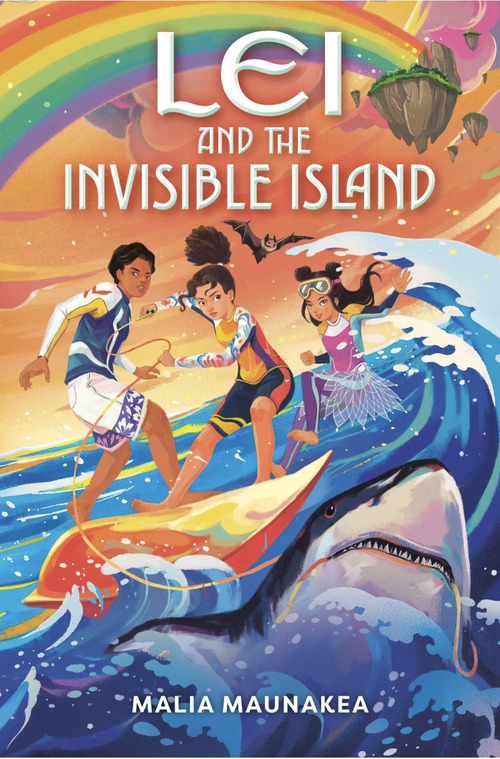
You know me. I LOVE books, art, and films that focus on the Native Hawaiian community and our Pacific Island cousins. I love them so much that my blog focuses on interviewing these amazing creators. As native peoples, our voices have traditionally been underrepresented. Thankfully, this is changing, with books by Native Hawaiian/Polynesian authors including Gabby Ahuli’i, Tammy Paikai, Malia Maunakea, Shar Tuiʻasoa, Brook Parker, and now, Kaylin Melia George, entering the market.

Aloha Everything is a beautiful, sweeping introduction to Hawaiian culture and history, especially helpful for those unfamiliar with the Native Hawaiian people.

Aloha-everything-cover
Illustration @ Mae Waite from Aloha Everything by Kaylin Melia George (Mythify, 2023)

The debut picture book by Native Hawaiian author Kaylin Melia George and illustrated by Hawaii-based artist Mae Waite, Aloha Everything is written in rhyme, an effective story-telling technique for reaching young readers and their grown-ups.

The spreads read like dream sequences full of authentic Hawaiian imagery. The book moves quickly, touching on the many traditions that are important to the Hawaiian people.

The phrase “What did hula teach her?” is repeated three times in the book, and although the book is not actually about hula, the refrain is an effective device that helps organize the global topics to make them easier for young readers to grasp.

The back matter provides a pronunciation guide and glossary in addition to biographies of both author and illustrator. I love lots of back matter in picture books, and included enrichment materials will be welcomed by schools, hālau, and other readers.

Aloha-Everything-Spread
Illustration @ Mae Waite from Aloha Everything by Kaylin Melia George (Mythify, 2023)

Aloha Everything is one of the most beautiful picture books I’ve ever seen. At the risk of sounding over the top, the illustrations are staggeringly beautiful. More than supporting the text, the art does its own storytelling. Like all great illustrations in children’s literature, they are key to understanding and appreciating the culture and history explained in the book. 

Artist Mae Waite is a wonder. Her vibrant, magical artwork leaps off the page. I love all of the illustrations, but my favorite accompanies the first “What did hula teach her?” refrain. In it, the girl is in a hula pose, as to say mahalo to the gods and the ʻāina: arms stretched before her, eyes closed, her long dark hair swirling all around in hues of purple and lavender. Gorgeous.

Each spread is richly layered, a riot not just of color but of images. You know how some picture books contain pretty but forgettable illustrations that you don’t really stop to look at? Not so with Aloha Everything. With Ms. Waite’s art, I found myself slowing down to examine the tiny details that make up the composition as a whole.

More than just pretty, the illustrations are the perfect jumping off point for discussions. I can imagine a class using an illustration as a starting point to explore Hawaiian culture, such as the concept of aloha in the title, the myth of the demigod Maui lassoing the sun, the process of traditional kapa making, and the various flora and fauna of Hawaiian forests.

Aloha-Everything-Spread-2
Illustration @ Mae Waite from Aloha Everything by Kaylin Melia George (Mythify, 2023)

As much as I love the imagery, I felt interactions the girl might’ve had with ʻohana, especially with her makua, were missing. 

Overall, Aloha Everything is a beautiful introduction to Native Hawaiian culture and a worthy addition to any bookshelf.

Aloha Everything
Written by Kaylin Melia George, illustrated by Mae Waite
Mythify, 2023
ISBN 978–1636551128
Suggested for ages 5 — 8 

Meet author Kaylin Melia George and illustrator Mae Waite in our talk story interviews. 

Please read our disclaimer to learn our book review policy. Mahalo!

Galley review copy and images courtesy of Kaylin Melia George.

Interview with Artist/Illustrator Mae Waite

Mae-Waite

Mae-WaiteArtist Mae Waite is a master of color and texture. She loves to experiment with a variety of techniques and surfaces. Working in ink, oils, acrylics, and watercolors, Maeʻs work is a bold expression of the world around her. “I create for myself and for you,” she writes. We are so pleased to feature our talk story with artist Mae Waite.

For those who haven’t met you yet, please tell us a little about yourself. 

My name is Mae Waite, and I’m an illustrator/painter. I’ve been painting since I was three years old. I received my BA in art with a concentration in studio art from the University of Hawaii at Mānoa. I’ve been a freelance painter since graduating in 2018. I’m also a part-time artisan at Louis Vuitton, so it’s safe to say I’m always painting.

Where did you grow up? What high school did you grad from?

This question always makes me pause because I’ve moved around so much. My father was in the Navy so I had the wonderful experience of living in multiple states such as California, Washington, DC, and Hawaii. I attended Radford for my freshman and sophomore year before moving to Kent, Washington, and finishing my high school education at Kentwood High School.

Go Royal Lions! Why did you become an artist/illustrator? Did you always know you could create art?

I’ve always had a fascination with art and creating. I love the thought of transforming a vision or an idea into something tangible. It really feels magical. Becoming an illustrator was more serendipitous. I never thought that illustrating books would fulfill me as much as it did until Kaylin [author of Aloha Everything] found me.

What do you enjoy most about illustrating? What are some of your greatest challenges?

There are so many things about illustrating that I love. I love looking at a project and gauging its potential. It’s like being presented with a bunch of small puzzles and it’s up to me to find the best solutions that fit the concepts/theme. I guess that’s one of the biggest challenges as well. I’m also a bit of a perfectionist and want to put my best effort in my paintings.

Aloha-everything-cover
Illustration @ Mae Waite from Aloha Everything by Kaylin Melia George (Mythify, 2023)

Can you share a bit of your upcoming debut picture book, Aloha Everything, illustrated by you and written by Kaylin Melia George? Is this your first picture book?

I don’t want to spoil anything but in a nutshell, it follows a girl named Ano who learns about her Native Hawaiian heritage through hula and her adventures. And yes, technically Aloha Everything is my first children’s picture book although I was working on it along side another book called Aloha Christmas by Burton Richardson.

What was the process like to making those beautiful illustrations in Aloha Everything?

The creative process was awesome. My collaboration with Kaylin was a very special experience that made the project so much fun. We first started the creative process by discussing the mood boards that Kaylin created. She did a really great job setting the visual pace of the book. Once we were on the same page, I began the conceptualizing phase which mainly consisted of creating simple compositions that highlighted the text best. We generally refer to these as thumbnail sketches. The book is split into three different sequences: Main, Rest, and I Spy. Early in this stage we didn’t have a style established yet but what we knew that it was important for us to have consistency for all three sequences. We wanted to make sure that the I Spy and rest pages were distinguishable from the main pages. The next step was creating character designs for Ano who was the protagonist. We created a handful of versions. We also created character designs for a couple of recognizable names such as Laka, who we ended taking out in the final, and Pele.

To achieve the overall looks of our characters, I referenced sources such as The Merrie Monarch Festival and archives from UHM’s database that held images of different instruments, traditional attires, and tools. I also looked at different modernized Native Hawaiian looks that inspired the fun and whimsy element that children would enjoy.

After the long and tedious job of gathering references, I started creating drafts of the pages based off the thumbnail sketches. Then, I created color swatches followed by digital renderings to further explain my visions. After that, we took it to the big paper. I cut 300 lb Arches watercolor paper to the proper dimensions and dove into painting. We didn’t paint the pages in chronological order which was nice.

Do you have a favorite illustration? Which one and why?

Honestly, I hold every illustration close to my heart. It’s as if all the pages of artwork have a mind of their own and they’re trying to come out of the paper. If I had to choose one, page eight clicked to me from the beginning. Ano has her arms stretched wide as if she is overseeing and embracing the land.

I love that one, too! What was your favorite part of working on the book?

The book reveal was the most rewarding. I teared up a bit. When you work day in and day out on something you don’t get to take it all in until it’s in your hands.

What was the most challenging?

The biggest challenge for me was ensuring consistency with all the illustrations. There would be times where my mind would go wild and I would want to implement new things (I secretly did anyway) but I had to dial it back.

How long did it take to complete the illustrations?

It really depended on the complexity of the design. Some, such as page three which has a ton of sea creatures following the mighty honu, took me what seemed to be a billion years—it actually took maybe two weeks while the last page took me about a week.

What techniques and resources did you use to illustrate the book?

After doing a few material swatches and mini painting samples we settled on acrylic and gouache on paper. I really loved how versatile and opaque the paints could be while being able to bleed like watercolor. It was important for me to be able to have access to a wide range of textures.

Waterbed-by-Mae-Waite
Waterbed @ Mae Waite

Do you have any experiences as a woman of color artist that you might share with our readers?

After graduating college, my professional art career took off in Hawaiʻi, which is known for its big melting pot culture. Because of that, I can’t say that I’ve ever been judged differently for my ethnicity or gender. Most people regard my art and are impressed because I’m young.

What would you like to see change in the industry regarding the acceptance of BIPOC creators?

What’s really great about the art industry is that skills, work acumen and visions are highly valued. I would like to see individuals flourishing from their own merit.

What beliefs is your work challenging?

I don’t think my current work challenges so much as evokes. I love illustrating because it brings out the childhood nostalgia that I miss in my adulthood. It’s important to create images that tell all kinds of stories: stories meant for a wide audience and stories that are hard to tell with words.

What are your hopes and dreams for the year and beyond in terms of your artistic career and what you’d like to see out in the world?

I would love to work towards becoming a concept artist/creator for animations. I am currently working on a large body of works that belong to a single narrative. 

What advice can you give an aspiring artist/illustrator?

Be yourself and remember to be curious.

City-by-Mae-Waite
City @ Mae Waite

Can you share a bit about what you’re working on next?

I’m currently working on a series that follows a character through many figmental scenes. I would like each illustration to be one piece of a grander narrative.

That sounds really interesting. What’s your online presence like? Are you on social media? What do your followers say about your work?

I use Instagram @maewaitestudio as my platform of choice. My audience accumulated over the past five years or so consists of people from many different backgrounds because my art also covers many different styles and visions. The feedback I receive on social media is largely supportive and motivates me to work on my next piece to showcase.

And a few fun questions, if you’d like to answer. Is there a fun fact youʻd like to share about yourself with young readers?

Iʻm pretty open about this, but I’m adopted from Kunming, China.

What kinds of books do you enjoy reading? Any favorites?

I love fantasy and sci-fi novels. I think my favorite at the moment is Dune by Frank Herbert or the Grace of Kings series by Ken Liu. These books took me longer to read because there’s so much to unpack and learn from.

Who is your biggest supporter?

My parents. They promote me better than any platform. I will periodically get texts from my dad saying that he needs a new order of my business cards.

Yay, dad! What advice would you give your younger self?

Stop overthinking everything!

Wise advice, for sure. Thank you so much for talking story with us, Mae! We wish you all the best!

To learn more about Mae Waite and to see more of her work, visit her website at maewaitestudio.com.  To pre-order her book, visit the Kickstarter website, Aloha Everything: A Hawaiian Fairy Tale.

Images courtesy of Mae Waite; book cover courtesy of Kaylin Melia George.