Interview with Illustrator Jing Jing Tsong

Jing-Jing-Tsong

Jing-Jing-Tsong

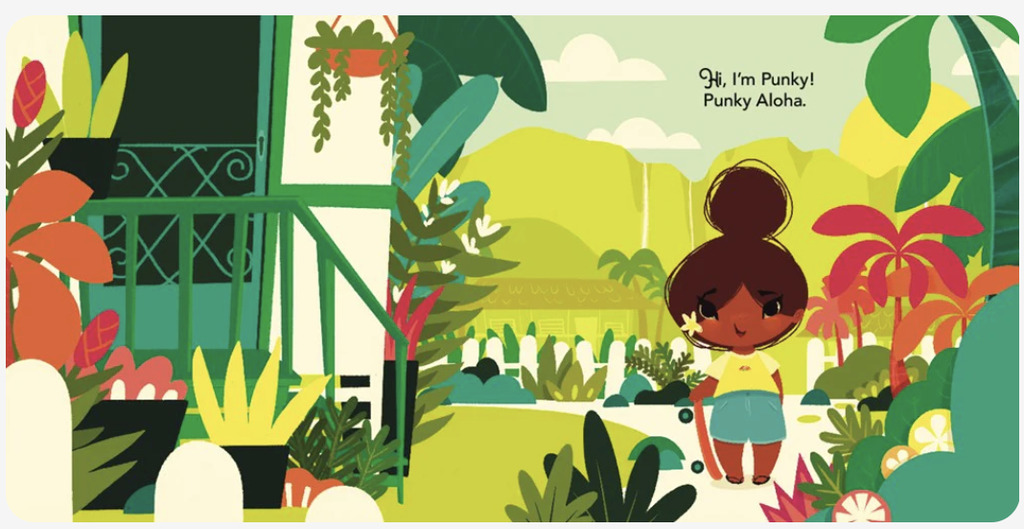
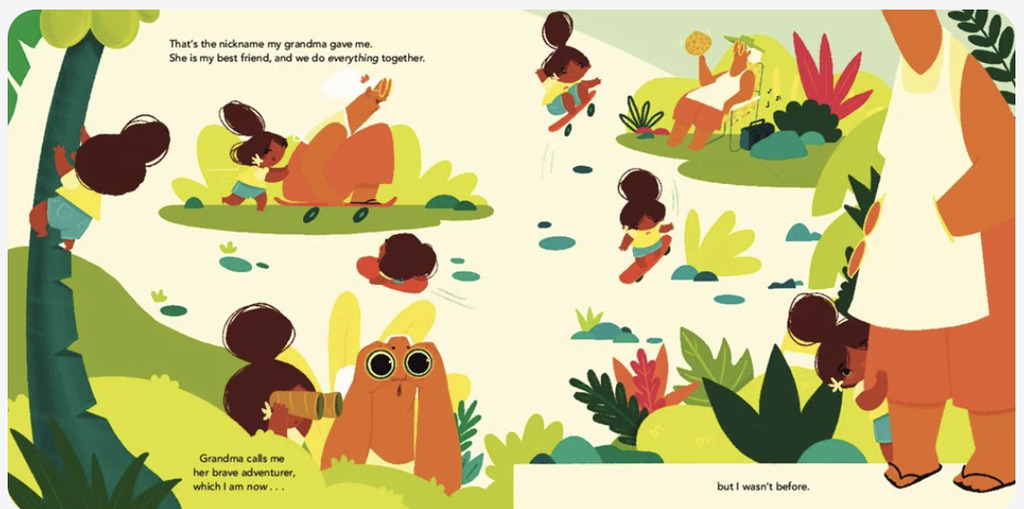
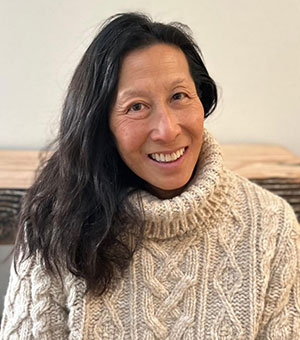
Talented picture book illustrator Jing Jing Tsong is a master at her craft. Influenced by the principles of monoprint and traditional stone lithography, Jing Jing layers colors and textures to create images that are engaging and compelling. Their visual and emotional appeal communicate a visual experience for young readers and their grown-ups. “In everything I practice,” she says, “I explore the interconnectedness of being.”

We are very pleased to talk story with illustrator Jing Jing Tsong.

Welcome, Jing Jing! For those who haven’t met you, could you please tell us a little about yourself?

I am an amateur musician (cello and stand-up bass), a permanent grom (beginner surfer), and a writer and illustrator. To me, these interests are inextricable—they influence how I approach my life—finding flow, connection and being ready to improvise.

Where did you grow up? Who do you consider to be your biggest supporter?

I grew up in a small college town in central Pennsylvania. Because of my dad’s work (physics researcher) our family had the opportunity to live in West Berlin for a year and then Albuquerque, NM, for a summer.

Bucket-of-BlessingsThere have been many “biggest” supporters in different phases of my life. But overall, it is definitely my husband, Michael Austin (who is also a writer/illustrator). We met each other in the Graphic Design program at Penn State. For many years we were rock climbing partners—we had to trust each other in belaying and being ready to take up the slack in the rope if one of us fell. Creatively, when I feel I am falling or feel that I am failing, I trust Mike to catch me or pick me up and encourage me.

Your relationship sounds amazing. Why did you become an illustrator? Did you always knew you could create art?

Honestly, one of the reasons I started to focus on illustration was because I was burned out on being the Art Director of the design studio that Michael and I were partners in. Michael left the business first and committed to illustration full-time. Eventually, when we sold our business, we took a year long sabbatical where I reconnected with family and my creative self. I worked on developing an illustration portfolio and at the end of the year, declared myself an Illustrator. Looking back, it seems rather audacious to make such a life pivot. Luckily, there was no one to tell us we couldn’t, so it worked out well. But full disclosure—I did juggle freelance design work, teaching and playing my cello at dozens of weddings, before I actually practiced illustration full-time.

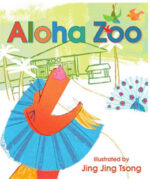
Aloha-ZooI never thought I COULDN’T be an artist. My mom used to bring us to the library every weekend for story time and then to replenish our stack of books for the week. I loved picture books and read them well past the time I was an “advanced” reader. After dinner, we often sat around the table as a family and drew and copied things from books. Because my parents loved ballet, I drew a lot of dancers! My dad had an easel set up in the tiny space by the washer and dryer. He experimented with abstract painting. My childhood seems to be a collage of visual experiences and creating art seemed as natural as eating or breathing.

What do you enjoy most about creating art? What are some of your greatest challenges?

The thing I love most is that anything is possible—I am the only to tell myself I can’t.

 The greatest challenge is not letting all the amazing work I see on social media distract me from my own journey.

Your art is so expressive and colorful. If you had to choose a favorite project, which would it be and why?

My favorite project is usually the most current one.

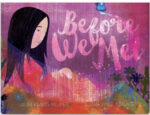
Before-We-MetThe one on my drawing table now, is a middle-grade graphic novel I’ve been working on for the past 7 years. I actually have sketches for initial explorations that date back 12 years! It started out as a picture-book, but my editor suggested it would be stronger as a graphic novel. She and my agent took great care in guiding me through this challenging and, at times, intimidating path. The story went from 32 to 90 to almost 200 pages.

When it comes out (hopefully Spring 2024), it will be my debut as a writer. Ironically, even though I am known for my colorful work, my true love is black and white work. I had a chance to indulge myself in black and white drawings which reflect an important concept in the story. I use color sparingly. What started out as a story on an experience of being bullied, evolved into a loving exploration of a young girl finding her place in her family and how that allows her embrace her different identities into a true expression of self.

We’re looking forward to your graphic novel! What are your hopes and dreams for the year and beyond in terms of your artistic career and what you would like to see published in the future?

I see illustration and writing as a life practice. I hope I continue to learn and create stronger work. I’ve illustrated over 20 picture books. In the future, I’d like to illustrate more of my own manuscripts. I hope that whatever I put out in the world will help someone understand their connection to their world in a joyful way.

Do you have any experiences as a woman of color illustrator that you might share with our readers? What would you like to see change in the industry regarding the acceptance of BIPOC illustrators and writers?

Pele-Finds-A-HoneOnce I received a manuscript where a description in the vein of “Oriental grace” was used to describe something. It definitely raised my hackles, and I reviewed it with my sisters to see if they felt the same. They reinforced my feelings, and I was able to address it with the editor who then addressed it with the writer.

Overall, I’m excited to be in publishing during a time of positive change. There is still a lot of work to do, but I feel there are many people in the picture-book community actively seeking under-represented people to share their stories.

Because my parents grew up in a time where their mother tongue, Taiwanese, was banned by 2 different occupations, I am always thrilled to see work that supports and celebrates indigenous languages. Without these languages, we’re in danger of losing stories that are essential to our understanding of traditions and histories. I’m honored to be part of one such project, the Hawaiian Legends for Little Ones by Gabrielle Ahuli’i, published by Beachhouse Publishing, comes out in an ‘Ōlelo Hawai’i  edition this spring.

What beliefs is your work challenging?

Instead of “challenging” I think of my work as “encouraging.”  I hope my work encourages people to think of themselves as parts of communities that extend beyond geographic and political borders. I hope that what I put into the world encourages people to take the time to listen and watch and seek experiences that broaden perspectives.

Where do you get your inspirations?

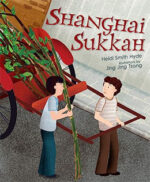
Shanghai-SukkahMy local library is one of my favorite places to procrastinate. I love the randomness of scanning shelves and finding unexpected treasures. I also like listening to different kinds of music and have my sisters and son and daughter for introducing me to aural treats I may not have found on my own.

In addition to books, what other kinds of art do you do?

I like to experiment with different materials. Last year, I carved my own pens out of bamboo and created ink from blackberries. This year, I’ve been experimenting with intaglio printing using lids from plastic containers and scratching images with a sewing needle. I really want to get into pottery!

Can you share a bit about what you’re working on next?

I’m working on illustrations for a counting book about delicious things. All I can say is that every time I start sketching, I get hungry!

What advice would you give an aspiring illustrator?

Join your local chapter of Society of Children’s Book Writers and Illustrators, join a critique group. The chapter I belong to (Western Washington) is so supportive, and I am constantly inspired by the generosity and phenomenal support of this community.

What’s your online presence? What do your followers say?

You can find my illustration here: www.jingjingtsong.com . I’m inconsistent on IG (occasionally sharing my creative process, or a good wave): @jingjingtsong. Working from a home studio can feel incredibly isolating, so I’m on Twitter every now and then, joining in on the weekly conversations in different picture book groups.

The books that have elicited the most response are the Hawaiian Legends for Little Ones series. People are grateful to have these authentic stories about Hawaii.

Mahalo, Jing Jing, for talking story with us! We loved learning about you and your creative process. Best wishes always!

To learn more about Jing Jing, including her gorgeous print gallery, visit her website, JingJingTsong.com. While you’re there, visit her online bookstore, Jing and Mike Co. Photo courtesy of author.


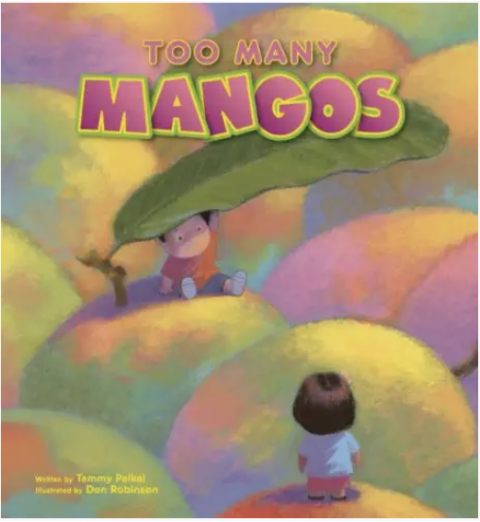
Book Review: Too Many Mangoes, by Tammy Paikai

Too_many_mangoes

Too_many_mangoes

Some picture books are classics. They tell timeless tales that teach us about the world and our place in it.

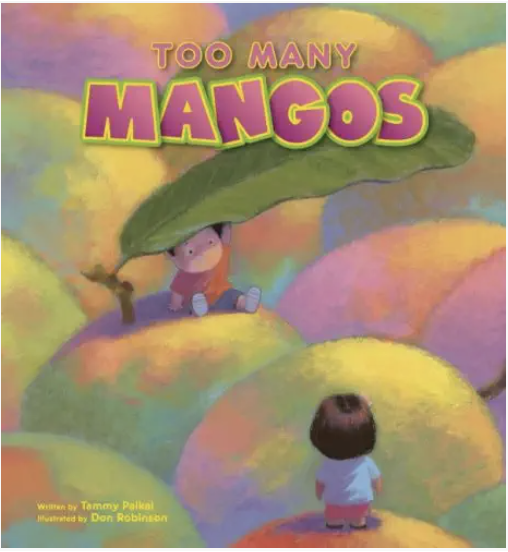
One such classic also happens to be one of the first Native Hawaiian-themed books written in an authentic voice. Too Many Mangoes by Tammy Paikai is a story based on the author’s childhood experience.

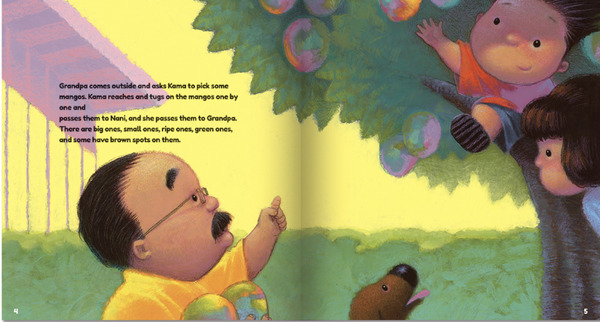
This gentle story is about two Hawaiian kids, Kama and Nani, who love to climb the mango tree at their grandpaʻs house. One day grandpa asks them to pick some mangoes, but when he realizes that the kids have picked way too many for their family to eat, he instructs them to give the mangoes away to their neighbors.

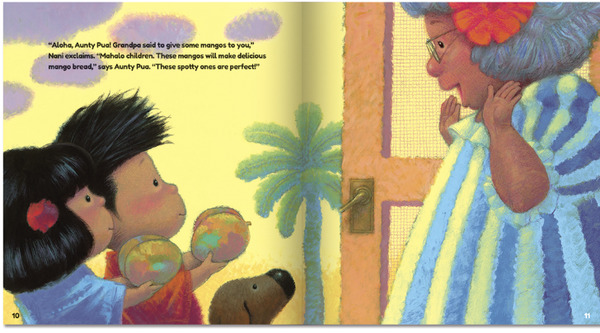
Thus the adventure begins. We are introduced to a delightful community of generous and kind neighbors. The kids go to each house to share the mangoes and, in return, are given wonderful treats — baked goods, fruit, jam, even an orchid plant — that the book calls “mahalo gifts.” The last spread is at the table where grandpa and the grandkids are happily feasting on their unexpected bounty.

Too-many-Mangoes-Grandpa
Illustration © Don Robinson from Too Many Mangoes by Tammy Paikai (Island Heritage, 2009)

What I love most about this book is the Native Hawaiian lessons of sharing without expectation of anything in return and in being happy with what nature gives you. Kids can be picky eaters, and this story shows then that delicious produce doesn’t have to be blemish-free: mangoes donʻt have to be perfect to be, well, perfect. As the neighbors explain, overripe mango can be sprinkled with sweet-and-salty li hing powder or made into pickles or bread. I was delighted to find that my favorite way to eat slightly underripe mango — with a thin marinade of shoyu, vinegar and chili pepper water — was featured in the book.

Illustration © Don Robinson from Too Many Mangoes by Tammy Paikai (Island Heritage, 2009)

Too Many Mangoes offers many enrichment opportunities and has been adapted by teachers, librarians and parents in curriculum for first graders, including math, food and backyard agriculture, and culture and diversity. The book has been adapted into classroom plays and reader theaters and community read-aloud events.

The illustrations, by popular local Hawaiʻi illustrator Don Robinson, are gorgeous, with muted tropical vibes youʻd expect from a children’s book about Hawaiʻi.

Some book reviewers have made an issue about so-called grammar errors. I found just one spread toward the end of the book where the tense shifts from the present to the past then back to the present. More a stylistic hiccup than a grammar mistake, the shift in tense is minor and does not detract from the story.

Perhaps the best vindication is that Too Many Mangoes was a featured title by the Harvard University Graduate School of Education. Dr. Sarah Dryden-Peterson described the Books of Belonging program “where we find big, hard questions about the world packaged with love between the covers of a book.”

And that describes Too Many Mangoes perfectly.

Too Many Mangoes, A Story about Sharing
Written by Tammy Paikai. Illustrated by Don Robinson
Island Heritage Publishing, 2009
ISBN 1–59700-758–7
Suggested for ages 2–6

Meet author Tammy Paikai in our talk-story interview and discover her other Hawaii-themed picture books. Too Many Mangoes is available at Native Books Hawaiʻi and at your favorite online booksellers. 

Images from Welcome to the Islands. Please read our disclaimer to learn our book review policy. Mahalo!

Interview with Native Hawaiian Filmmaker Ciara Leinaʻala Lacy

Ciara-Lacy

Ciara-LacyCiara Leinaʻala Lacy is a talented writer-producer-director whose passion is telling stories influenced by her Native Hawaiian heritage.

Her documentary-style content has shown at Sundance and Berlinale and on streaming platforms including Netflix, PBS, ABC, and Al Jazeera. The inaugural Sundance Institute Merata Mita Fellow, Ciaraʻs work has been supported by Tribeca, The Princess Grace Foundation, the MacArthur Foundation, and Pacific Islanders in Communication.

Her award-winning filmography includes Is That Black Enough for You? (2022), This is the Way We Rise (2021), Out of State (2018), We Are Still Here (2018), and 11/8/16 (2017), and as well as other commercial projects.

And as if all of that wasn’t impressive enough, Ciara is humble and gracious. She recently carved out some time out of her busy schedule to talk story with us.

Click the stills below to see trailers of the films.

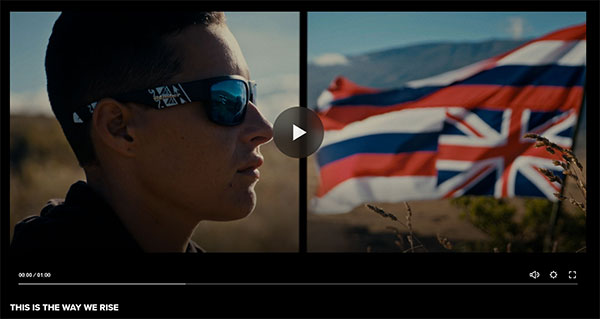
scene from This is the Way We Rise
scene from This is the Way We Rise

Aloha e Ciara! For those who haven’t met you, could you please tell us a little about yourself?

I’m Hawaiian, Chinese, Caucasian born and raised in Central Oahu. I love to make things  and collaborate with teams, and have spent the majority of my career crafting non-fiction work, whether for TV or Film, about the Kanaka Maoli experience.

Where did you grow up? What high school did you grad from? 

I grew up in Mililani, and attended Kamehameha High School, Kapālama.

Me, too! Go, Warriors! Who is your biggest supporter?

This was a tough one! I’ve been really fortunate to have a TON of support. My parents have always been huge supporters of anything I wanted to do, no matter how crazy, and my husband has been as well. I have to give thanks to all my friends who endure watching cuts of my work or reading drafts because Iʻm a huge believer in the power of feedback to help make work better.

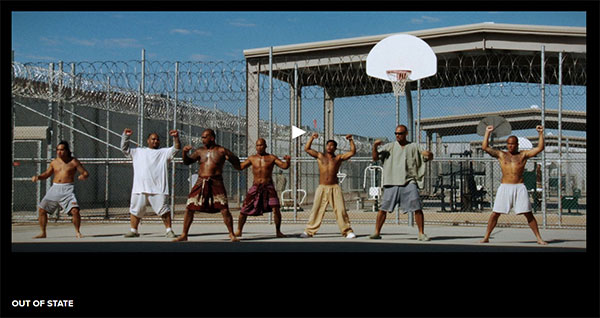
scene from Out of State
scene from Out of State

Why did you become a filmmaker? Did you always know you could create art?

I became a filmmaker, because I am crazy? I didn’t always know I could make art, but I have always loved the idea of making things. I absolutely love project based work, and I do love a little adventure in life…so filmmaking has given me both!  Itʻs taken me a long time to feel comfortable calling myself an artist because Iʻm untrained and kind of learn by doing, but I think Iʻm getting there!

What do you enjoy most about filmmaking? What are some of your greatest challenges?

I love the process, even if it can keep me up at night or make me want to tear my hair out at times! And I love to create collaborative spaces, working with others who are like minded and dedicated to crafting the strongest possible of work.

I tend to be more of an emotional, less linear thinker, so I worry that my work is making sense. I often poke hard at it for this reason, which sounds very minor but is a really big deal for me. How can people emotionally connect with or learn from your work, if they donʻt understand the basics of whatʻs going on?

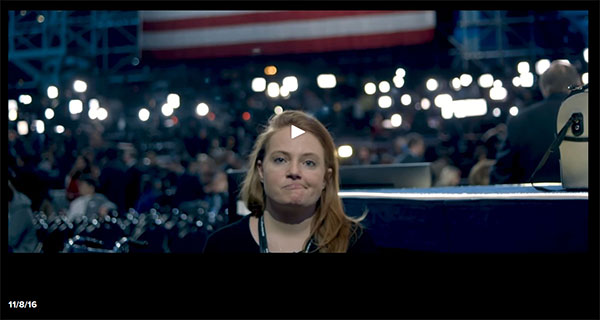
Scene from 11-8-16
scene from 11–8‑16

And you never know what people take away from a film. Sometimes you think an idea will mean one thing, and people take away another. So Iʻm constantly digging into feedback to refine the messaging and clarity of what I am making.

What are your hopes and dreams for the year and beyond in terms of your artistic career and what you would like to see published in the future?

My hopes for the next year are very transitional and, hopefully, very transformative! Iʻm hoping to expand what I do beyond documentary work to include screenwriting and directing narrative content. So Iʻm working a screenplay, my first animated short for kids, and two narrative shorts. Iʻm hoping to do even more, not to sound too greedy, but we shall see what I can accomplish!

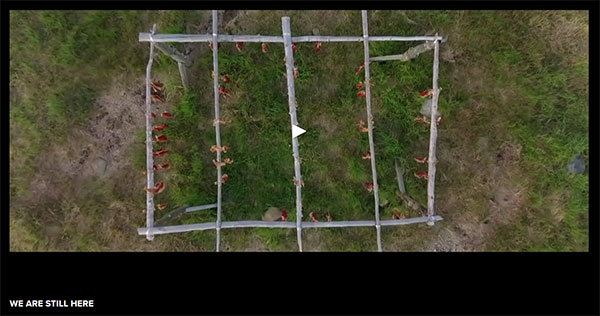
scene from We Are Still Here
scene from We Are Still Here

That sounds exciting! Do you have any experiences as a woman of color filmmaker that you might share with our readers? What would you like to see change in the industry regarding the acceptance of BIPOC creators?

I am constantly surprised by misconceptions and preconceived notions people have about Kanaka Maoli, our stories, and our worldview. This impacts how the work is received, whether people are in a space to embrace the storytelling or not.

What advice would you give an aspiring filmmaker?

Play! Give yourself time to learn, grow, and really find what you like. Developing a sense of personal taste is really important. You donʻt have to create work for everyone. Just know what you like and focus on that. Your audience will come!

I love that advice. Where do you get your inspirations?

Everywhere! Friends and family, the news, art, radio, going for walks. Inspiration can find you any place you’re ready to see it.

Can you share a bit about what you’re working on next?

I’m working on a few things, but perhaps most fun is my first narrative piece, a short animated story for kids. It’s been a really big challenge – I’m learning a ton – and am excited to see what shakes out from it all!

And now a few niele (noisy) questions, if you’d like to answer. Who is your hero?

My hero is Twinkle Borge of Wai‘anae. She is a kanaka driven to support community needs, especially for keiki and has been able to make tangible change for her people. This is a woman that can move mountains, and she inspires me.

Oh, yes, she’s amazing. What is your proudest accomplishment?

Meeting my husband.

What advice would you give your younger self?

Never be afraid to try. You can be creative!

If you could choose to do anything for a day, what would that be?

Float in space! How cool would that be?

Very cool. This was so fun, Ciara! Mahalo nui loa for sharing your mana’o with us. We can’t wait to see more from you!

To learn more about Ciara Lacy and her films, visit her at CiaraLacy.com,and on Instagram@ciaraleilacy. Stills and photo courtesy of Ciara Lacy.


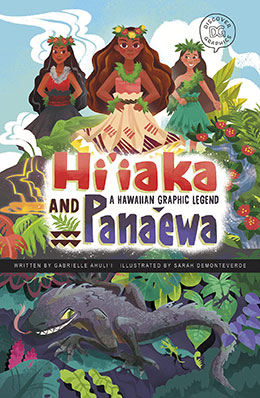
Book Review: Hiʻiaka and Panaʻewa, a Graphic Novel by Gabrielle Ahuliʻi

Hiʻiaka-and-Panaewa

Hiʻiaka-and-Panaewa

When I was a kid, I had a set of books called Great Illustrated Classics. They were fat volumes full of stories embellished with black and white drawings. The scariest tales were from Greek and Roman mythology where the hero battled bad guys and won (most of the time.) 

Even in school, the myths we read were limited to Greek and Roman gods with names like Zeus, Athena, Poseidon and Mars.

But where were the colorful picture books about Pele, Maui, Kaʻahupahau, Kamapuaʻa, the menehune? There weren’t any, not in the kidlit section of the library or in any of the illustrated classics that lined my childhood bookshelf.

The message native kids like me got loud and clear was that those Greeks and Romans were the classic heroes, the only heroes worth learning about.

Thankfully, times are changing. More Native Hawaiian authors and artists are revisiting and retelling our traditional stories for today’s young audiences.

The latest is a graphic novel, Hiʻiaka and Panaʻewa, by Native Hawaiian author Gabrielle Ahuliʻi. Intended for the picture book crowd, ages 4 – 8, and their grown-ups, this book is the perfect introduction to Hawaiian myths for the youngest readers.

The story, as described in the summary, is: 

Hiʻiaka wants to make the forests of Hawaiʻi safe for people. But sheʻll have to battle an evil lizard named Panaʻewa and his army to do it. With a little help from her sister, her friend, and some special powers, sheʻs ready for a great battle.”

This is a story of friendship and sisterhood. Faced with the task of keeping the forest safe for the people, Hiʻiaka, accompanied by her friend Wahineʻōmaʻo, must decide how to challenge the fearsome guardian mo’o, Panaʻewa.

In one of my favorite scenes, Hiʻiaka seeks strength by looking up at the stars and remembering the courage it took for her ancestors to brave the vast Pacific Ocean to settle in Hawaiʻi. This simple panel conveys such emotion in a deeply Hawaiian way.

The small cast of characters are totally likeable. They experience some fears and doubts, but ultimately they find strength from within and from each other. The battle with Panaʻewa is scary, but the scene is not too intense for young readers.

As expected in a children’s story, the heroes prevail, and the end is hopeful. The last panel neatly ties up the story by reflecting the very first panel of the island below and the manuokū flying above.

I appreciate that the story is presented as a short (32 page) graphic novel. The format with its thoughtful word choice and poetic devices is perfect for its intended audience of beginning readers but also as a read aloud.

The illustrations are intentionally sparse. Kids can easily get overwhelmed in traditional comic book style, but in this book, frantic, overdrawn panels are avoided. Instead, the colorful, picture book-like illustrations convey both story and emotion appropriate for the intended age group.

More than anything, I love the author’s authentic voice. Everything, from imagery – especially Pele’s skirt and lei, the voyaging canoe, the manuokū seabird, the moʻo – to the selected words in ʻōlelo Hawaiʻi feels pono. For traditionalists in my community, this story of Pele and Hiʻiaka is respectful.

The bookʻs back matter consists of helpful resources, including writing prompts, discussion questions, and a short glossary.

In her author’s note, Ahuliʻi writes, “I hope our ancestors look on my telling with pride.”

I am sure they are.

Hiʻiaka and Panaewa, A Hawaiian Graphic Legend
Written by Gabrielle Ahuliʻi. Illustrated by Sarah Demonteverde
Published by Picture Window Books, 2023
ISBN: 9781484672907
Suggested for ages 4 – 8

Learn about the author in our talk story interview with Gabrielle Ahuliʻi. To look up the definitions of the Hawaiian terms used in this post, please visit Nā Puke Wehewehe.

Disclaimer.

Interview with Native Hawaiian Author Gabrielle Ahuliʻi

Gabby-Ahulii

Gabby-AhuliiLike most Native Hawaiians, author Gabrielle Ahuliʻi grew up hearing the beloved legends passed down from generation to generation. 

Best known for her popular series, Hawaiian Legends for Little Ones, and now for her first graphic novel, Hi’iaka and Panaewa, Gabrielle beautifully retells these classic stories for today’s young readers and their grown-ups. 

Why is it so important for children to know the myths and legends of their ancestors? Gabrielle explains in an interview at Brightly:

Exposure to stories and legends of cultural significance in early childhood can give children a deep sense of respect for the place they live and an opportunity to engage with the culture around them. Access to and engagement with Native Hawaiian stories empowers children of Native Hawaiian descent by arming them with knowledge to help navigate their world as Indigenous people…If a child understands the world around them from a cultural perspective, they are not only able to engage more deeply with their culture, but to create more meaningful connection across cultures as well.

We totally agree.

Aloha e Gabrielle. For those who haven’t met you, could you please tell us a little about yourself?

My name is Gabrielle Ahuliʻi Ferreira Holt, and I was born and raised on Oʻahu. I live in the ahupuaʻa of Makiki, which is also the ahupuaʻa of the school I work at. I am the school librarian at Hanahauʻoli School, a 105 year old progressive elementary school.

Where did you grow up? What high school did you grad from?

I grew up in Honolulu, and I was fortunate to attend both Hanahauʻoli School and Punahou School. Hanahauʻoli gave me the gift of critical thinking, a love of learning, and creative problem solving, while Punahou school widened my horizons and gave me the gift of learning ʻōlelo Hawaiʻi for four years.

Go Buff n’ Blue! Who is your biggest supporter?

I live an incredibly privileged life in that I have no lack of supporters. I have countless people in my life who step up, both physically and mentally, and are constantly and consistently on my team. I want to recognize my family, my partner, my mentor, my editor at Beachhouse, my friends and colleagues at Hanahauʻoli, and the lāhui for always giving me everything I need.

Why did you become a writer? What inspired you to write for children?

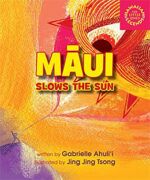
I didn’t ever see myself as a writer; as a kid, I was an incredibly lazy writer. I didn’t Maui-slows-the-sunconnect to writing in the way that I deeply connected to reading. I became friends with someone who publishes books for children in Hawaiʻi while I was in the Library Sciences program at UH. At the time, I was focused on Hawaiian / Pacific Librarianship, and when she heard about my passion, she approached me with a writing project. She and I worked so well together that we published six adaptations of moʻolelo together. She allowed me to see myself as a writer.
What do you enjoy most about writing for kids? What are some of your greatest challenges in writing for children?

Since I am a school librarian, I get to workshop ideas and rough drafts with my students. Their feedback is invaluable. I hear their voices in my head when I am crafting a story. I love that I get to essentially collaborate with my students. Some of them are such powerful, descriptive writers that truly inspire me.

After their Hawaiʻi Island trip, one child wrote about the “braided lava.” Another child wrote the phrase “Pele runs her hand along creation,” and I was just blown away. Just being around their sincere, creative energy makes me a better person and a better writer.

My biggest challenge is keeping stories simple. Too often, people feel that children need bells and whistles in a story to keep them engaged. Nothing is further from the truth! The most enduring, meaningful narratives for children are often the most simple but profound. If you have something to say, say it truthfully, meaningfully, and in the language of the world you have built.
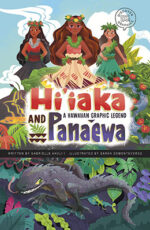
Hiʻiaka-and-PanaewaCongratulations on your new graphic novel, Hiʻiaka and Panaewa! Can you share a bit about the book? Without giving too much away, what is it about?

This book is a re-telling of Hiʻiaka and her first major encounter with one of the moʻo of Hawaiʻi – Panaʻewa. My re-telling simplifies her journey a lot. Itʻs for younger readers and for those who may not have a lot of context for who Hiʻiaka is, so she sets of on this adventure with a slightly different goal than what is discussed in the original ʻoli.

What inspired you to choose that topic for your first graphic novel?

When I was approached to write this, I suggested three Hawaiian moʻolelo (hoping that this one was the one the publishers would connect to). I wanted to write a moʻolelo with a female protagonist, and I wanted to bring more of Hiʻiakaʻs story to younger readers.

What was your favorite part of writing your graphic novel? What was most challenging?

I love reading and doing research, so I really like that part of the process. I want to make sure that my adaptations are faithful, while also being able to give them my own voice and perspective. I wasnʻt used to creating books in a graphic novel format, so the biggest challenge was thinking about what I wanted each panel to look like – not that I necessarily told the illustrator exactly what to draw, but I needed to think about what my words needed to say and where the images could help support the rest of the story.

What was the journey to getting that book published like?

Capstone approached me to write an entry in their ongoing Discover Graphics series in December of 2021 and I spent 2022 working on the manuscript. It was published in December of 2022. They found me because of my first series of Hawaiian Legend adaptations, which has indeed opened many doors for me.

What characteristics do you love best about the protagonist(s)?

I love Hiʻiaka as a character because although she is powerful, she is also fallible and realistic. I love how courageous she is, but also how cocky she can be. I didnʻt get to include this in my re-telling, but there is a point in her story when she is participating in a surf contest, and she says, “Aia a ʻane e uhi ke kai i ke kua o ke kuahiwi o kea, a laila, kū koʻu nalu – When the sea rises and covers Mauna Kea, then that is my wave.” So brave, and so bold! I just love her so much and want more of her epic available for children to enjoy.
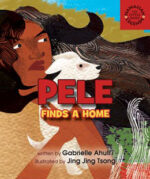
Pele-Finds-A-HoneYou are also the author of a successful series of board books. What inspired you to write about folk tales for your first books?

I think there is a true need for moʻolelo to be accessible for young readers – we have a few very, very good adaptations, but I want children to have as many anthologies and books about Hawaiian gods and goddesses as there are about the Greek ones. I want more Native Hawaiian voices represented as the tellers of these moʻolelo, and I want a wide variety of moʻolelo told.

What are your hopes and dreams for the year and beyond in terms of your writing career and what you would like to see published in the future?

I would love to continue to perpetuate the culture of literacy that Kanaka have built. It is a privilege to get to be someone who can write these moʻolelo down for posterity, so I hope and dream that I continue to do it and do it in a way where I make my community and lāhui proud to read them.
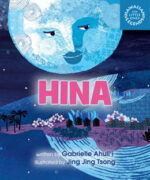
My next goal or wish is to create an anthology of Hawaiian moʻolelo for middle grades — 3rd to 6th. There is a real need there. The anthologies that do exist are good resources for adults. I want older elementary age children to be excited about the Hawaiian pantheon of Gods and Goddesses in the same way many are obsessed with Greek or Norse mythology.

There are not a lot of stories for kids by Native Hawaiian, Pacific Islander or BIPOC writers. Why do you think that is? What do you think we can do the change that?

I do feel we are seeing a paradigm shift in publishing culture. Many are being more critical of the books that take up space in the canon of childrenʻs literature and giving it a second glance. I feel that it is more diverse than when I was developing my reading skills, certainly.
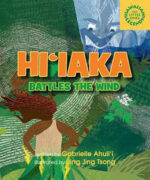
Hiʻiaka-Battles-The-WindHowever, it really does boil down to: You canʻt be what you canʻt see. The only books that I read as a child with a Hawaiian character in it were either so wildly misrepresented as to verge on offensive, or written by a non-Hawaiian person. I think that in order to fix this, we have to empower ourselves to take charge, shed our imposter syndromes and say, “I can do this, I can tell this story.” In that way, we can invest in a future where children have seen themselves represented in their literature and are encouraged to not only seek out more, but add on to what has been created.

Which of your books did you have the most fun writing? Which were the most challenging?

All were such interesting challenges that it’s hard to rank them. I loved doing the research piece for all the board books — even though the adaptations are quite short, I wanted to do the tradition of moʻolelo service and tried to find and read as many versions as I could. I loved writing all of them!

What beliefs are your books challenging?
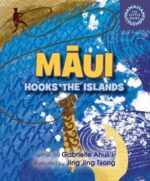
Maui-Hooks_the_islandsI want to challenge the belief that Hawaiʻi is just this static place that visitors simply “experience”. I want people to understand that every piece of Hawaiʻi is a moʻolelo in itself; that every person (visitor, settler or ʻōiwi) here has a responsibility to take care of Hawaiʻi and acknowledge those moʻolelo.

Can you share a bit about your next book?

I’ve just finished an ʻŌlelo Hawaiʻi translations of my first six board books with Beachhouse. David Del Rocco helped me immensely with the translation process (I needed some language support — some of my grammar was a little rusty!) I am beyond excited for those re-publications to come out. I would love to read them aloud ma ka ʻōlelo Hawaiʻi someday soon to a group of children!

What advice would you give an aspiring writer?
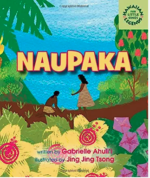
NaupakaWrite what you know and in your own voice, writing is not a solo process, the project is never truly finished, treat your characters with empathy and as if they are sitting in the room with you.

What kinds of books do you enjoy reading? Any favorites?

I love reading and my superpower is that I am an extremely fast reader, so I am able to read a lot in a short amount of time. I love authors like Ali Smith who play with the conventions of what a novel is and have such a specific voice. I love all genres – although  I donʻt necessarily gravitate towards romance or thrillers (except a book called Razorblade Tears that I thought was stupendous).

Hereʻs a list of authors and/or books that I love:

  • Ali Smith (Seasonal Quartet, The Accidental, How to be Both)
  • Rachel Cusk (Outline trilogy)
  • Hernan Diaz (Trust)
  • Elif Batuman (The Idiot)
  • Otessa Moshfegh (My Year of Rest & Relaxation, Lapvona)
  • Bernadine Evaristo (Girl, Woman, Other)
  • Emma Cline (The Girls, Daddy, The Guest)
  • Jesmyn Ward (Salvage the Bones, Sing, Unburied, Sing)
  • Madeline Miller (Song of Achilles, Circe)
  • Robert Jones Jr. (The Prophets)
  • Miriam Toews (A Complicated Kindness, Women Talking)
  • Tommy Orange (There, There)
  • Yoko Ogawa (The Memory Police)

More authors: Mohsin Hamed, Helen Oyemi, Andrea Levy, Bryan Washington, Michael Ondaatje, Lisa taddeo, Juhea Kim, Chanelle Benz, Lauren Groff, Zadie Smith, Luis Alberto Urrea, Brandon Hobson)

I have so many!

Can you share a bit of your current work?

I just went to Hawaiʻi Island with some students and was isnpired by Waiānuenue / Rainbow Falls and the moʻolelo of Kuna the moʻo. I started drafting a story to tell my students the second night we were there, so this is a work in progress:

The moʻo took silent steps toward her. The moʻo was covered in a sickly translucent set of scales, as if the rays of the sun could not reach him. His eyes were a deep mottled grey. Hina thought of the lava fields south of Hilo, the smooth lava that in some light looked like bodies strewn across a plain. His eyes gave her that same unsettled but awe-struck feeling.

The moʻoʻs tongue slicked out to wet one of those grey eyes. “Hina of Hilo — you meet my eyes as if we are equals. But you do have manners, so I will not strike you down here. I have long tired of you and your kind coming to this island, assuming that you can shape the earth around you with no consequence.”

Hina opened her mouth to argue but remained silent. Sometimes silence was better.

The moʻo continued. “Your son, the famous Māui, has a hook. He will bring me this hook that he has used to reshape the heavens itself, or you will die here, in this pool. This pool is cold and the current is strong, and the sea of this coast is violent and unforgiving.”

Hina thought. Why should Māui bring this monster his hook?

The moʻo smiled slyly. “Why should your son bring me this hook, you may be thinking. Simply: he does not deserve this extraordinary tool. This hook belongs to the old Gods, those that were born from the deep roiling depths and grew alongside the ferns and fish and birds.”

“The gods themselves gave that hook to my son, and he has only used it to serve others. As I have taught him.” Hina stood up straighter.

“Who does he serve when he cracks the sea floor to pull islands to the surface? Who does he serve when he bends even the sun to his selfish will?” The moʻo spoke calmly, but Hina could sense the fury pulsing through the monsterʻs veins. His tail tapped slowly on the wet cave floor.

“He serves his family and his people. As is correct,” Hina responded simply. “The responsibility of gods and their family is to help and protect the humans who live with us.”

The kids must’ve loved this! Do you have a website? Are you on social media? Do your readers contact you? What do they say?

My website is gabrielleahulii.com. I donʻt really have social media in a professional “writer” capacity. Most people contact me through my website. I get messages about how they discovered my books or I get images of children reading them. I love that a lot. I also get to meet people when I do readings, which is always so fantastic!

It was wonderful meeting you, Gabrielle. Mahalo nui for sharing your manaʻo, and best wishes always for your continued success!

To read more about Gabrielle, including her work on literacy in Hawaiʻi, visit her website, GabriellaAhulii.com. Photo courtesy of author.
 

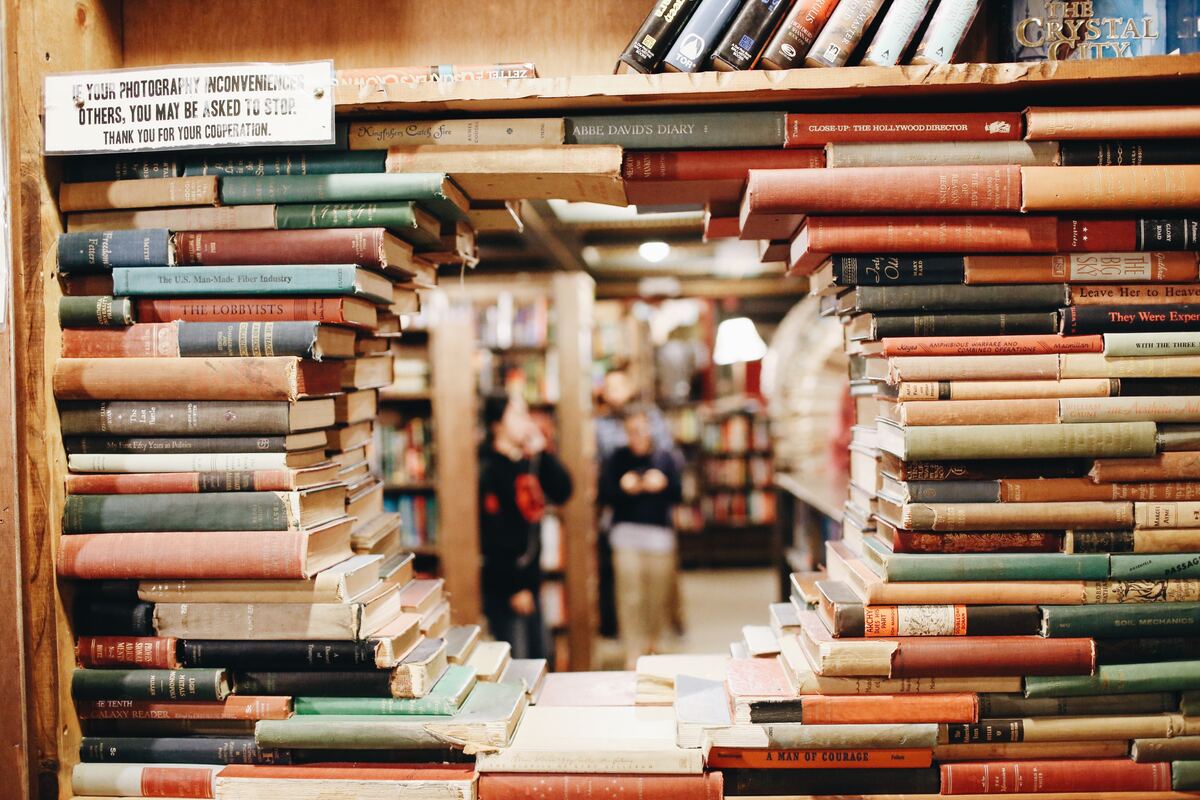
How I Learned to Write Using Mentor Texts: Unspeakable, by Carole Boston Weatherford

Books-unsplash
Books-unsplash
Photo by Fallon Michael on Unsplash

Welcome to a new occasional series about learning from mentor text picture books!

I love picture books, those wildly colorful, wonderfully imaginative works of children’s literature. Some picture books are so good that every time I read  one, I always come away with something new — a fact I didn’t know, an exciting idea I hadn’t thought of, a point of view I hadn’t considered — in a small, easy-to-read, beautifully illustrated package. As a writer, I use mentor texts to improve my storytelling skills. 

What are mentor texts?

These are well-written books we can use as models to become better readers and writers. Mentor texts allow us to experiment, to take risks, and to test new ideas and points of view.

Patrice-GopoThere is an army of us authors (and teachers, parents and grandparents, librarians, and students) devoted to and inspired by picture books. Just listen to the popular podcast Picture Books are for Grown-ups, Too led by my friend, the wonderful Patrice Gopo. Her guests are writers who discuss mentor texts, fiction and non-fiction, of all kinds.

Like these writers, I also study mentor texts to learn the tricks and tips to improve my own writing. I focus on HOW a story is told, including plot devices, page turns, and lyrical language. 

But what if I can’t find mentor texts about the topics I want to write about?

That’s the challenge I face. I write about my Native Hawaiian community’s difficult history, and mentor texts on our generational trauma written by ‘ō’iwi authors are pretty much non-existent. 

If, like me, finding mentor texts for your difficult topics is a struggle, it may help to realize that our communities are not the only ones that face historical challenges. Picture books by successful kidlit authors such as Carole Boston Weatherford, Traci Sorrell, Rob Sanders, Sun Yung Shin, and others can inspire and instruct us. 

That’s what this series is about — the search for mentor texts that demonstrate ways in which difficult / sensitive topics can be handled with care yet honestly for young readers, and thus inspire us to write our own stories. 

Which mentor text inspired me to write my own picture book stories?

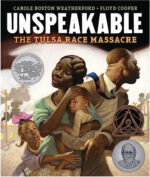
Unspeakable coverFor me, the influential picture book that helped me to write my first two non-fiction manuscripts is UNSPEAKABLE, THE TULSA RACE MASSACRE by Carole Boston Weatherford (Lerner, 2021.) In fact, I love this book so much that I chose it to speak about when I was a guest on Patrice’s podcast.

The book makes this difficult history story accessible to kids. Ms. Weatherford does this in deliberate, ingenious ways:

  • employing the familiar refrain, “Once upon a time,” to gently orient readers to the city and the residents’ accomplishments, 
  • making use of measured yet musical language, such as internal rhyme and alliteration,
  • incorporating the everyday activities of residents with the names of actual businesses, such as the soda fountain at Williams Confectionery, making the story more relatable to today’s young readers,
  • presenting the inciting incident with the words, “All it took,” a devastating moment in the book,
  • choosing words that demonstrate the violence of the mob, resulting in a clear-eyed telling that never condescends or insults the reader’s intelligence,
  • ending with a call to action and a scene of hope. 

Because I’m such a fan-girl, I contacted Ms. Weatherford through her website to thank her for her incredible book. Her response was a gracious email encouraging me to stick with it:

Thanks so much for reaching out. I love Hawaii but hate what was done to the indigenous people. Please document that history.

Absolutely!

My-guest-podcastWhat are your mentor texts? Are you working on difficult, challenging topics? Which picture books inspire you? Email me kamalani3@gmail.com and let’s talk books! 


Interview with Native Hawaiian Artist Solomon Enos

Solomon-Enos

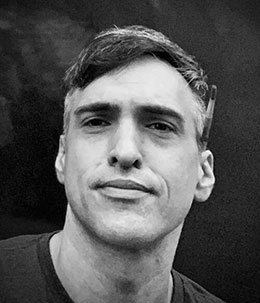
Native Hawaiian artist Solomon Enos is a modern-day Renaissance man: a sought-after artist, book Solomon-Enosillustrator, muralist, sculptor, and game designer. His beautiful pieces have been exhibited at multiple public venues, including the Honolulu Museum of Art, the Hawai’i State Art Museum, and the prestigious Smithsonian Museum Asian Pacific American Center. Google, Pixar, and Disney’s Aulani Resort are among his famous clients. 

His website describes the artist this way:

A self-described “Possibilist” Solomon’s art expresses an informed aspirational vision of the world at its best via contemporary and traditional art that leans towards Sci-Fi and Fantasy. His work touches on themes like collective-consciousness, ancestry and identity, our relationship with our planet, and all through the lens of his experience as a person indigenous to Hawaiʻi.

Yet for all his many accomplishments and contributions to the community, he is a humble man of few words. We are honored to feature the artist, Solomon Enos.

Aloha e Solomon. For those who haven’t met you yet, can you please tell us a little about yourself?

FamilyI am a native Hawaiian artist with an interest in visually translating aspects of Hawaiian culture into new media and genres. 

Where did you grow up? What high school did you grad from?

I grew up in Mākaha [island of Oʻahu] and went to Waiʻanae High School.

Go Seariders! Who are your biggest supporters?

My family and associates who share a sense of kuleana to our cultural values.

Why did you come an illustrator/artist? Did you always  know you could create art? 

From a very young age, as my family gave me all the encouragement I needed. 

What do you enjoy most about creating art? What are some of your greatest challenges? 

The very mystery of creation, and finding enough time to work in balance with my other responsibilities.

Liliʻu-Kalākaua-MuralWhere do you get your inspirations?

From a multitude of varied sources and quite a bit of internal explorations.

Illustrators and artists, like writers, do a lot of research when theyʻre creating. Whatʻs your research process like? 

This is probably the most challenging question, as I am constantly working and creating, so I do not separate my process from my daily life. To sum it up, I have an unstoppable belief that I can achieve any vision I set out to create, providing I manage my time, as I have multiple visions in progress.

What beliefs are your work challenging?

The nature of war as inevitable, and the worship of wealth without responsibility.

Gatherer-black-and-whiteThere are not a lot of Native Hawaiian, Pacific Islander or people of color illustrators.  Why do you think that is? What do you think we can do to change that? 

I am very much committed to inspiring other natives, by example of my work ethic, and my aspiration to gain consensus as I move to excellence.

What are your hopes and dreams for the year and beyond in terms of your artistic career?

I am blessed to be working on a range of major commissions simultaneously, and I hope to get back to my own projects with all this gained experience.

Art-AttackCan we see a bit of your current work?

Sure, @solomonenos on Instagram is the most current and easiest way to access my work.

What advice would you give an aspiring artist? 

Make sacred work spaces, where you have all your tools and good lighting. Know that whatever you are currently working on, it is the most important thing you can be doing with the time you have to give. Be fearless and take risks with paper and canvas, and no time used creating is ever wasted.

What’s your online presence like? Do your followers contact you? What do they say? 

Solomonenos.com, and I am most actively on Instagram @solomonenos. I absolutely encourage engagement and conversations, and I have been blessed with many people expressing their appreciation and who have found inspiration in my work. Those are truly the priceless ways that I thrive and can give back. 

Mahalo, Solomon, for sharing your mana’o with us today, and best wishes always for your continued success!

To learn more about Solomon Enos, including his online portfolio of murals and exhibitions, visit his website, SolomonEnos.com. Photo and images courtesy of Solomon Enos


Book Review: Lei and the Fire Goddess, by Malia Maunakea

Lei-and-the-Fire-Goddess

Lei-and-the-Fire-Goddess

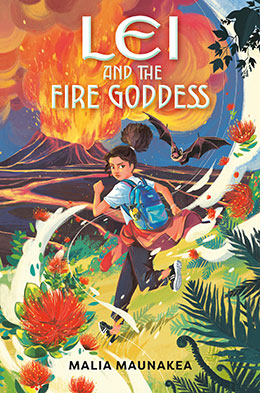
Lei and the Fire Goddess by Malia Maunakea is a rare gem in kid lit: an epic coming-of-age story written by a Native Hawaiian author featuring Native Hawaiian characters.

The story introduces us to twelve year old Lei, with all the joy and snarkiness and insecurity that are part of growing up. It didn’t take long for me to get into the story. From the very moment she steps off that airplane at Hilo airport, Lei is a fully developed, fully likeable character.

So are the secondary characters, especially Tūtū, ʻIlikea, Moʻo, Kamapuaʻa, and the formidable Pele. I won’t spoil it for you by revealing too much. Just know that the characters of Hawaiian legends come alive in the author’s vivid storytelling and are integral to Lei’s growing awareness and maturity.

There is so much I love about this book.

I loved Lei’s character arc, watching her grow, facing her fears, devising solutions, and facing the consequences. The exciting major scenes — between Lei and Kamapuaʻa, between Pele and Poliʻahu, the holua sled race — grab the reader and donʻt let go.

But even the quiet moments, such as Lei vowing not to share the waterfall on social media and later realizing why telescopes donʻt belong on Maunakea, speak volumes,  especially to ʻōiwi readers.

I love how the language is geared to today’s audience without being dismissive of the memories and upbringing of the older readers the story might appeal to. The ʻōlelo Hawaiʻi is not a trope but a real storytelling device. For example, Tūtūʻs “close the mouth” line in an early scene is such a Hawaiian way of teaching and learning.

I loved what felt like inside jokes but are really evidence of the author’s authentic voice: KTA, the tin roof, Iz’s song, li hing mui snacks, pidgin. I love that the first hula that comes to Lei’s mind is the one we all learn as kids, Kahuli Aku. And I laughed out loud at the chapter titled “Ma-ke Die Dead.”

Now the elephant in the room. At first I was super nervous about Pele being a main character. Our kūpuna teach us to respect and revere her. There will always be traditionalists who feel the Pele story should never be retold in a modern voice.

Yet, for me, more than anything, I love how creative the story is. It’s respectful and authentic and adds to the Pele and Kamapuaʻa canon for today’s kids. Pele truly sounds like the goddess I grew up hearing about. That she becomes Lei’s frenemy is edgy and feels right. 

Kids’ books by lived experience/own voices authors are so important. I am Native Hawaiian and grew up in the 1960s. There were no books – not one! – where the characters looked like me, did the things I did as a kid, ate the foods I ate, or used the pidgin I spoke. All kids deserve to see themselves in children’s lit.

This is why books like Lei and the Fire Goddess are so important. It’s a beautifully written, rollicking exciting-scary-funny story that kids everywhere will love. For all these reasons, LEI is a must-read.

Lei and the Fire Goddess  
By Malia Maunakea   
Penguin Random House
2023
ISBN 9780593522035
Suggested for ages 8 – 12

Mahalo to Sierra Pregosin at Penguin Random House for access to the galley! 

Learn about author Malia Maunakea in our talk-story interview. To look up the definitions of the Hawaiian terms used in this post, please visit Wehewehe.org


Interview with Native Hawaiian Author Malia Maunakea

Malia-Maunakea-Kahiki-Photography

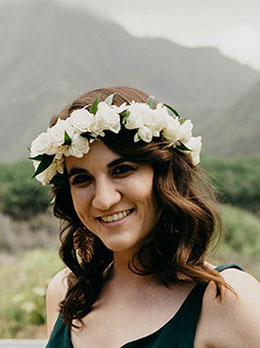
Malia-Maunakea-Kahiki-PhotographyMalia Maunkea is Native Hawaiian author of middle grade and non-fiction. Her new novel, LEI AND THE FIRE GODDESS, a rollicking story about an adventurous Native Hawaiian twelve-year-old, is a rarity in childrenʻs literature: a story for middle grade kids written by an ʻōiwi author that features an ʻōiwi character. We are proud to feature Malia in todayʻs talk-story.

Hoʻomaikaʻiʻana on your new novel! For those who haven’t met you yet, please tell us a little about yourself.

Sure! My name’s Malia, named for the Olomana song O Malia since my parents’ first date was to an Olomana concert. My mom is from upstate New York and is pure Polish. My dad is from Māʻili (West Side) on Oʻahu. I’ve been married to my awesome partner for nearly two decades, and we have two kids who are teens at the time of this interview. I love hiking and backpacking and traveling around the continent in our tiny campervan.

Where did you grow up? What high school did you grad from?

I grew up on Hawaiʻi Island ’til 7th grade and Oʻahu thru high school. I got accepted into Kamehameha Schools in 7th grade. I was a boarder for one year, then my family moved over to Oʻahu and, much to my dismay, I had to move back in with them. I graduated from Kamehameha Schools in 1999. My dad is class of ʻ72. My great-grandpa is class of ʻ17.

I mua! Go Warriors! Can you share a bit of your upcoming debut novel, LEI AND THE FIRE GODDESS? Without giving too much away, what is it about? 

Lei-and-the-Fire-GoddessLEI is about a girl who is raised in Colorado but goes to stay with her tūtū in Volcano, Hawaiʻi every summer for three weeks. She’s part Hawaiian but doesn’t feel like she’s Hawaiian enough to fit in there, and she also struggles fitting in back home in Colorado where no one believes the things her grandma tells her.

This summer she decides she doesn’t believe them either, and all she wants to do is go do touristy things so she can have fun stories to tell her friends when she gets home. Unfortunately, Lei ends up insulting Pele, the fire goddess, who sends her giant hawk to kidnap her best friend. When Lei goes to rescue him, she realizes just how real Tūtū’s moʻolelo are as she teams up with demigods and talking bats to battle mythical creatures and evade the traps Pele hurls her way. For if Lei hopes to get her friend back, she has to dig deep into her Hawaiian roots and embrace all of who she is.

That’s an exciting idea! What inspired you to choose that topic for your debut novel? 

My son was big into Greek mythology for a while, and I tried explaining to him that we Hawaiians have our own amazing gods and legends, but he sorta brushed me off. I decided the only way I could get him to listen was maybe if I put it in a book that could be on a shelf that his classmates might pick up and read, like a Percy Jackson type story. So I came up with this story to try share a lot of the myths and moʻolelo I learned growing up in Hawaii with a new generation of readers who may or may not be familiar with our stories.

What was your favorite part of writing your novel? What was most challenging? 

My favorite part was going back through my memories and pictures from living in Volcano and visiting Hawaiʻi Volcanoes National Park and remembering all the iconic art and songs that I was able to thread throughout the story. The most challenging was bringing it up to speed. Things have changed since I moved from the island, and I wanted to make sure I was still on point with various landmarks and understandings.

What characteristics do you love best about your protagonist, Anna Leilani Kamaʻehu? Is she modeled after someone specific? 

I love that she’s sort of a jump-right-in-and-figure-it-out-as-we-go kind of a person. I pulled a lot of my own struggles of not feeling Hawaiian enough and difficulties making and keeping friends as material for Anna.

What was the journey to getting your novel published like? How long did it take to write your book?

I drafted this book from April to August of 2020 then spent two years in revisions. My journey was super fast compared to some folks, and not as fast as others.

In the fall of 2020 I applied for a number of mentorships and ended up being selected for both We Need Diverse Books (WNDB) and my regional Society of Children’s Book Writers and Illustrators (SCBWI) programs. I worked intensively with Alan Gratz and Andrea Wang to rewrite, revise, and improve my story from January to May of 2021, then submitted it to #APIPit (a pitch event on Twitter) in May of 2021. I received interest from a number of agents, so I sent out my queries and interviewed different agents, selected an agent, did more revisions, sent the book out on submission to publishers in June, ended up having multiple publishing houses interested and went to auction in August.

We sold in September 2021 in a two book deal and started working with my fabulous editor Elizabeth Lee at Penguin Workshop (an imprint of Penguin Random House). So since then it has been many more rounds of revisions, and now working on book two!

Why did you become author? Have you always wanted to be an author? 

I loved writing when I was young but was advised by teachers that it wasn’t necessarily my strong suit and that I was better at the maths and sciences. I also loved reading but abhorred book reports and most of the required reading from my classes. It wasn’t until I was an adult with a couple of careers under my belt when I popped my head up from the grind and wondered if it was possible for me to try writing again.

We are so glad you did. What do you enjoy most about writing, especially for kids? What are some of your greatest challenges? 

I love writing exciting, fast-paced action scenes—showing kids how clever and strong and brave they can be. My greatest challenge is to get the characters to have an arc, to have them change over the course of the story. A mentor told me once that people don’t fall in love with plot; they fall in love with characters. The character needs to be three dimensional and flawed, so readers can root for them and understand why they’re going through what they’re going through. That is challenging for me as I usually come up with fun circumstances that I want to have happen to my character, but they usually don’t tie in to a theme or deeper meaning (which probably ties into why I struggled with Language Arts and book reports in school.)

You also wrote another book, BACKPACKING WITH CHILDREN book, which is on a very different topic. What made you decide to write this book?

Backpacking-with-ChildrenI actually started that one before LEI AND THE FIRE GODDESS. A friend of mine published a book for beginner backpackers, and I thought that if he could do it, I could do it. They say to “write what you know,” so I wrote about my experiences backpacking with our kids over the past ten years and 600+ miles. While that book was on submission, I had a lot of time to wait, and so I decided to write the next thing, and the next thing, and then another thing. And that last thing ended up becoming LEI!

What are your hopes and dreams for the year and beyond in terms of your publishing career and what you would like to see published in the future? 

I have so many ideas and not enough time! I’m working on revising the sequel for LEI right now and working on a young adult contemporary novel that I describe as Pride and Prejudice meets WILD. I’d love to do well enough that I’m able to get back to Hawaiʻi and spend time with keiki in the schools there.

Hopes and dreams? How big you want to know? Heck, if we go big time, I’d love for someone like Dwayne Johnson or Jason Momoa or Barack Obama to pick it up (they all have daughters and probably other kids that they could gift it to after they’re pau reading) and talk about it so that it gets on the radar of Taika Waititi and scooped up into a movie. Then some mysterious benefactor who is looking to give back to kānaka in Hawaiʻi offers to give a copy to every kid in Hawaiʻi (so many times growing up I never had money to get a book at those book fairs) and rents out the movie theaters so all the kids and their families can go see it for free. 

Clearly I’m not realistic when it comes down to the fact that this is a business since I want to just give it all away. I’d absolutely love to have a long, steady career in writing, but even if LEI is the only fiction book I ever sell, it’ll have been an incredible experience.

I love your big dreams, Malia. What beliefs are your work challenging?

I’m not sure if this is challenging beliefs, necessarily, but I’m trying to do a couple things with this story:

  1. Help kids who might not feel like they are representative of their own cultures or ethnicities understand that they are enough and
  2. Help increase awareness of some of the issues Hawaiians are facing in an age appropriate way that doesn’t feel overly teachy/preachy— mentioning the day the Hawaiian flag was taken down from ‘Iolani Palace, by mentioning the telescopes on Maunakea and protection efforts there, having Anna face discrimination by a local girl when she doesn’t pick the right sticky rice at the grocery store.

Do you have any experiences as a Native Hawaiian writer that you might share with our readers? What would you like to see change in the industry regarding the acceptance of BIPOC creators? 

Our voices are so important! The way we view the world, interact with nature and our families, process trauma, and perhaps come from a more collectivist culture (prioritizing the group above the individual) are all so different than experiences traditionally portrayed in stories.

Some of us don’t follow traditional western storytelling patterns, and that’s okay! I’m really excited about some new up and coming Kanaka authors, like Makana Yamamoto’s Hammajang Luck and Megan Kakimoto’s Every Drop Is A Man’s Nightmare and your own Kahoʻolawe! All of our stories are important, and it’s necessary for a plethora of us to have our voices out there so none of us is burdened with representing the entire lāhui, the entire Native Hawaiian population. We are each so unique within our shared experiences, it is critical that readers are able to see Hawaiians as individual flavors, not just all coconut all the time.

What advice would you give an aspiring writer? 

Find other writers to learn with, practice with, and commiserate with! If you love it, it isn’t a waste of time. If your strengths lie elsewhere, you can do both! Keep this as a hobby as you explore other things as well.

Is there a fun fact youʻd like to share about yourself with young readers? 

Hmm, one of my earlobes is attached, and the other isn’t. Oh, and I have a preauricular pit on one ear. And I get random songs stuck in my head a lot of times and end up making epic mash ups of songs but can never remember any of them. Otherwise, I’d have been an awesome DJ.

What kinds of books do you enjoy reading? Any favorites? 

As a kid I loved Garfield and The Far Side (I probably would have devoured graphic novels if they’d been around!). Then I got into creepier things, RL Stine to Christopher Pike to Stephen King (it was quite the jump, but there weren’t many young adult options that I knew of way back in the 1900s). Now I love reading funny, action-packed middle grade stories and young adult or adult rom-coms with strong female leads and lots of witty banter. I go through them too quickly to remember a favorite!

Do you have an online presence? Do your readers contact you? What do they say? 

My website is MaliaMaunakea.com, and on social media I’m on Instagram and Facebook. My book wasn’t out then, but I did some virtual classroom visits in February and read a couple chapters of my book to kids, and a number of the classes sent me thank you notes. Oh, my goodness, my heart was not prepared for the sweetness and loveliness of their expressions. They are why writing for kids is the best thing ever. 

It was so much fun talking story with you, Malia! Mahalo nui loa for sharing your mana’o with us! E pili mau nā pōmaikaʻi me ʻoe (best wishes!)

To read more about Malia, including her cool list of fun facts, visit her website, MaliaMaunakea.com. Photo credit: Kahiki Photography